Field guide · Shanghai
By the ChinaTravel.fly field desk 7 min read Updated Nov 2026
- Airport
- PVG30 km east; maglev ¥50, taxi ¥170–250
- Ferry
- ¥2Jinling Road to Dongchang Road, 5 minutes
- Towers
- ¥180–220Shanghai Tower 118F, last lift 21:00
- Lights off
- 22:0023:00 on Fridays and Saturdays
- Target bedtime
- 21:30whatever your body says
Shanghai is the easiest landing in China. The airport train is fast, the metro is signed in English, the taxis take cards, and the skyline does the work of a welcome speech. The mistake is checking in and lying down at five, which buys you a three-in-the-morning wake-up and a wasted second day.
The plan is deliberately short: land, drop the bags, walk the river from 17:30, cross it for ¥2, eat noodles at eight, and be in bed by half nine. Everything else in the city can wait until you are conscious.
Landing, and the first three hours
From Pudong, the maglev covers 30 kilometres to Longyang Road in 7 minutes 20 seconds at 300 km/h. It costs ¥50, or ¥40 if you show a same-day boarding pass, and it is the only airport train in the world that feels like a fairground ride. From Longyang Road, metro Line 2 reaches the Bund in about 35 minutes for ¥5.
Line 2 also runs the whole way from the airport, takes 75 to 90 minutes, and costs ¥8; you change trains at Guanglan Road, on the same platform, from a four-car to an eight-car set. A taxi is ¥170–250 and 50 to 70 minutes depending on the elevated ring road, which is either empty or a car park.
Check in, shower, change, and leave the room by 16:45. Do not lie on the bed to test it. This is the one rule that matters.
17:30 — walk east, into the light
Start at People's Square or East Nanjing Road and walk east toward the river. The last kilometre of Nanjing Road is a pedestrian mall of neon and loudspeakers, which is worth ten minutes and no more. Turn off it at Henan Road and the crowd thins immediately; the buildings get lower, older and better.
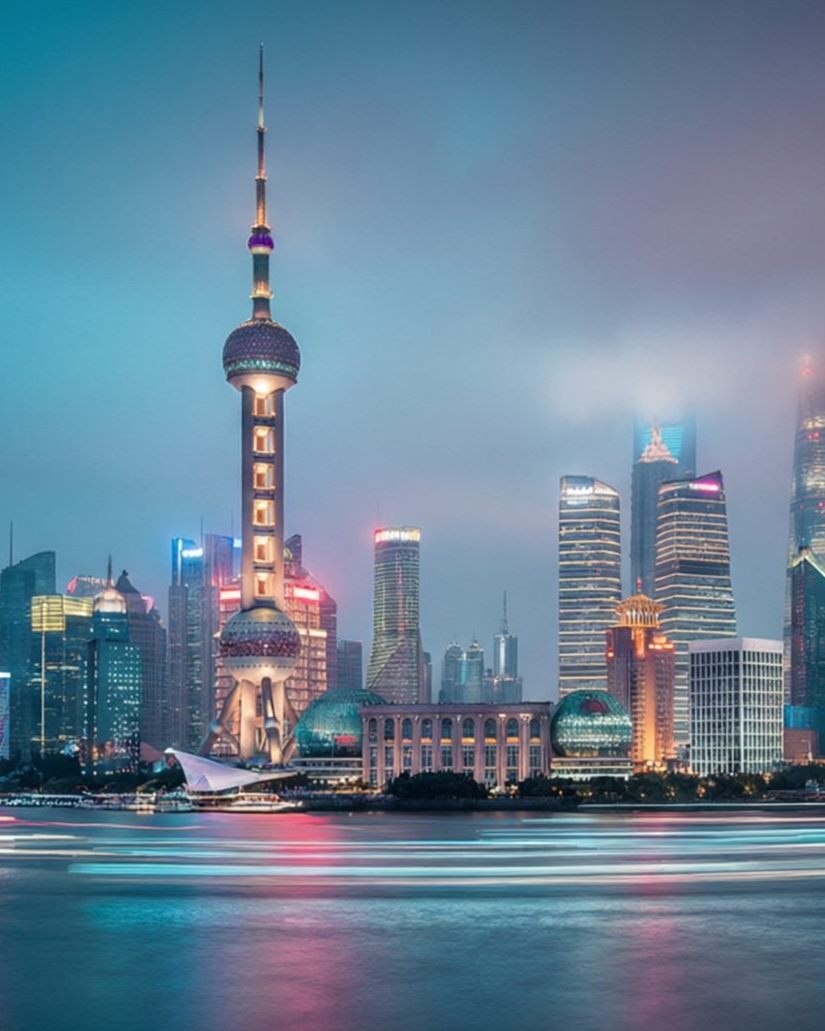
The Bund itself is 1.5 kilometres of granite embankment with 52 buildings behind it, banks and consulates and hotels from the 1920s and 1930s, in a run of styles from neo-classical to Art Deco. The famous view is not of them. It is of what is across the water.
18:00 — the Bund, from the correct end
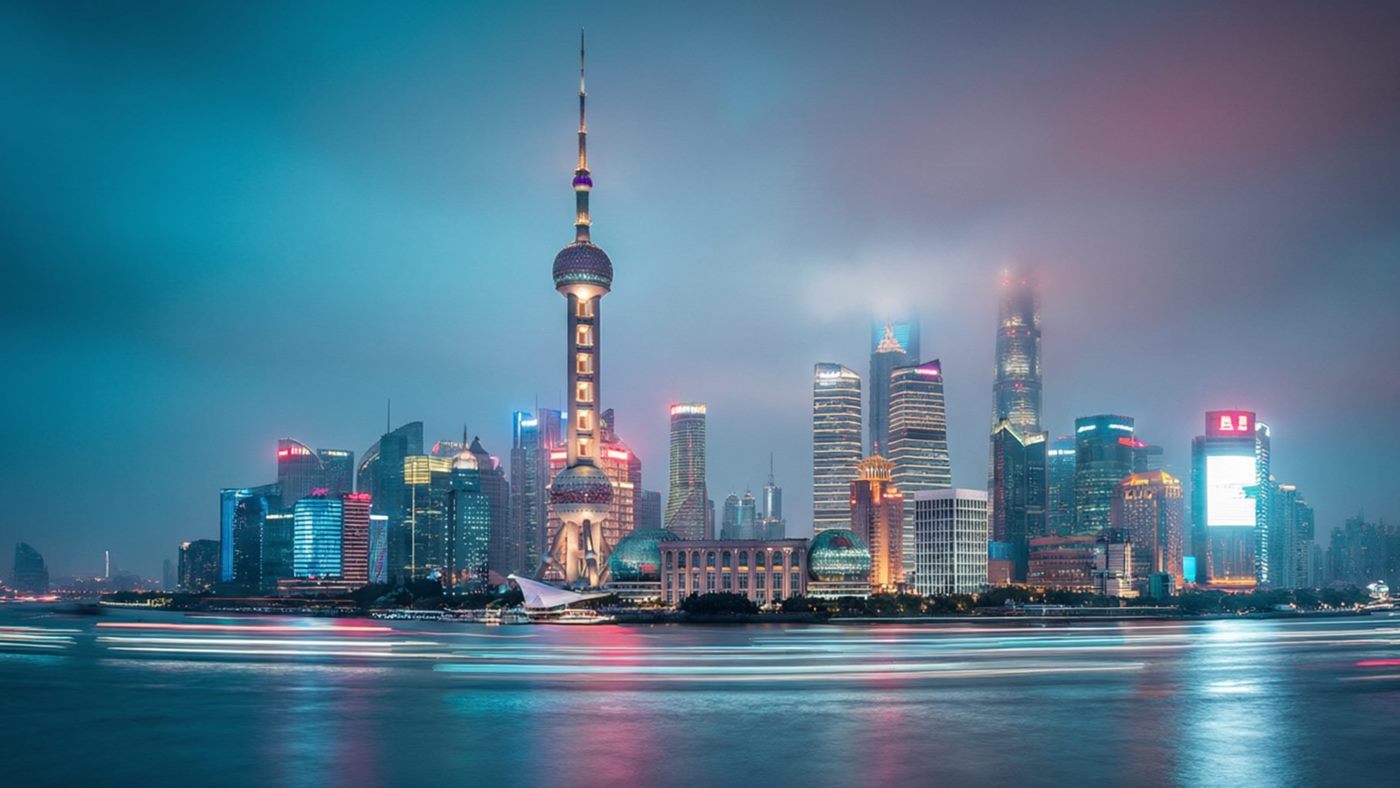
The towers switch on at about 18:30 and go off at 22:00, an hour later on Fridays and Saturdays. Blue hour — the twenty minutes when the sky still has colour and the windows are already lit — is the only time the skyline photographs well without a tripod, and it moves fast. Check sunset time for your month: 17:00 in December, 19:00 in June, 17:30 in October.
Walk the promenade from south to north, ending at the Waibaidu steel truss bridge of 1908, where the river bends and the traffic, the neon and the water line up in one frame. The raised section above the road is quieter than the waterfront level and has the same view. Between 19:00 and 21:00 both are busy; before seven they are not.
19:00 — the ferry trick
The commuter ferry from Jinling East Road to Dongchang Road costs ¥2, takes five minutes, runs every ten to twenty minutes until about 22:00, and takes bicycles. It is the cheapest river crossing in any city that has a skyline, and it puts you on the water among people going home from work rather than among tourists holding selfie sticks.
From Dongchang Road, walk twenty minutes north along the Binjiang promenade to the Lujiazui waterfront, where the view reverses: the whole colonial Bund laid out as one lit wall, with the tower cluster behind you. The sightseeing cruises, ¥120–180 for fifty minutes, are fine and entirely unnecessary. The ferry does the same water for the price of a baozi.
20:00 — dinner without a decision
On a first night, do not research. Order two things. Shengjianbao, the pan-fried pork buns with a crisp base and a scalding interior, are ¥12–18 for four; xiaolongbao are ¥30–60 a basket; a bowl of scallion oil noodles is ¥18–28. Any dumpling shop with a queue and plastic stools will be better than any restaurant with a view.
If you want to sit down properly, the basement food halls of the big department stores near People's Square serve eight regional cuisines for ¥40–70 a head and stay open until 21:30. From October, hairy crab appears everywhere at ¥80–150 each, which is a bargain or a trap depending on how much you like picking shellfish with your hands.
21:30 — the skyline decision
Shanghai Tower's 118th-floor deck is 546 metres up, costs ¥180–220, and the last lift is around 21:00. The World Financial Center next door is ¥180 for the 100th floor, with a glass floor. The Oriental Pearl is ¥199–259 and the least interesting of the three, because you cannot see the tower you are standing in.
If the visibility is under five kilometres, skip all of them. Shanghai haze is real, and a ¥200 ticket to a grey rectangle is a poor first purchase. A hotel bar in Lujiazui will sell you a cocktail for ¥120–180 with nearly the same view, and you can leave when you like.
Jet lag is not cured by sleep. It is cured by daylight, a long walk and one very slow evening on a river wall. Field desk · Huangpu, Shanghai
The jet-lag plan
- Sleep on the plane's schedule, not yours. If you land at 15:00, the flight was your night. Do not nap on arrival.
- Daylight at 16:00–18:00 beats any tablet. Twenty minutes of low sun on the Bund does more than a blackout curtain.
- Eat at local meal times from day one. Dinner at 20:00, breakfast at 07:30, however strange it feels.
- No caffeine after 14:00, no alcohol on night one. Both make the 03:00 wake-up worse and longer.
- Melatonin, 0.5–1 mg, at 21:00 for three nights. Small doses work better than the 5 mg tablets sold at airports.
- Wake at 06:30 and walk before breakfast. The city at seven is cool, empty and full of people doing tai chi badly.
By 21:30 you will have been awake for something close to twenty hours, seen the skyline from both banks, crossed the river twice and eaten for ¥50. That is a complete first night. The second day, which is the one everybody ruins, is now yours.
Questions travellers ask
- What is the best way to get from Pudong airport to the Bund?
- The maglev to Longyang Road, ¥50, then metro Line 2 for ¥5 and about 35 minutes. Total journey around an hour. A taxi is ¥170–250 and 50–70 minutes. The metro alone is ¥8 but takes 75–90 minutes with a change at Guanglan Road.
- Is the Bund better at night or during the day?
- Night, but specifically blue hour: twenty minutes after the lights come on at 18:30, when the sky still holds colour. Midday is flat and hot; after 21:00 the crowds thin but the sky is black and the photographs lose their depth.
- How do you beat jet lag on the first night in Shanghai?
- Stay awake until 21:30 local time, walk in daylight for two hours, eat dinner at a normal hour and avoid alcohol and afternoon caffeine. A small dose of melatonin at bedtime for three nights helps. Do not nap on arrival, however short.