Chengdu runs on tea, chilli oil and a municipal refusal to hurry. The pandas are the reason most people get on the plane; the teahouses, the mahjong in the park and the smell of a hundred hotpots are the reason they add a day, then another.
成都 ChéngdūSichuan · Southwest ChinaIdeal 3–5 daysWindow Mar – May
Population
21 millionroughly the population of the Netherlands
Metro
13 lines¥2–10; Line 3 runs out toward the panda base
Airport
TFU / CTUTianfu is 50 km south-east; 50 min on Line 18
Panda base
¥557:30 opening; the pandas eat until about 10:30
Hotpot
¥90per head with beer, split pot for the table
Chapter 01 — Orientation
Flat, green, and in no hurry
Chengdu sits on the flat western floor of the Sichuan Basin, which is why it has some of the widest ring roads in the country and almost no skyline worth photographing. Tianfu Square is the centre, the Jinjiang river runs about a kilometre south of it, and the metro grid crosses underneath: Line 1 north–south, Line 2 east–west. Nearly everything on a short visit is within four stops of that crossing.
West of the centre, People's Park sits on top of its own metro stop, with the Wide and Narrow Alleys 15 minutes north-west of it; east, Chunxi Road is the shopping surface, all glass and flagships; north, Wenshu Monastery keeps a vegetarian kitchen and a quiet courtyard. The panda base is 10 km north-east — Line 3 to Panda Avenue, then a shuttle or a 20-minute walk along a bamboo road. Leshan is 1 h 05 south by high-speed rail, and Jiuzhaigou is now a rail-and-shuttle run rather than the old overnight coach.
The local conviction is that work is for other provinces. Teahouses charge for the glass and then refill it free until closing, so a table is rented for an afternoon rather than a drink. Mahjong sets appear in parks by 9am, ear cleaners work the rows with tuning forks, and nobody moves for rain. The food keeps the same hours: long, unhurried, too much of it, and better in the residential blocks than on the tourist streets.
Stay near Tianfu Square or Chunxi Road if the metro matters, or in Yulin if dinner does. Two nights covers the pandas and one serious hotpot, four adds Leshan, and five is the point where Jiuzhaigou stops being a fantasy and becomes a train ticket.
Bamboo, first sittingSplit down the middleThe valley, two days north
Chapter 02 — Five days
Pandas early, hotpot late
Day 1 PM
Tea first, then the pot
Drop the bag and walk to People's Park by 4pm. Order jasmine at the covered teahouse on the lake, pay ¥20–40, and watch the city do nothing for two hours. Drift through the Wide and Narrow Alleys at dusk, when the tour groups have gone and the courtyards light up, then eat hotpot at 8pm in Yulin: split pot, tripe, potato slices, beer by the crate.
Day 2 AM
Pandas at 7:30
Be at the panda base gate at 7:15. Tickets are ¥55, sold through the base's own mini-programme and tied to your passport number. Walk uphill to the nursery first, where the cubs are out from about 9, then work downhill through the adult enclosures. By 11 the animals are asleep in heaps and the coaches are arriving; leave then, and have lunch near the zoo.
Day 3 AM
Leshan by rail
Chengdu East to Leshan is 1 h 05 and about ¥54. From Leshan station it is a 25-minute taxi (¥30) or a local bus to the north gate. The 71-metre Buddha was cut into the cliff between 713 and 803, and the stairway down his right shoulder is a one-way queue that takes 40 minutes on a good day. If the wait is two hours, take the boat (¥70) instead.
Day 4 AM
The valley, first day
The 7:00 train to Huanglongjiuzhai takes 1 h 50; a shuttle covers the last 90 minutes to the park gate. Entry is ¥190 plus a ¥90 bus pass, and the buses are not optional — the valley is 60 km long. Walk the Rize branch in the afternoon, sleep at Zhangzha by the gate, and be back inside for the second valley at opening.
Day 5 AM
Second valley, then home
Shuzheng valley in the morning, while the coaches are still on the road, then the 16:00 shuttle to the station and an evening train back. Two days in one valley is not excessive: the top of the route is 3,100 m, the boardwalks are one-way, and the altitude makes every staircase feel twice its length.
Chapter 03 — Six sights
What earns the ticket
01 · Wildlife
The panda base 熊猫基地
More than 200 giant pandas live on this bamboo hillside 10 km north-east of the centre, in enclosures that follow the slope. The nursery is the draw and the cubs come out mid-morning; the adults are fed at 8 and again at 10:30, then once more at 2, which is the quieter sitting. After 11 they sleep and the car park fills.
¥557:30–18:003–4 hLine 3 + shuttle
茶
02 · Nothing to do
A People's Park teahouse 茶馆
Under the willow shade on the park lake sits a shed with 300 bamboo chairs and a menu of four teas. You pay ¥20–40 for the glass and refills are free until they sweep you out at dusk. Ear cleaners circulate with tuning forks, the mahjong tables are full by 10am, and the whole afternoon costs less than a museum ticket.
free entry7:00–22:00¥20–40 a glass2 h minimum
巷
03 · Old streets
Wide and Narrow Alleys 宽窄巷子
Three parallel Qing lanes — wide, narrow and well — rebuilt in 2008 into courtyards, teahouses and shops selling the same embroidered bags as everywhere else. Go at 8am, when the shutters are still down and residents walk their birds; by 6pm it is shoulder to shoulder and the opera make-up stalls are in full pitch.
freebest 7–9ammetro 41.5 h
04 · Dinner
Sichuan hotpot 火锅
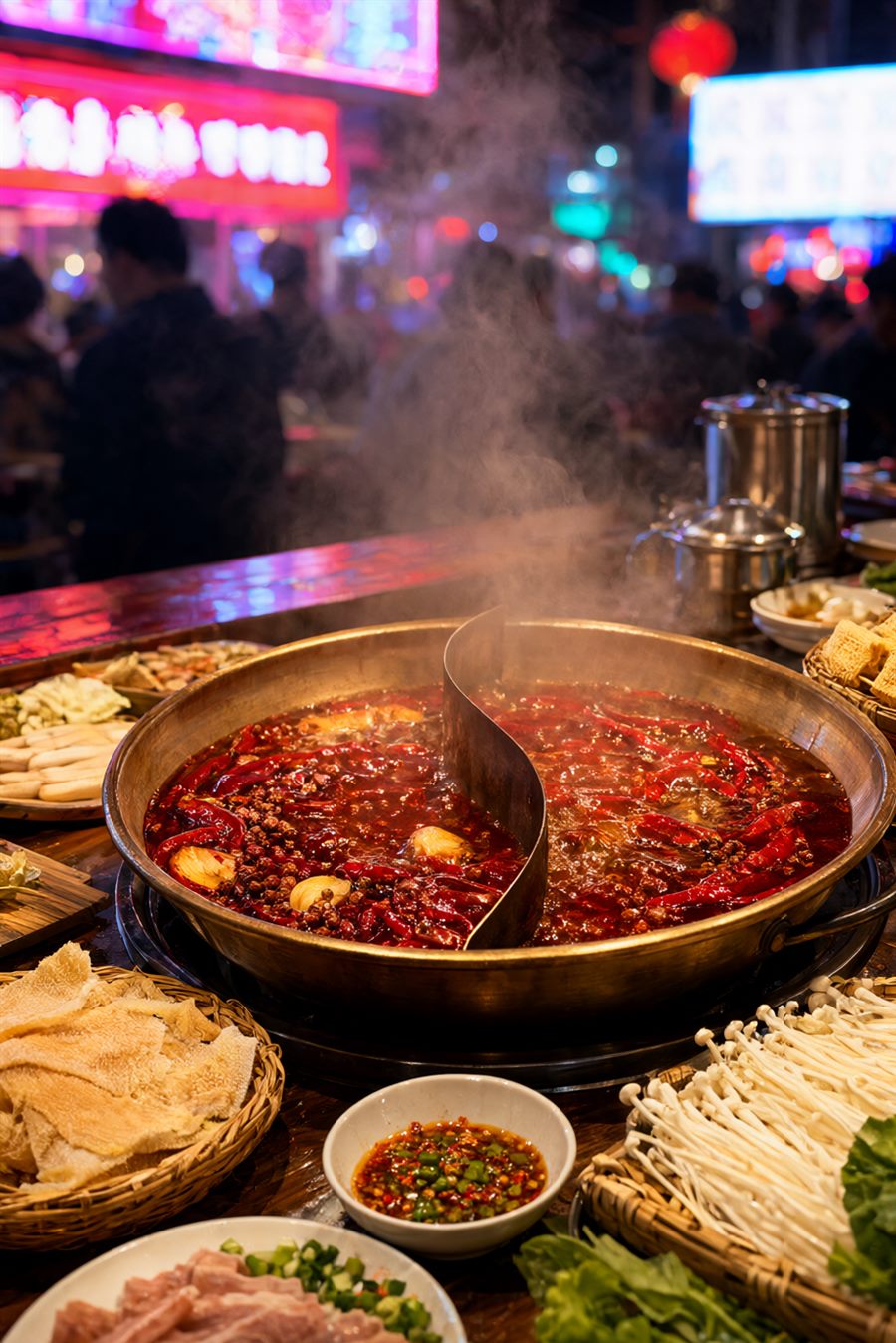
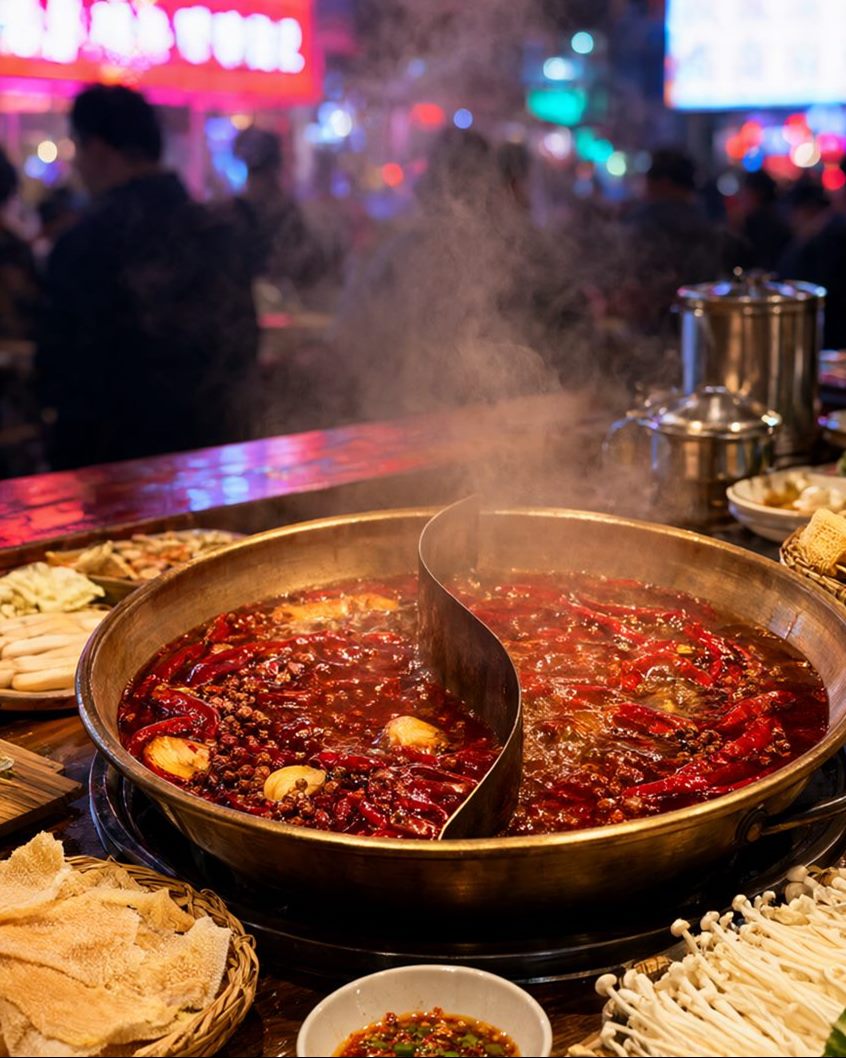
Chongqing's version is beef fat and pure fire; Chengdu's is gentler, with a clear broth on one side of the pot and a chilli slick on the other. Order tripe, potato, luncheon meat and one plate of greens you will forget in the pot. Budget ¥90 a head with beer, more for the expensive cuts, and expect to smell of it for a day.
¥80–120 ppfrom 5pmYulin or Shuangnan2 h
佛
05 · Day trip
Leshan Giant Buddha 乐山大佛
A 71-metre seated Buddha carved into a sandstone cliff where three rivers meet, finished in 803 after ninety years of work and one monk who gouged out an eye to shame the fundraisers. The stairway down his right side is narrow, one-way and slow. The boat (¥70, 30 minutes) gives you the head and shoulders without the queue.
¥808:00–17:30rail 1 h 05half day
06 · Overnight
Jiuzhaigou 九寨沟
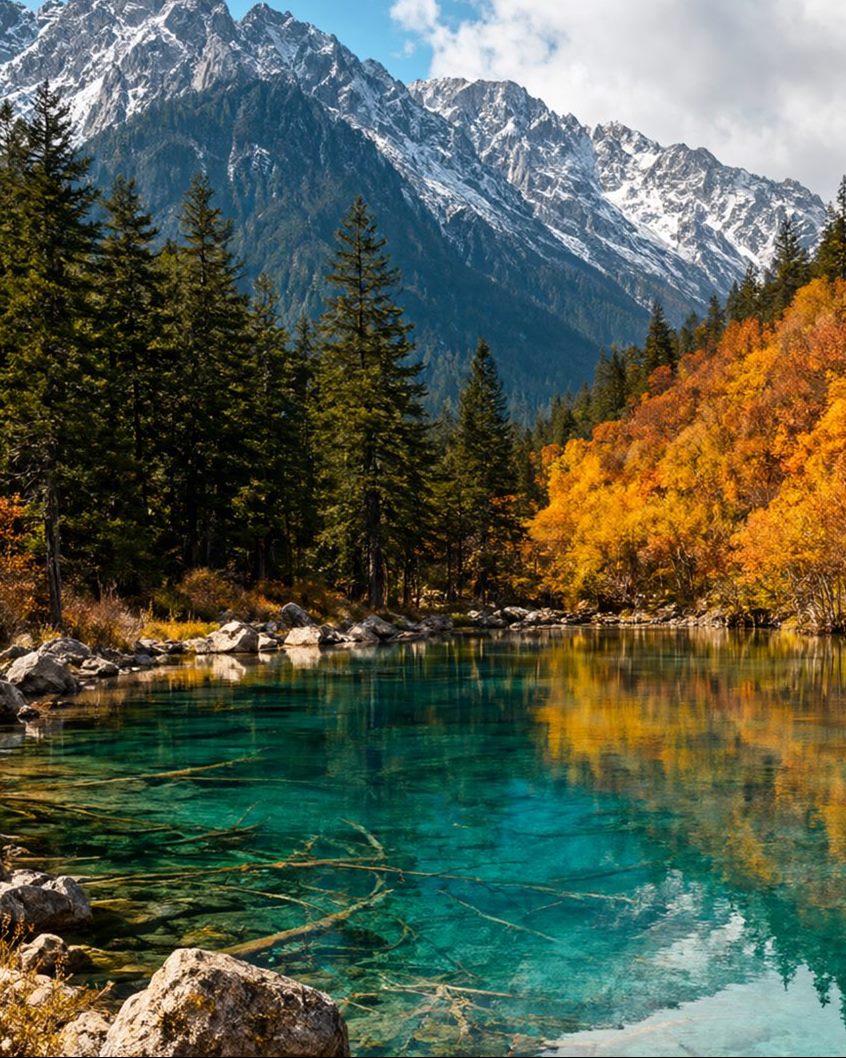
Turquoise lakes stacked up a Y-shaped valley, coloured by travertine and drowned trees, 3,000 m up in the Min mountains. Since the rail line opened it is a two-day trip rather than a three-day expedition: train to Huanglongjiuzhai, shuttle to the gate, one night at Zhangzha. Entry ¥190 plus a ¥90 bus pass, and the buses are compulsory.
¥190 + ¥90rail 1 h 502 days3,100 m
The panda timetable
Pandas eat for around twelve hours a day, in two long sittings: roughly 8am to 10:30, then again from 2pm. Between those they sleep, usually on their backs and usually out of sight. The difference between a good visit and a wasted one is arriving at 7:15, walking uphill first, and leaving by 11.
Tickets are ¥55, sold in half-hour slots online, and you need the passport number of every person in the booking. The internal shuttle is ¥10 and saves 20 minutes of uphill road. Bring the physical passport: the gate matches the name on the booking, and the cubs are carried in around noon regardless of what the queue is doing.
Questions travellers ask
How many days do you need in Chengdu?
Three days covers the pandas, a teahouse afternoon, one serious hotpot and a day trip to Leshan. Add two more for Jiuzhaigou, which needs a night in the valley to justify the journey, or swap that for Qingcheng Mountain and the Dujiangyan irrigation works, 35 minutes away by rail.
What time should I arrive at the panda base?
Gates open at 7:30 and the pandas eat until about 10:30. Arrive at 7:15, walk uphill to the nursery first, and leave by 11, when the coaches arrive and the animals sleep. Tickets are ¥55 and are sold in timed slots online with your passport number.
Is Jiuzhaigou worth two days from Chengdu?
Yes, if you give it two. The rail line to Huanglongjiuzhai takes 1 h 50, then a 90-minute shuttle, so a day trip means six hours in transit. One night at the gate lets you walk both valleys at opening, which is the difference between a lake and a crowd.