Practical · Rail
By the ChinaTravel.fly field desk 8 min read Updated Nov 2026
- Network
- 45,000 kmhigh-speed lines, plus twice that of ordinary rail
- Presale
- 15 daysreleased at 8:00, a few stations later in the day
- Top speed
- 350 km/hBeijing–Shanghai and a handful of others
- Ticket
- Passportno paper, no printing, the passport is the ticket
- Arrive
- 40 minbefore departure at a major station
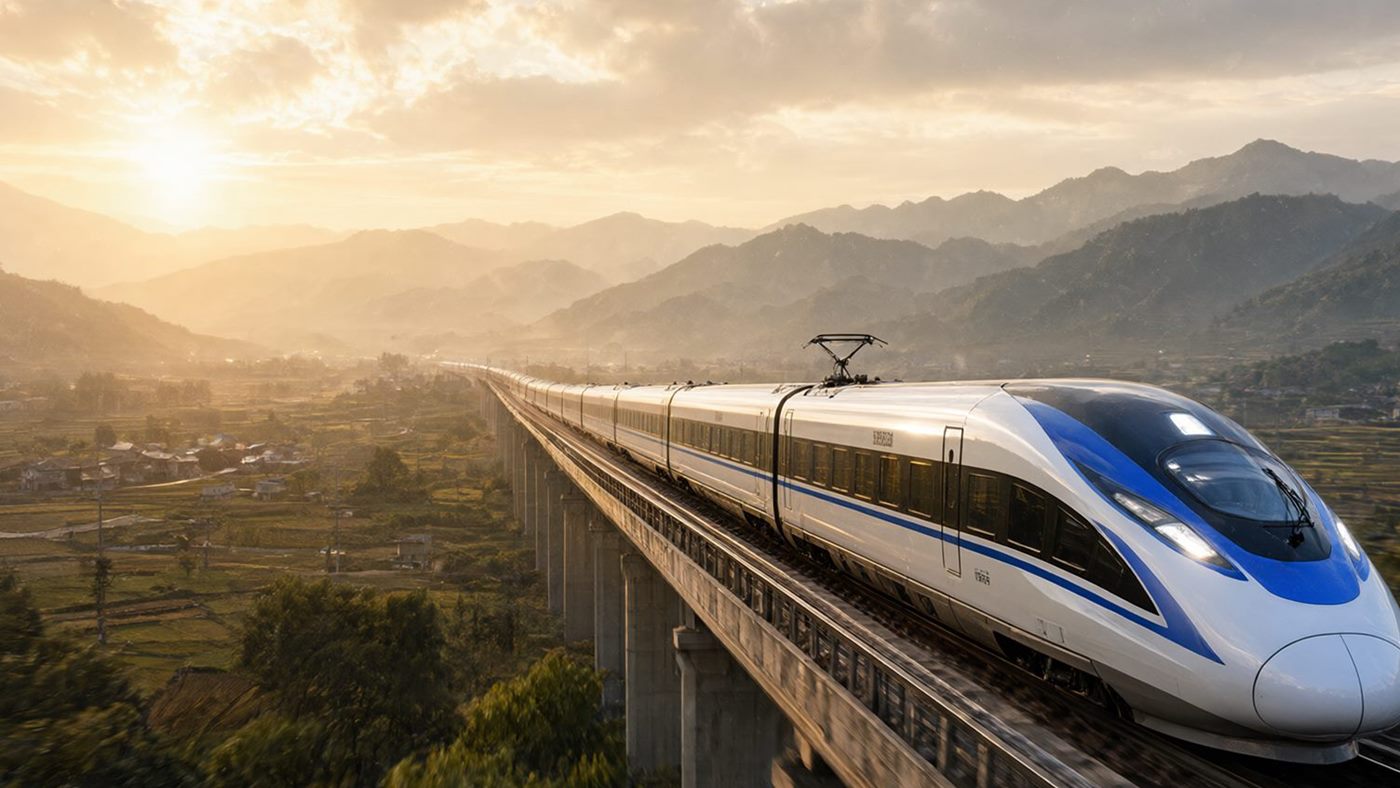
Trains leave on the minute, the seats are comfortable, the fares are a fraction of European equivalents, and a 1,300-kilometre journey takes four and a half hours.
The hard part is not the railway. It is the booking system, which was designed for people with Chinese ID cards and has been retrofitted for passports with varying success. Learn it once and the country opens up.
Booking: 12306, an agent, or the window
The official channel is 12306, which has an English app and website. Register with your passport number, exactly as printed, and enter your name in the order the passport shows it: surname first, given names second, no spaces if the system complains. Verification sometimes takes a few hours; do it at home, not at a station.
Tickets go on sale 15 days ahead, most stations releasing at 08:00, a few at 10:00 or 14:00. On popular routes at holiday time the good departures vanish within minutes, so book on the release day. Outside holidays, a week ahead is plenty and next-day is usually fine.
Trip.com sells the same seats in fluent English for a ¥20–40 fee and will deal with the helpline on your behalf. We use it when a journey matters and 12306 when it does not. Either way there is no paper ticket: your passport is scanned at the gate, and the seat number appears on the app.
Seat classes, honestly compared
| Class | Layout | Fare, relative | Worth it when |
|---|---|---|---|
| Second | 3+2, reclining | 1× | Almost always; it is a short-haul aircraft seat with more legroom |
| First | 2+2, wider, footrest | ≈1.6× | Journeys over four hours, or working on a laptop |
| Business | 2+1, lie-flat pod | ≈3× | Rarely; a ¥1,748 Beijing–Shanghai seat is a choice, not a necessity |
| Soft sleeper | 4 berths, closing door | ≈1–1.2× | Overnight routes, families, anyone over 1.8 m |
| Hard sleeper | 6 berths, open bay | ≈0.5–0.7× | Overnight on a budget; the middle bunk is the good one |
| Standing | Corridor | 1× | Only when the alternative is not travelling |
For overnight trains the class names mislead. Hard sleeper is not hard, it is a vinyl-covered bunk in a bay of six, and it is perfectly civilised. Soft sleeper buys a door, four berths and a little more quiet. On the newest high-speed sleepers there are also private two-berth compartments, which sell out first.
The station, minute by minute
Chinese stations are airports with trains. Arrive 40 minutes before departure at a major hub, 30 at a small one. You will queue for an ID check at the entrance, put your bags through an X-ray, find your waiting area on the departure board, and then wait for the gate to open about 15 minutes before departure.
Gates close five minutes before the train leaves, and they mean it. On the platform, stand at the coloured marker for your carriage number rather than queuing at the nearest door. Carriages are numbered from the front, and walking the length of a 16-car train with luggage as it departs is a specific kind of misery.
Luggage, limits and the things you cannot carry
There is no check-in and no carousel. You carry everything to your seat and lift it into a rack above your head or a stack at the end of the carriage. The nominal limit is 20 kg for adults; nobody weighs it, but a 28-inch case is the practical maximum on newer trains and a nuisance on older ones.
Security is real. Lighters, matches, most knives including penknives, aerosols above the cabin limit and power banks over 100Wh or without a visible capacity marking are confiscated at the X-ray. So is anything that looks like a weapon, including some tripods. Put the power bank in your hand luggage and check the printing on it before you pack.
The train is the only place in China where the clock is never wrong, and everyone in the waiting hall knows it. Field desk · Shanghai Hongqiao, 07:12
Food, water and the four-hour problem
Every carriage has a hot-water dispenser, which is why half the train is eating instant noodles by the second hour. The dining car on a G-series train serves a ¥35–60 set meal that is edible rather than good; the trolley sells snacks, fruit and dreadful coffee at ¥15–45. Stations have convenience shops and noodle counters airside, priced for captives but not outrageous.
Our routine: buy fruit, bread and a bag of roasted seeds at a station shop, fill a flask from the dispenser, and eat properly on arrival. On a four-hour run that is better than anything the trolley offers, and it costs about ¥30.
When the train you want is full
12306 runs an official waitlist, which works better than its reputation suggests: pay, join the queue, and seats are released as people cancel, usually the day before. Failing that, buy a ticket for one stop beyond your destination and get off early, or split a long journey at a hub such as Zhengzhou, Wuhan or Changsha. Both are legal; neither is comfortable with heavy bags.
Four routes, four fares
Beijing South to Shanghai Hongqiao. 4h18–6h, ¥553 second class. The busiest line in the country; book on release day for a morning departure.
Beijing West to Xi'an North. 4h20–6h, ¥515. The 8am departure puts you at the terracotta army by early afternoon.
Shanghai Hongqiao to Hangzhou East. 45–60 minutes, ¥73. Commuter-frequency, no need to book more than a day ahead.
Chengdu East to Chongqing North. 62–80 minutes, ¥154. The most useful short hop in the west.
Questions travellers ask
- Do I need to collect a paper ticket?
- No. Since the e-ticket rollout, your passport is scanned at the gate and at the platform, and the seat number is on the app. A few small stations still prefer a printed receipt, which the counter will give you free. Keep the booking confirmation screenshot anyway, in case of a scanner failure.
- Can I book train tickets for someone else?
- Yes, up to a small number of passengers per account, but each passenger's passport details must be entered exactly. The named traveller must travel; tickets are not transferable, and the gate checks the photo page against your face. This is the one place where borrowing an ID does not work.
- Is a sleeper worth it on an overnight train?
- On long routes with no daytime high-speed option, yes: you save a hotel night and a day of travel. On routes where a four-hour daytime train exists, no. Book a soft sleeper for a door and four berths, or a hard sleeper lower bunk for value. Bring earplugs and slippers.