What China actually eats
Chinese food is not one cuisine; it is at least eight, separated by climate and 2,000 years of argument. This section is about the mechanics — what to order, how it arrives, how much it costs — rather than a list of fifty dishes you will never find.
The table
Start with the mechanics
Every page here can be read before you land, and used again at the table with the phone held up to a waiter.
Tea
One leaf, six families, and a brewing method built on seconds. What to order in a teahouse and what it costs.
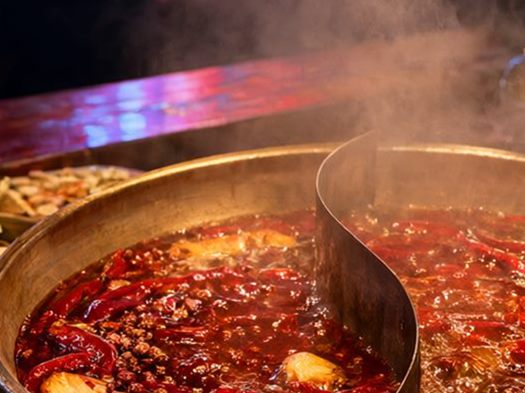 Nationwide
7 min
Street food rules
A stall with one dish, a visible flame and a queue of locals is almost always fine. The rest is arithmetic.
Dumplings, sorted
Jiaozi, baozi, xiaolongbao, wontons: four wrappers, four techniques, and one rule about soup that will save your…
Cantonese dim sum
Small, medium, large, special, superlative. A steamer is priced by its size, and the whole morning runs on that code.
Xi'an noodles
Biangbiang by the belt, paomo you tear yourself, cold liangpi at noon, roujiamo eaten on the pavement. The order…
Peking duck
Forty days of duck, ninety minutes of fire, three courses in a fixed order. How the ritual works and what it costs in…
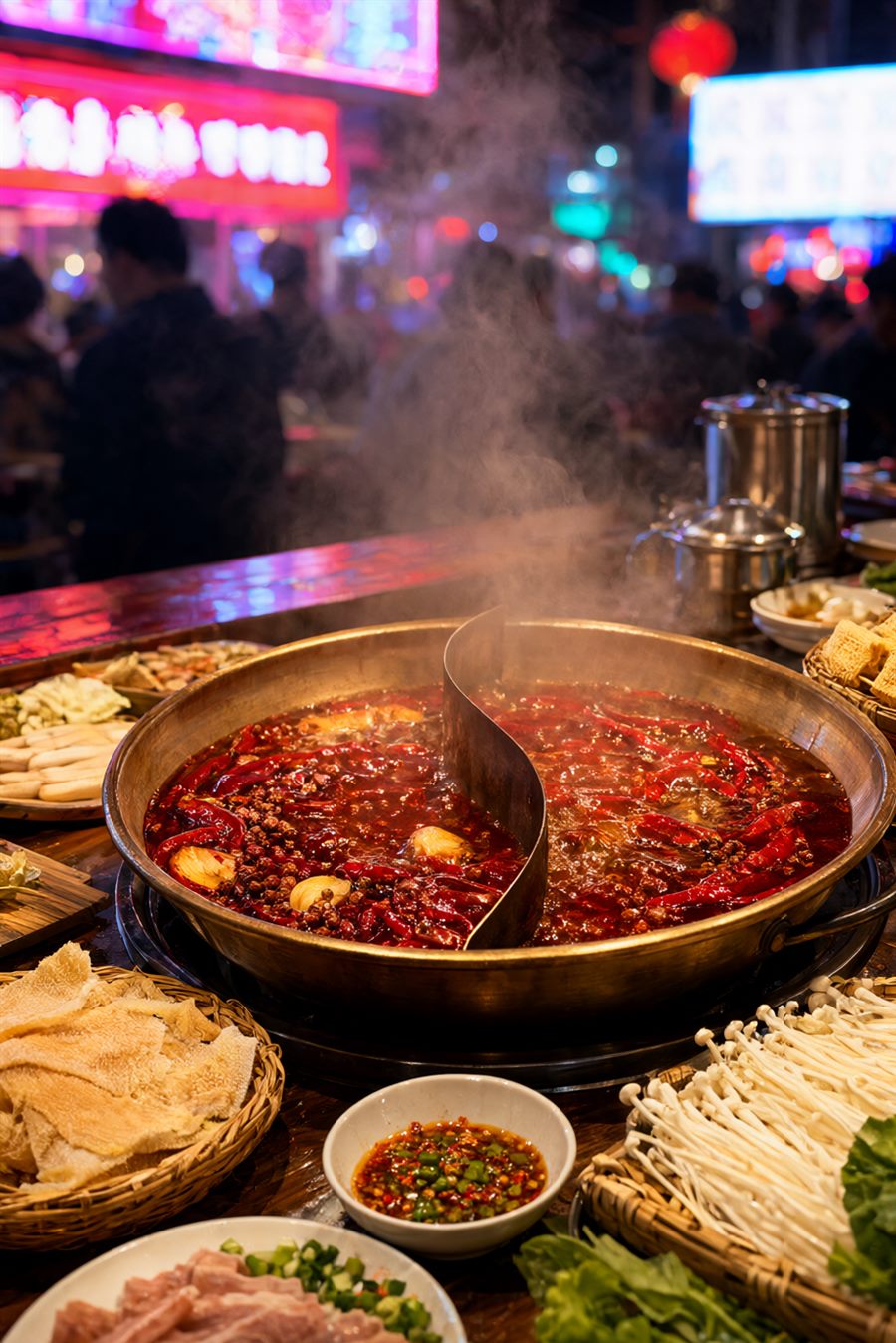 Sichuan
7 min
Sichuan hotpot
Four decisions — broth, dip, sequence, timing — and one rule about the oil that nobody explains until it is too late.
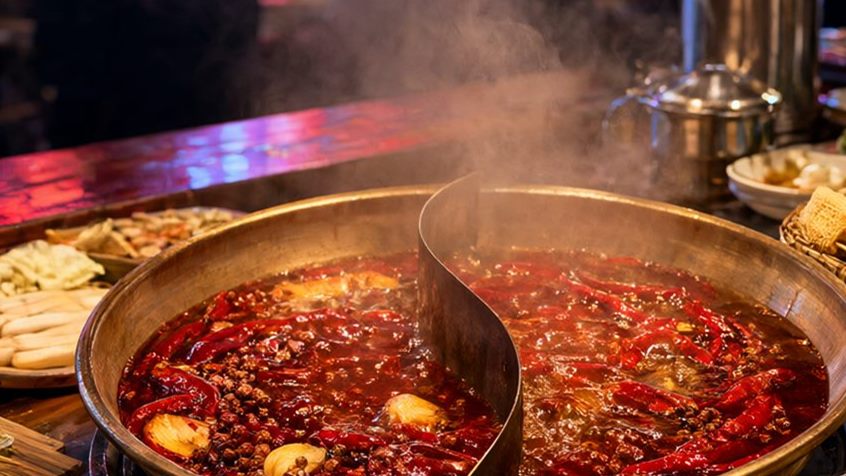 Nationwide
7 min
The eight cuisines
Forget the canon for a minute. Four gradients explain most of Chinese food: grain, oil, chilli and vinegar.