Eleven dynasties used this valley as the capital, which is why the ground under Xi'an is still producing armies, palaces and bronze chariots. You come for the 8,000 clay soldiers and stay for the wall, the noodle streets and a Muslim Quarter that has been trading for 1,300 years.
西安 Xī'ānShaanxi · Northwest ChinaIdeal 3–4 daysWindow Apr – Jun
Population
13 millionthe walled city holds less than a tenth of it
Metro
8 lines¥2–8; Line 2 runs the old north–south axis
Airport
XIY40 km north-west; 45 min on metro Line 14
Terracotta Army
¥1201 hour east; passport number required to book
City wall
13.7 km¥54 to climb, ¥45 to hire a bike for two hours
Chapter 01 — Orientation
A grid inside a rectangle inside a ring road
Xi'an is the easiest big Chinese city to understand: a Ming wall forms a 13.7-kilometre rectangle around the old town, and inside it four gates line up with a north–south and an east–west axis. The Bell Tower sits at the crossing, the Drum Tower a block west of it, and from there the Muslim Quarter runs north while the shopping streets run east toward the city's best hotels.
Almost everything you want is inside or just outside that rectangle. The Shaanxi History Museum and the Big Wild Goose Pagoda are south of the wall, the railway station is just north of it, and the terracotta army is a 40-minute ride east on the suburban line. Only Huashan, the granite mountain with the plank walk, needs a proper day.
The thing that surprises first-time visitors is the scale of the layers underneath. The Tang dynasty capital here was the largest city on earth in the eighth century, with a grid of 108 wards that the modern streets still partly follow. When a subway line is dug, archaeologists go first — and the museum that comes out of those digs is a better introduction than the terracotta pits themselves.
Stay inside the wall if you can: south of the Bell Tower for restaurants and the metro, or near the South Gate for the wall itself. Two nights is enough for the highlights, four lets you add Huashan or a slow morning in the Muslim Quarter before the tour groups wake up.
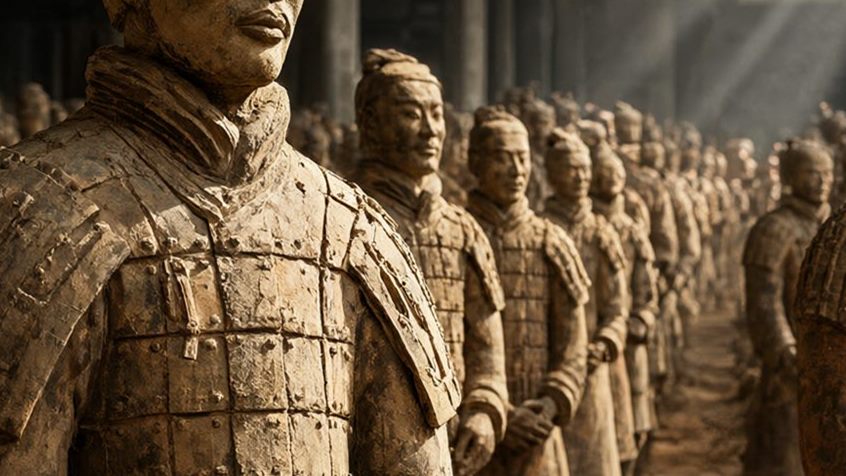
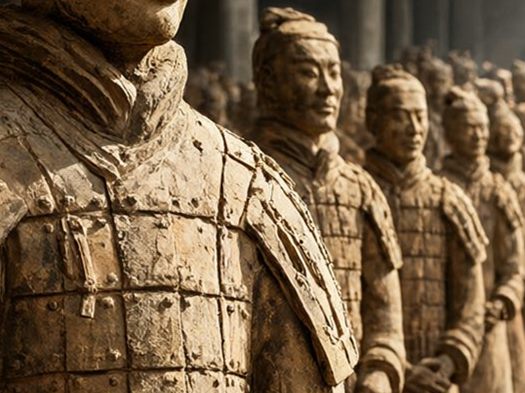
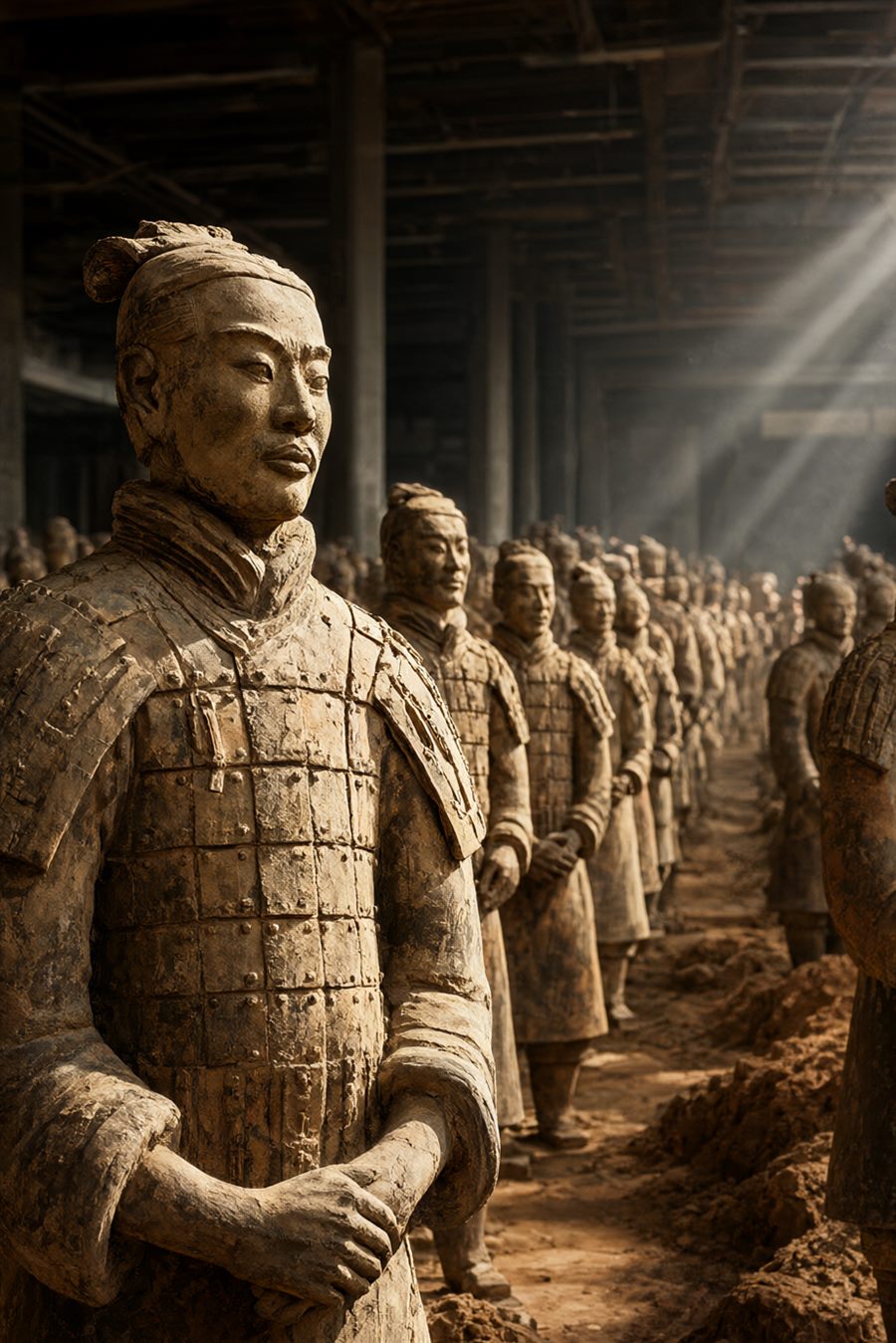
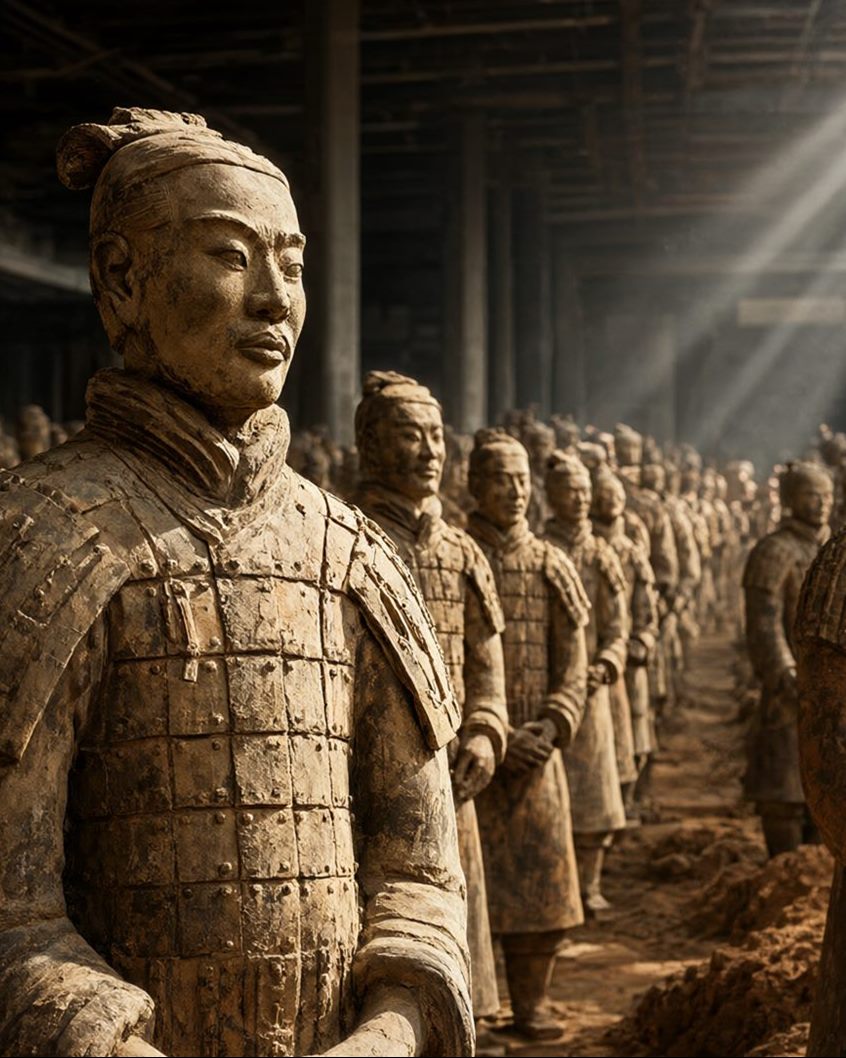
Pit 1, north endNo two faces repeatEight thousand, still counting
Chapter 02 — Four days
An itinerary that beats the crowds
Day 1 PM
Wall at dusk, noodles after dark
Check in inside the wall, then climb at the South Gate around 5pm. Hire a bike and ride the full rectangle — about 90 minutes at an easy pace, with the old town on one side and the new skyline on the other. Come down as the lanterns come on and walk into the Muslim Quarter for yangrou paomo and grilled skewers.
Day 2 AM
The terracotta army, first
Take the early suburban train from Xi'an station and be at the pits by 8:30, when the gates open. Go straight to Pit 3, then Pit 2, then Pit 1 last — the reverse of every coach group. The army is genuinely astonishing even on a bad day, but the difference between 8:30 and 10:00 is the difference between a photograph and a crowd scene.
Day 3 AM
Museum, pagoda, and the Tang skyline
Shaanxi History Museum at opening (book the free slot online days ahead), then lunch near the Small Wild Goose Pagoda and the Big Wild Goose Pagoda in the late afternoon, when the square fills with fountains and families. Climb the pagoda if the air is clear; the view over the southern suburbs is better than the postcards suggest.
Day 4 AM
Muslim Quarter before the crowds
Walk Beiyuanmen at 8am, when the bread ovens are going and the street belongs to residents. Then the Great Mosque — a Chinese courtyard complex with an Islamic prayer hall, easy to miss behind an unmarked gate. Catch an afternoon train west to Lanzhou or east to Beijing; the high-speed station is 40 minutes by metro.
Chapter 03 — Five sights
What is worth the ticket
01 · Archaeology
The Terracotta Army 兵马俑
Three pits, 8,000 soldiers, and not one identical face. Pit 1 is the vast one you have seen; Pit 2 has the archers and the cavalry; Pit 3 is the command post and takes ten minutes. The exhibition hall behind Pit 1 holds two bronze chariots that are worth more time than most people give them.
¥1208:30–17:00book with passport3–4 h
墙
02 · The rectangle
The city wall 城墙
The most complete ancient city wall in China, wide enough to drive a small car along the top. Ride the whole loop at dusk: the light goes orange over the Drum Tower, the lanterns come on along the parapet, and the noise of the traffic below fades to a hum. The south-east corner is the quietest stretch.
¥548:00–22:00bike ¥45 / 2 h1.5–2 h
食
03 · Street food
The Muslim Quarter 回民街
A Hui neighbourhood that has been trading since the Tang, now half market and half theme park. Ignore the front stretch of Beiyuanmen and go deeper into Xiyangshi and Dapiyuan, where the bread is baked in clay ovens and the paomo is worth the queue. Eat with your hands and carry tissues.
freebest 7–10amDapiyuan · Xiyangshi2 h
塔
04 · Tang
Big Wild Goose Pagoda 大雁塔
Built in 652 to house the sutras Xuanzang carried back from India, and still the best symbol of Tang Xi'an. The temple courtyards are calm in the morning; the north square turns into a fountain show at dusk. Climb the seven storeys for a view over the city grid.
¥40 temple8:00–18:00¥25 to climb1.5 h
山
05 · Day trip
Huashan, the plank walk 华山
A granite massif two hours east by high-speed rail, with vertical trails, a cable car, and the famous planks bolted to a cliff face. It is a long day and a serious amount of stairs; if you only have three days in Xi'an, skip it and spend the morning in the museum instead.
¥160 entryrail 35 minfull daysturdy shoes
The ticket that catches everyone
The terracotta army sells timed tickets through its own WeChat mini-program, and you need your passport number to book. Tickets for a given morning are released about a week ahead and the midday slots vanish first; the 8:30 slot is usually still there two days out.
Bring the physical passport, not a photo. The gate checks the name against the booking, and a screenshot of your passport page will not get you through. The same rule applies at the Shaanxi History Museum, where the free reservation is stricter than the paid one.
Questions travellers ask
How many days do you need in Xi'an?
Three days covers the terracotta army, the city wall and the Muslim Quarter at a comfortable pace. Four days lets you add the Shaanxi History Museum and the Big Wild Goose Pagoda without rushing, or a full-day trip to Huashan.
Is the terracotta army worth it?
Yes, but go at opening. The site is 90 minutes from the city centre and the coach groups arrive between 10am and 2pm. Arriving at 8:30 gives you the pits almost to yourself for the first hour.
Can you cycle the Xi'an city wall?
Yes. Bicycles are hired on top of the wall at several gates for about ¥45 for two hours, which is enough for the full 13.7 km loop at an easy pace. Passport or ID deposit required.