Field guide · Xi'an
By the ChinaTravel.fly field desk 6 min read Updated Nov 2026
- Ticket
- ¥120includes the mausoleum shuttle
- Opens
- 8:30last entry about an hour before close
- Distance
- 40 km east60–70 minutes by bus from the station
- Time needed
- 3–4 hourstwo if you move fast and skip the mound
- Booking
- 5–7 dayspassport number, timed slot
The terracotta army is the most famous archaeological site in China and the least forgiving to the unprepared. Coach groups leave Xi'an at 8:30, arrive at ten, and move through the pits as a block that takes about ninety minutes. If you are on the first bus and walking the pits backwards, you meet them in the doorway and never see them again.
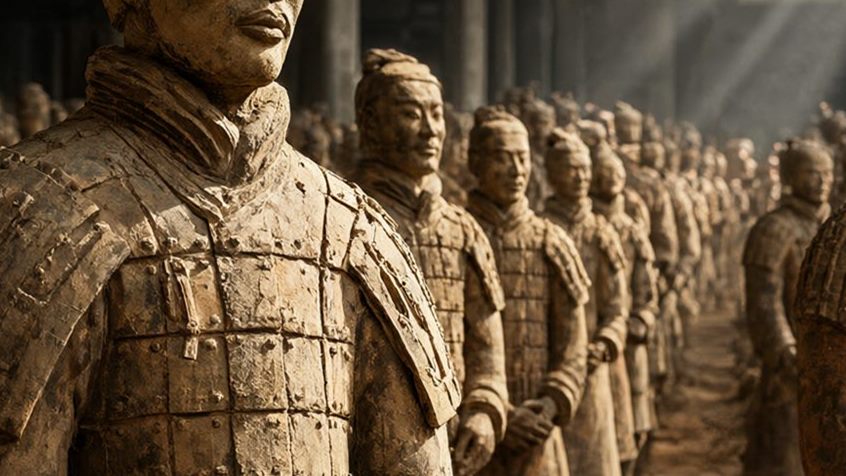
The site is a working excavation with a roof over it, not a museum with labels and benches. Three pits, 8,000 figures and a great deal of earth. Almost everything you have read about it is true, including the part about the crowds, which is entirely a question of when you arrive.
Which pit, in which order
Go to Pit 3 first. It is the smallest, 68 figures and a command post, and it takes ten minutes. Then Pit 2: 1,400 figures including kneeling archers and cavalry, still partly buried, with the excavation trenches cut down to eye level so you can see individual faces and the fingerprints in the clay. Then Pit 1 last, which is the opposite of what every tour does and the reason you will have it almost to yourself.
Pit 1 is 230 metres long, 62 wide, and holds about 6,000 figures in eleven corridors under a hangar the size of an aircraft shed. Stand at the east end and look down the length of the formation: that is the photograph, and at 8:45 there is nobody in it but you and a guard with a whistle. Do it in that order and the crowds become something you leave behind rather than something you queue in.
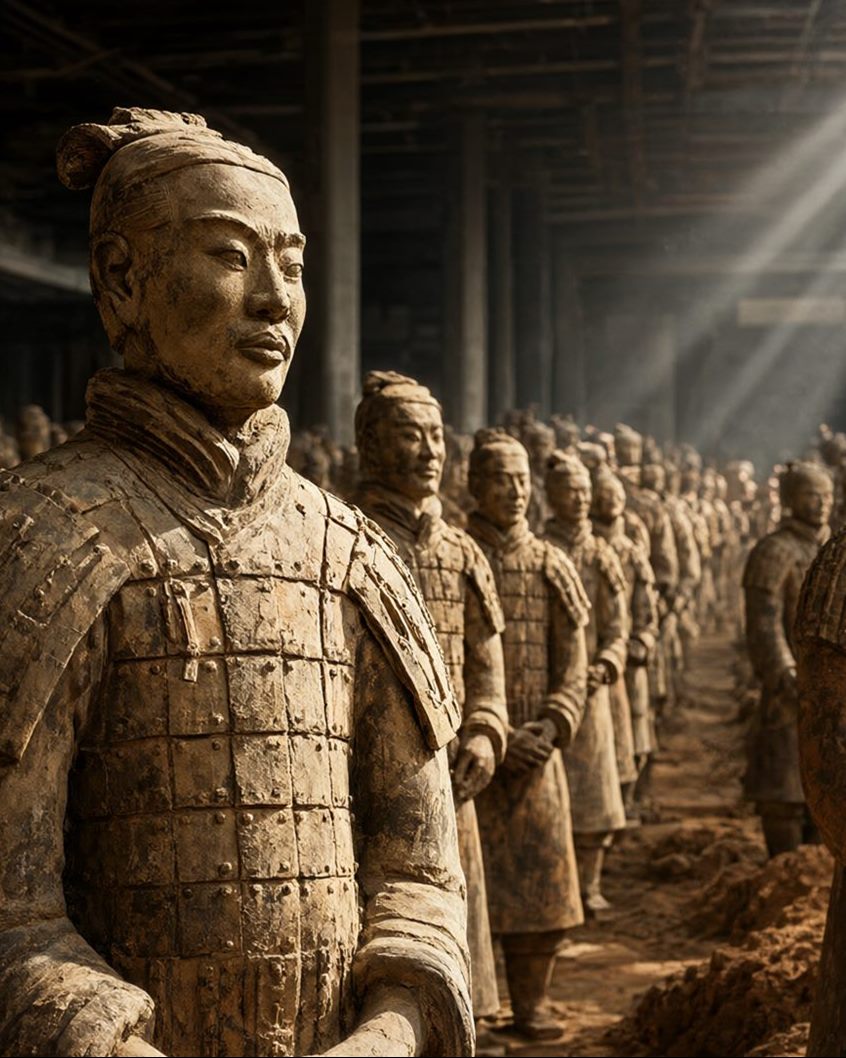
The ticket and the gate
¥120, sold against a passport number through the site's WeChat mini-programme, released about a week ahead with timed slots. The 8:30 slot is usually still available two days out; the 10:00 to 13:00 slots go first because that is when the tours book. Bring the physical passport, not a screenshot.
The ticket covers the three pits, the bronze chariot hall, and the shuttle to the burial mound two kilometres away. Photography is allowed everywhere without a flash. Tripods are not, and neither are drones. The gate is a fifteen-minute walk from the car park through a commercial street selling replica warriors at every second stall.
Getting there from Xi'an
Bus 306 — also marked 游5 — leaves from the east square of Xi'an railway station every ten to fifteen minutes from 7:00, costs ¥7–8, and takes about seventy minutes. It is green and white, it stops at the site's own gate, and it is the only bus you need. Anyone who approaches you at the station with a laminated sign is selling a tour, not a ticket.
Metro Line 9 runs to Huaqing Pool, forty minutes from the city centre, where a local bus or a ¥15–25 taxi covers the last eight kilometres. That route is slower but useful if you want to combine the pits with Huaqing Palace, the Tang hot-spring resort five minutes away.
The bronze chariots, and the mound
Behind Pit 1, in a low hall most people walk past, sit two bronze chariots and their horses at half scale: 3,000 separate pieces, restored over eight years, with a canopy thin enough to see the light through. They are the finest objects on the site and they take fifteen minutes. If you only have time for one thing after the pits, make it this.
The burial mound itself is a free shuttle and a forty-minute loop through a landscaped park, with the emperor's tomb still unexcavated under a hill of earth and pomegranate trees. It is atmospheric and almost entirely without information. Go if you have the afternoon and an interest in what has not been found; skip it if you are on the 12:30 bus back.
The army is not a sculpture garden. It is a garrison, arranged for inspection by a dead man, and the only way to feel that is to walk it in the order it was meant to be read. Field desk · Lintong, Shaanxi
What the guides get wrong
Licensed guides wait at the gate and charge ¥100–200 for ninety minutes; they are worth it if you want the excavation history, and the audio guide at ¥40 is a decent substitute. What is not worth it is anything sold as a package.
- The factory stop. Cheap tours include a 'replica workshop' where the warriors are made and sold. It is commission-driven and eats an hour.
- The 'free' shuttle from the station. There is no free shuttle. Bus 306 is ¥7–8 and leaves from inside the square.
- The wrong pit order. If your guide starts at Pit 1, you are on a schedule, not a visit.
- The claim that photography is banned. It is not, and has not been for years. Flash is discouraged; tripods are refused.
Half a day more, or another day
Huaqing Palace, five minutes away, is ¥120 and combines Tang dynasty bathing pools with the cliff where Chiang Kai-shek was captured in 1936. It is a pleasant hour and a half and a strange history lesson. The Lintong Museum in town is smaller, older and almost empty, with a collection that predates the Qin by a thousand years.
Either way, be back in Xi'an by five. The city wall is best at dusk, the Muslim Quarter is best hungry, and both are twenty minutes from the station where your bus comes in.
Questions travellers ask
- How long do you need at the terracotta army?
- Three hours covers the three pits at a calm pace, the bronze chariots and the shop. Add an hour for the burial mound shuttle. Most coach tours do it in ninety minutes, which is why they queue at Pit 1 while you are walking out of Pit 3.
- Can you visit the terracotta army without a tour?
- Yes, and it is easier than most people expect. Book ¥120 online with your passport, take bus 306 from Xi'an railway station for ¥7–8, and follow the signs. English labels are good, and an audio guide costs ¥40 if you want the excavation story.
- What is the best time to see the terracotta warriors?
- The 8:30 opening, any day except a weekend or public holiday. Coaches arrive around ten and leave by two, so the last two hours before closing are also quiet. April, May, September and October give the best weather; July and August are hot and the busiest.