Itinerary · 8 days
By the ChinaTravel.fly field desk 8 min read Updated Nov 2026
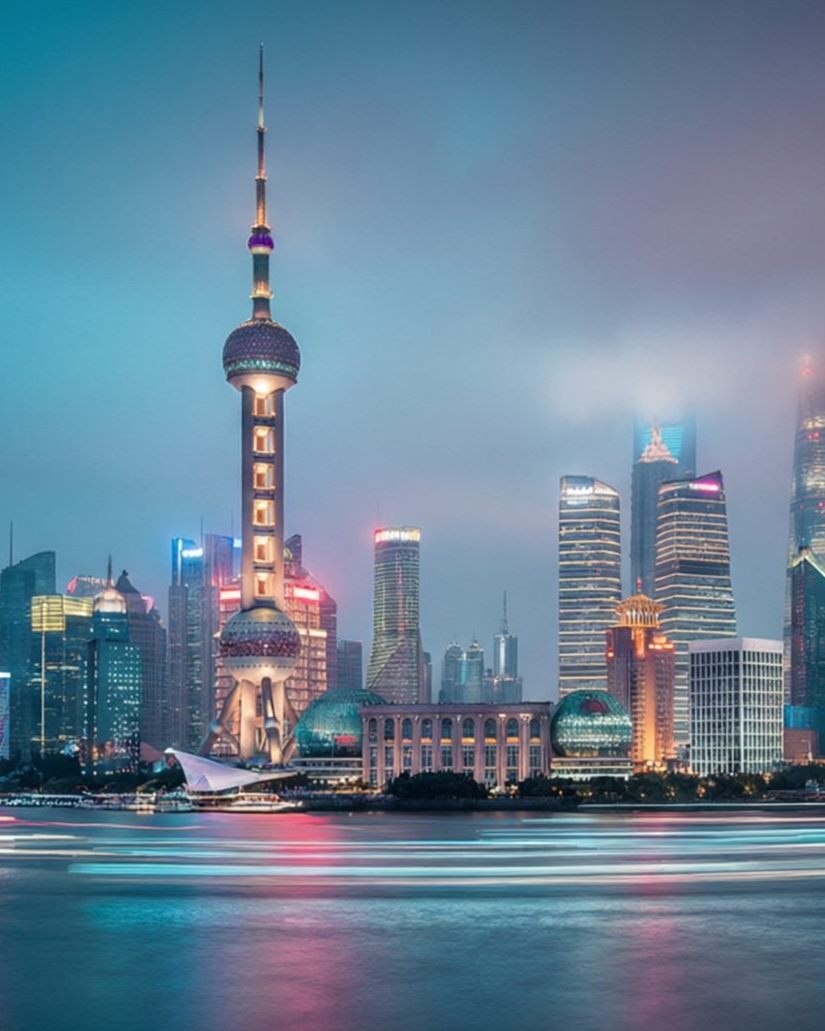
- Days
- 8seven nights; the permission allows ten days
- Rail legs
- 2Beijing–Xi'an and Xi'an–Shanghai, both seated day trains
- Best months
- Apr–May, Octthe dates below are 16–23 April 2027
- Cost band
- ¥8,000–10,500per person, mid-range, without the long-haul flight
- Entry
- 30-day schemethe 240-hour transit does not cover this route
The trio has become the standard answer to a short trip: Beijing for the palace and the wall, Xi'an for the army, Shanghai to fly home from. It is a good route and the timings below are real. What follows is the version with the legal question answered first, because the answer changes which passport queue you stand in.
The dates, hour by hour
Sixteen to twenty-three April 2027 avoids the Qingming and Labour Day surges, gives 21°C in Beijing and 20°C in Shanghai, and puts you ahead of the plum rain. Rail tickets open fifteen days out, so the booking date is 1 April.
| Date | Where | The move | Sleep |
|---|---|---|---|
| Fri 16 Apr | Beijing | Land PEK 09:20, metro Line 2, palace from 13:30 | Beijing |
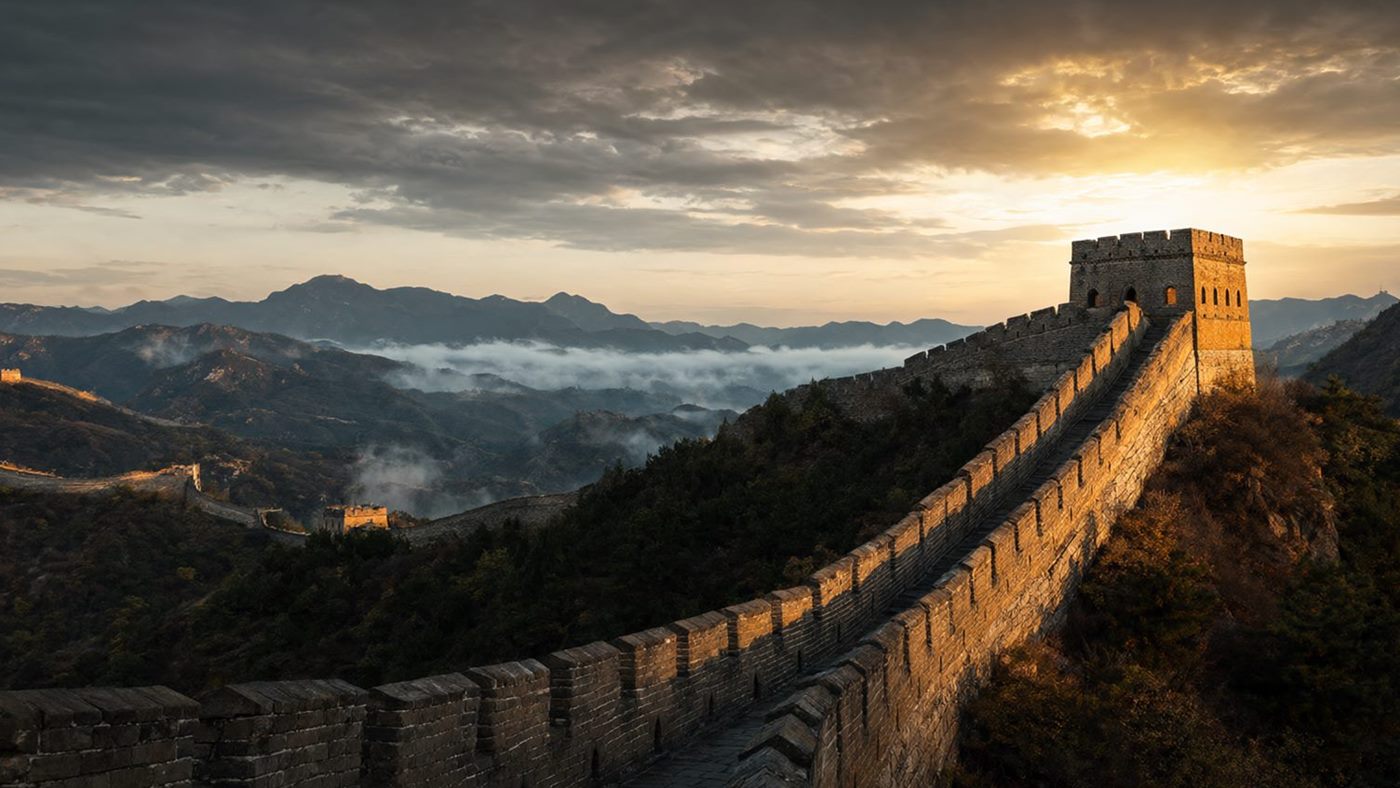
| Sat 17 Apr | Beijing | Wall day at Jinshanling, car out at 05:30, back by 18:00 | Beijing |
| Sun 18 Apr | Xi'an | Temple of Heaven at 08:00; 14:00 train, 4 h 20, in by 18:30 | Xi'an |
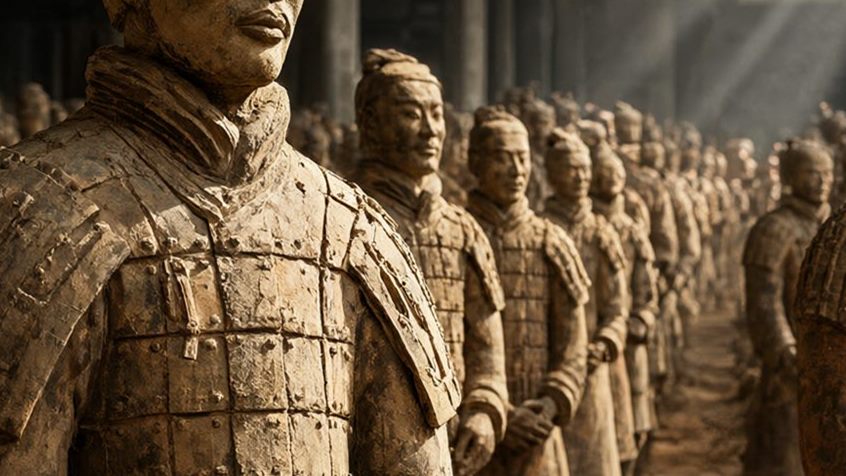
| Mon 19 Apr | Xi'an | Army at 08:30; Big Wild Goose Pagoda at dusk | Xi'an |
| Tue 20 Apr | Shanghai | Quarter at 08:00, 11:00 train, 6 h, in by 17:20 | Shanghai |
| Wed 21 Apr | Shanghai | Museum at 10:00, Concession, Bund at 19:00 | Shanghai |
| Thu 22 Apr | Suzhou | 08:00 train, one garden, back by 18:00 | Shanghai |
| Fri 23 Apr | Shanghai | Maglev at 08:00, PVG, fly out | — |
The paperwork, which is the whole trip
The 240-hour rule is permission to pass through, granted on arrival to citizens of roughly 55 countries who are travelling from one country to another. It fixes a map by your entry point. Enter at Beijing and the map is Beijing, Tianjin and Hebei, which includes the wall at Jinshanling. Enter at Shanghai and it is the Yangtze delta: Jiangsu, Zhejiang, Anhui. Enter at Xi'an and it is Shaanxi.
This route crosses three of those maps. On the transit permission it is out of status the moment the Beijing–Xi'an train leaves the platform, and a valid ticket is not a defence. So the trio as drawn runs on one of two other permissions: the 30-day unilateral visa-free scheme, which as of late 2026 covers much of Europe, Australia, New Zealand, Japan and South Korea but not the United States; or an ordinary tourist visa, ten years for US passports, typically two for British ones, £120–180 including the service charge.
If the 240-hour clock is genuinely all you have, keep the shape and lose a city. Beijing in and out of PEK, with the wall in Hebei and a day in Tianjin 33 minutes away by rail, is legal and needs no visa at all. The Shanghai version — entering at PVG and using Suzhou and Hangzhou — is the better of the two, because the delta does not run out of things to do.
The rule is generous. The internet's summary of it is not, and the airline reads the summary. Field desk · Capital Airport, 06:40
Two legs, six hours apart
Beijing West to Xi'an North is four hours twenty for ¥515 and fits neatly into an afternoon: leave at 14:00, climb the city wall by six. The second leg is the long one. Xi'an North to Shanghai Hongqiao runs five hours fifty to six hours twenty for ¥610–700, and an 11:00 departure costs you a morning in the Muslim Quarter but saves a hotel night. The alternative is a 2 h 15 flight at ¥800–1,200, which is worth it only if the train is full.
What it costs, and where it leaks
¥8,000–10,500 per person at mid-range, before the long-haul flight. Seven nights of rooms run ¥3,000–4,500 across the three cities; the two rail tickets are ¥1,150; the wall car is ¥700–1,000 split between however many of you there are. Tickets — palace, wall, army, museum, one garden — come to about ¥450. Everything else is food, and food is cheap until you order the duck.
The leaks are transfers and timing. A taxi from PVG is ¥200 and an hour; the Maglev plus Line 2 is ¥53 and twenty-five minutes. A hotel near the Bund costs ¥200 a night more than one three metro stops inland, and the difference buys nothing except a shorter walk home at midnight.
What to carry on arrival
Paper, not screens. The onward ticket, the first hotel's address in Chinese characters, and the flight number for the arrival card. Airport wifi needs a code you will not have yet.
The registration slip. Hotels register you automatically. A private stay needs a police registration inside 24 hours, with the host and the paperwork.
A photocopy of the passport page. Two copies, one in the bag and one photographed. The gate at the terracotta army wants the physical passport, so the copy is for everything else.
Questions travellers ask
- Can I fly into Beijing and out of Shanghai on the 240-hour transit?
- Not on this route. The permission is tied to the area around your entry port, so Beijing entry limits you to Beijing, Tianjin and Hebei; Xi'an and Shanghai are separate areas. Use the 30-day visa-free scheme or a tourist visa, or stay inside one area and fly out of the same region.
- How far ahead should I apply for the paperwork?
- A tourist visa takes about ten working days plus an appointment, so start six weeks out. The 30-day visa-free scheme needs nothing in advance beyond a confirmed onward ticket and an address. Whichever you use, check the current port and area list on the National Immigration Administration site, not a blog.