Field notes · No. 09 · Yongding
By the ChinaTravel.fly field desk 7 min read Updated Nov 2026
- Room
- ¥120–260in a family-run ring; shared bathroom below ¥200
- Built
- 16th–20th c.rammed earth, bamboo, lime, and a lot of patience
- Wall base
- 1.5–2 mtapering to about 0.9 m at the top
- From Xiamen
- 2.5–3 hbus to Hukeng, ¥80–110, then a local car
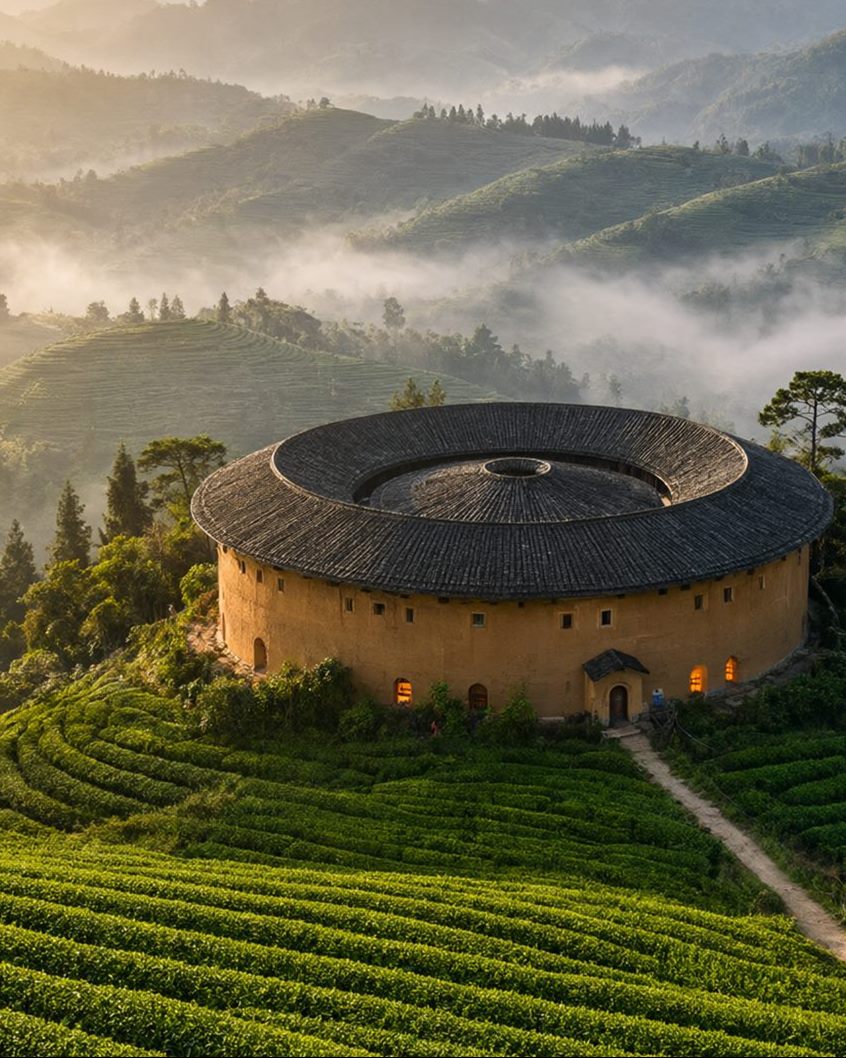
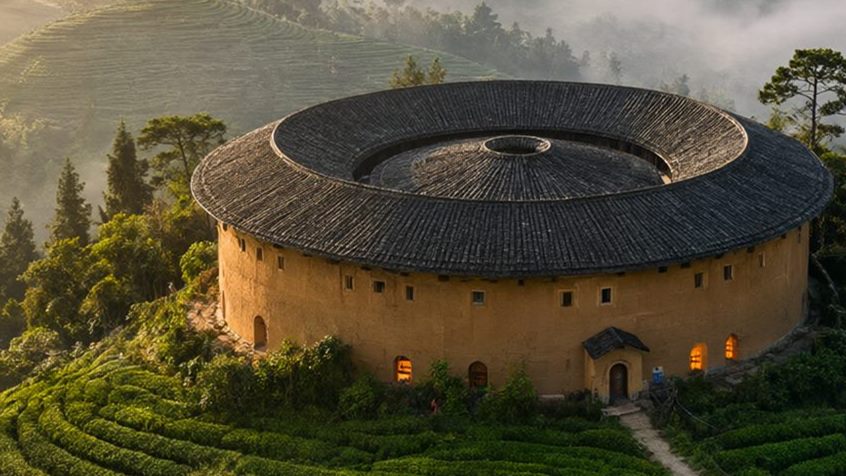
The first thing a tulou does is refuse to look like a house. From the ridge above Hongkeng it reads as a bracelet dropped in a valley: a closed ring of packed earth, a tiled roof running around the top like a lid, and one arched gate in the whole circumference. We walked through that gate at four in the afternoon, in the middle of the coaches.
A fortress that learned to be a village
The walls are rammed earth mixed with bamboo strips on a stone plinth, thicker at the base than a person is wide. The ground floor has no windows, only kitchens and stores; the second floor was for grain; people lived above, where the building is weakest, so the upper galleries are timber and the roof overhangs them by a metre. It was built to be defended and lived in continuously for four centuries, which is a strange combination to stand inside.
The courtyard is the shared room of the ring: an ancestral hall at the far end, two wells, a stone floor, and a permanent audience of doorways. Our room was on the second gallery, twelve square metres, two beds, an electric blanket, a thermos, and a window over the well. The bathroom was at the end of the gallery, shared with nine rooms, hot water from six until ten. It cost ¥180 with breakfast, and it was the best-value night of the trip.
A tulou is not a hotel shaped like a drum. It is a village that agreed to live inside one wall, and the wall has opinions about how you sleep. Field desk · Hongkeng, Yongding County
Dinner, and the family who cook it
At six the daughter of the house knocked on the gallery rail, which is how announcements are made here, and we ate at a long table in the kitchen with the family and four other guests. Braised pork with dried mustard greens, bamboo shoots, taro, a chicken that had been walking that morning, and rice wine poured without being offered. Thirty-five yuan a head, no menu, no choice, and the grandmother watched to see whether we finished.
Conversation ran through the son and his phone. The ring was built, he said, by a family that made a fortune in tobacco and then in tea, and the side wings came later when there were more cousins than rooms. He was vague about dates, and precise about the guest list: which rooms were booked, which coach was coming, who would want breakfast before eight.
What the building does to sound
Sound rises. A footstep on the gallery above arrives as a hollow knock and runs away around the ring. Somebody dragging a chair at ten is a public event. A conversation at the tap on the far side is audible but not intelligible, which is worse, because you spend a while trying. The courtyard is a drum: a dropped lid, a child's shoe, a phone on stone, all amplified and handed back with half a second of delay.
The ring amplifies weather too. Rain on those tiles is not background noise but a performance that starts at the far end and works round. Water comes off the eaves in a curtain, lands in the drain a metre from the wall, and you hear it before you have decided to get up and close the window.
The tourist tide, and when it goes out
On the day we were there four coaches came between 9:40 and 10:30, each with a flag and a forty-minute circuit: gate, courtyard, one photograph of the ancestral hall, one of the well, back to the bus. The Hongkeng cluster ticket is ¥90 and the coaches are why it exists. By four they had gone and the village belonged to thirty people, most of them guests, a few of them chickens.
The evening is the point. At seven the lanes outside need a torch; at eight the only lights are the doorways and two stools by the gate; at nine the gate closes and the ring is a black circle with a slice of sky above it. At half past nine we could hear a television two floors up, a baby, and someone washing a pan.
Sleeping in the ring
Ask for the second or third gallery. The ground floor is damp and the top floor is hot in summer and cold in winter, and neither has a view of anything except the roof opposite.
Bring earplugs, a torch and slippers. The stairs are steep and polished by feet, and there is no lift for your bag. Hot water runs from about six to ten; toilet paper is not always provided; cash still works better than a phone for meals.
Six in the morning, before the coaches
The gate opened at half five and the valley was full of mist. Women were washing greens at the courtyard tap, a man was hosing the stone, and the roof was a hard dark ring against a hill that had not decided what colour it was. Breakfast was congee, pickles, peanuts and an egg for ¥10, at the same table, with the same grandmother, who this time approved.
That is the hour to walk the village lanes, before the first coach and before the souvenir tables are unfolded. We climbed the path behind the ring to look down into the courtyard, the photograph everyone takes and genuinely worth taking, then came down to find the first bus at the gate at twenty past nine. One night is enough to understand the building; two are enough to be recognised by the family.
Questions travellers ask
- Can you sleep inside a tulou in Fujian?
- Yes. Dozens of rings in Yongding and Nanjing counties take guests, usually run by the families who own them. Expect ¥120–260 for a basic double, shared bathrooms in the older buildings, and meals at ¥30–50 a head. Book a week ahead in summer and around the October holiday, when the good rooms go first.
- How do you reach Yongding without a car?
- Buses leave Xiamen's Fanghu station roughly hourly from early morning, take two and a half to three hours to Hukeng or Yongding, and cost ¥80–110. From the bus stop you need a local taxi or the family's own car, ¥30–60. A private car from Xiamen is ¥600–800 each way and saves two changes.