Field notes · No. 32 · Hongqiao
By the ChinaTravel.fly field desk 8 min read Updated Nov 2026
- Beijing–Shanghai
- 4h181,318 km; second class ¥553–662
- Airport buffer
- 2–3 hcheck-in closes 45 min before; the airport is usually further out
- Rail security
- 15–25 minno liquid rules, no laptops out, no shoes off
- Punctuality
- ~98%high-speed services; weather rarely stops them
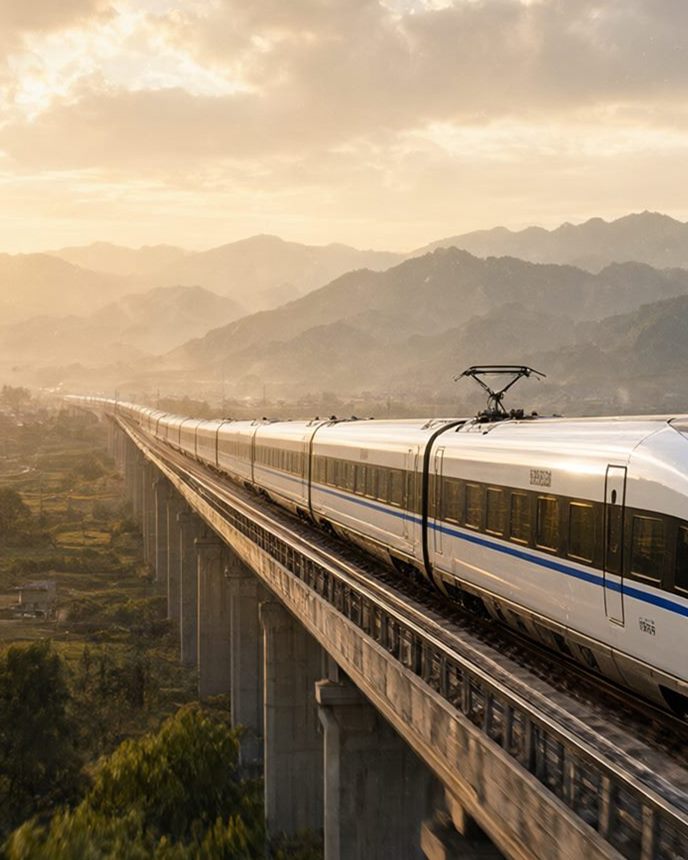
The train from Beijing South to Shanghai Hongqiao takes four hours and eighteen minutes and covers 1,318 kilometres. The flight takes two hours and ten minutes and is, on paper, the obvious choice. In practice the plane leaves from a terminal an hour outside the city, requires you there two hours early, and lands at an airport that is another forty-five minutes from where you are going. The two options arrive within twenty minutes of each other, and one of them has a dining car.
This is the whole argument. What follows is the rule we use, the stations that make it work, and the routes where the plane wins anyway.
The four-hour rule
If the train takes under about four hours, take the train and stop thinking about it. Under four hours, the check-in buffer, the transfer at both ends and the taxi queue at the arrivals hall cannot be beaten by an aircraft, whatever the timetable says. Between four and six hours it depends on the airports: a route between two city-centre stations at five hours still beats a flight between two distant airports, but only just.
Above six hours, the calculation starts to favour flying, unless the train is overnight. A soft sleeper from Xi'an to Beijing leaves in the evening and arrives at seven, which is not a transport decision but an accommodation one: you save a hotel night and a day of your trip, and you arrive with the particular grey feeling of someone who has slept on a train. We do that route by sleeper about half the time and by a 4h20 daytime train the other half, depending on whether the morning is worth anything.
Stations that do the work
The rule only holds where the stations are good, and China's are wildly uneven. Shanghai Hongqiao is the best in the country: metro lines 2, 10 and 17 underneath, the domestic airport in the same complex, and a departures hall the size of a small city with noodle shops that are genuinely all right. Beijing South is nearly as good, on lines 4 and 14, twenty minutes from the Drum Tower.
The counter-examples matter more. Xi'an North is 15 kilometres from the city wall and the metro takes forty minutes; a flight from Xi'an gets you to the airport in fifty. Guangzhou South sits in Panyu, half an hour from everything. And some cities have two stations where you want one: Shanghai's Hongqiao and Pudong stations are an hour apart, and the ticket will not tell you which is which until you look properly.
| Route | Train, station to station | Flying, terminal to terminal | Verdict |
|---|---|---|---|
| Shanghai–Hangzhou | 45–60 min, ¥73–117 | No useful flight | Rail, always |
| Beijing–Shanghai | 4h18–4h48 | 5h30 including airports | Rail, narrowly |
| Beijing–Xi'an | 4h20–4h50 | 5h15 | Rail |
| Chengdu–Chongqing | 62–75 min | No useful flight | Rail, obviously |
| Shanghai–Huangshan | 2h50 | No direct flight | Rail |
| Beijing–Urumqi | 30 h+ | 4h30 | Fly |
| Chengdu–Lhasa | 36 h | 2h20 | Fly, or take the train for the scenery |
When the plane still wins
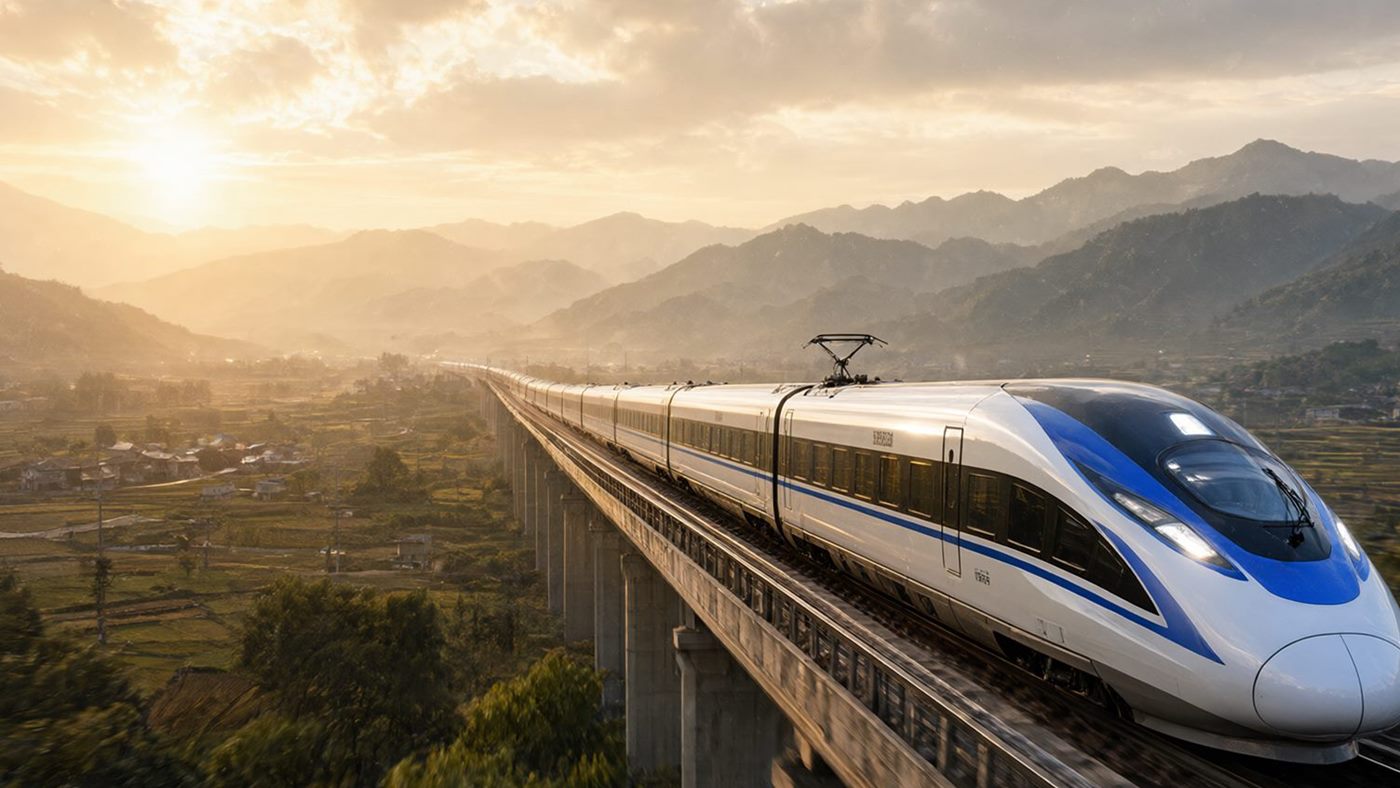
The west. Anything beyond about 1,500 kilometres in a straight line, and anything where the rail line has to go round a mountain range, belongs to the aircraft. Beijing to Urumqi is four and a half hours in the air or more than thirty on the ground. Chengdu to Lhasa is two hours twenty by air against a day and a half by rail, though the rail journey is one of the great train rides and people take it on purpose.
Domestic flying has its own tax, and it is weather rather than safety. Summer thunderstorms in the south and east produce delays measured in hours, and the airlines are candid about it in a way European carriers are not: the board goes orange, the gate changes twice, and an announcement explains that the aircraft has not left its previous airport. A high-speed train in the same weather runs late by ten minutes, because the line is graded and drained and the drivers are cautious.
The airport is a building you must arrive at early and leave late. The station is a building you walk through, which is a different and much better relationship with a journey. Field desk · Hongqiao Railway Station, Shanghai
Luggage, tickets and the last mile
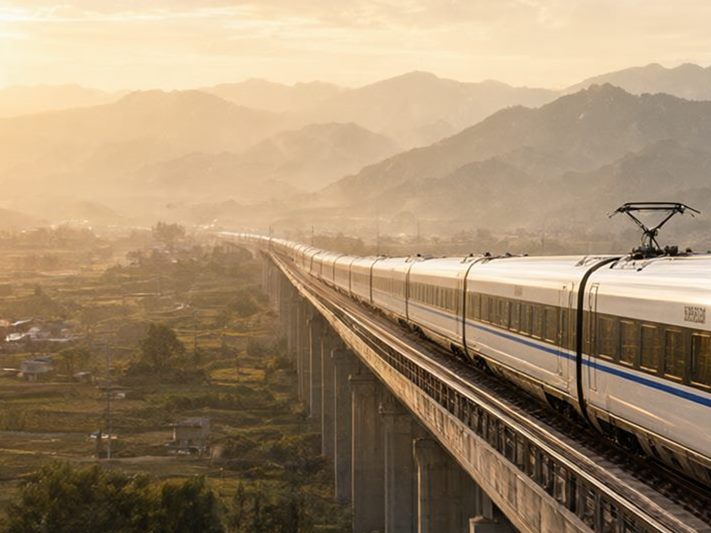
Rail wins on luggage for anyone carrying more than a cabin bag. There is no weight limit worth worrying about, no fee for a second bag, and a rack at the end of every carriage. You put the bag up yourself, you take it down yourself, and it never disappears into a hold. On a plane you will pay for the privilege and then wait twenty minutes for it at the other end.
Tickets are real-name and bought against a passport, and the passport is what gets you through the gate — there is no paper at all on most services now. Book through the official app or a booking site, collect nothing, and turn up twenty-five minutes before departure. If you miss the train, the ticket can usually be changed once on the day for a fee; if you miss the flight, the fare is gone.
Doing the comparison properly
Add the airport transfer at both ends, not the flight time. Beijing Capital to the city centre is 45–70 minutes; Daxing is longer; Shanghai Pudong is 50 minutes on the metro. Then add two hours of buffer and see what is left of the plane's advantage.
Check which station your ticket names. Cities with two terminals catch out everyone once, and the mistake costs an hour and a rebooking. Also check the arrival station: an extra 20 minutes into the centre can erase the whole saving.
Questions travellers ask
- Is it faster to fly or take the train in China?
- Under about four hours of rail time, the train is faster door to door, because airports are distant and require two hours of buffer. Between four and six hours it depends on the two stations. Above six hours, or anywhere west of Xi'an, flying usually wins, though overnight sleepers change the arithmetic entirely.
- How early should you arrive at a Chinese railway station?
- Twenty-five to thirty minutes for a high-speed service. Security takes 15–25 minutes including the passport check at the gate, and boarding starts ten minutes before departure. Big stations such as Hongqiao need the full half hour; a provincial station needs ten minutes. Trains leave on the minute.