Compare · Guilin or Zhangjiajie
By the ChinaTravel.fly field desk 7 min read Updated Nov 2026
- Days
- 4–5 vs 3–5Guilin wants a river day and a bike day
- Best months
- Apr–May · Sep–OctMay has the most water, October the clearest sky
- Cost, per day
- ¥600–900Zhangjiajie adds ¥500 in tickets and lifts
- Between them
- 6 h railVia Changsha; or 1 h 20 in the air for ¥500–900
- Rain
- 1,900 mm vs 150 daysGuilin's falls April–June; Zhangjiajie's falls all year
These are the two landscapes that sell China to people who have not been yet, and they ask completely different things of you. Guilin asks for a bicycle and an afternoon. Zhangjiajie asks for a queue, a shuttle bus and 8–10 km of stairs before lunch. Pick according to how you want to spend your legs, not which photograph you prefer.
What each place is actually like
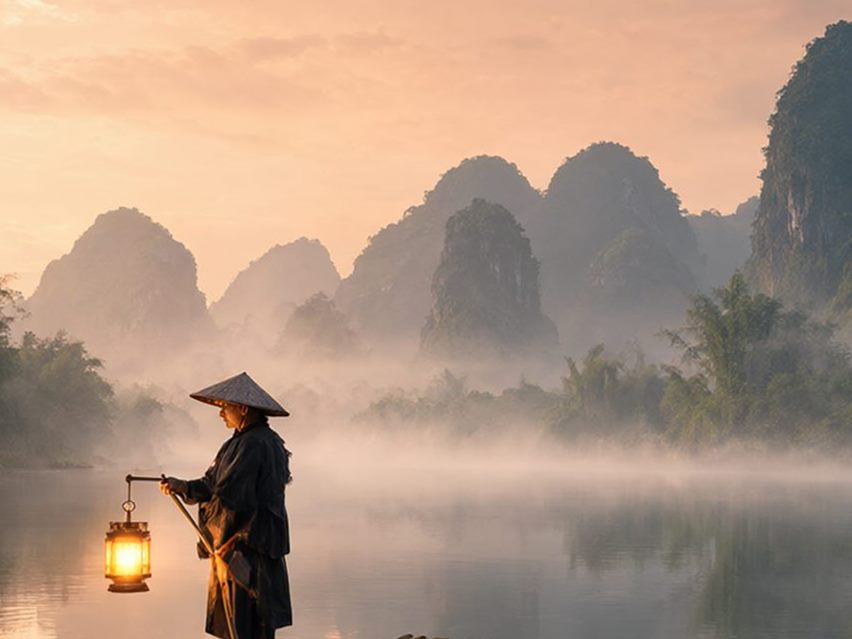
Guilin is a small city on a river everyone has seen without knowing it: the bend at Xingping is the view printed on the twenty-yuan note. The region is a limestone plain with rice fields wedged between the towers, and the good days involve two wheels, a raft and nothing booked. Yangshuo, 70 km downstream, is where most people sleep and where the towers come closest to the hotels.
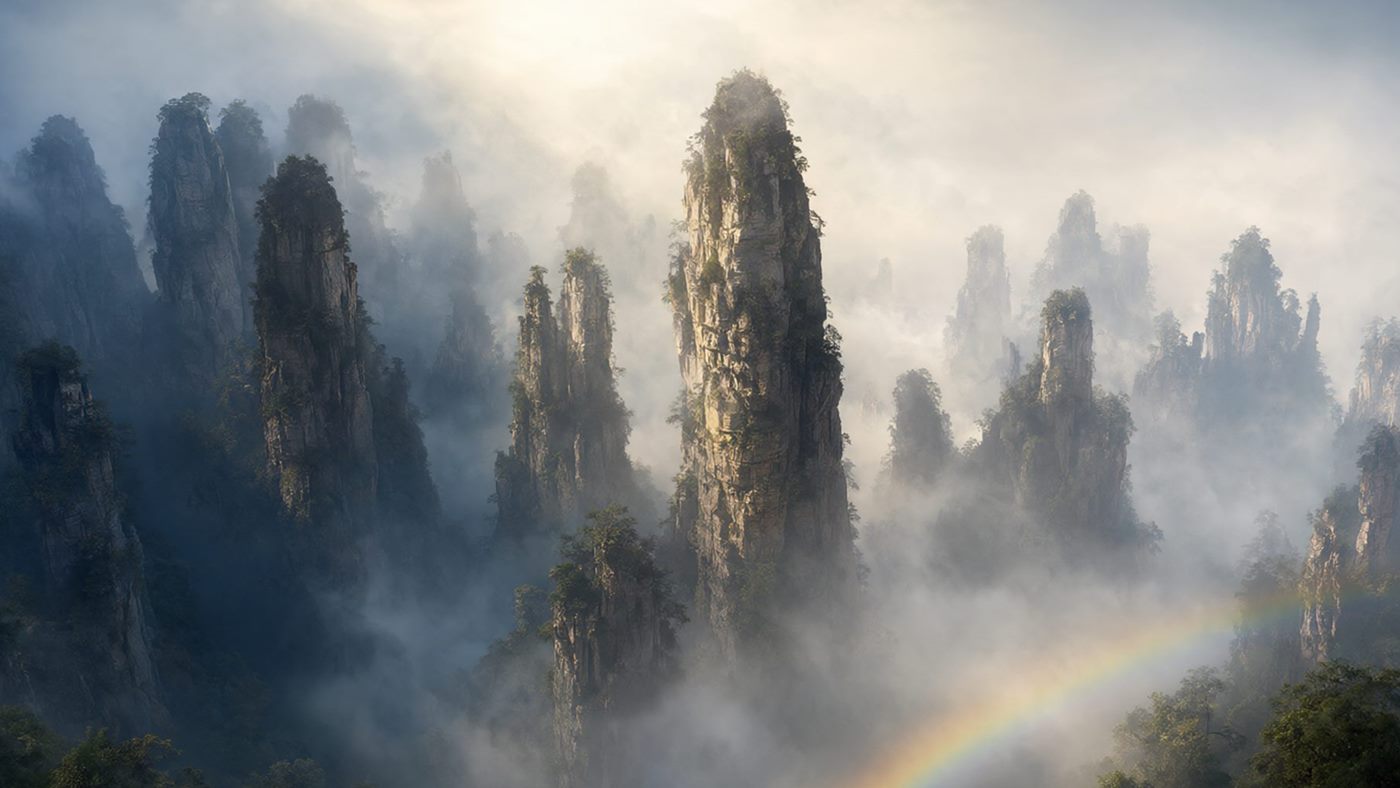
Zhangjiajie is not a single mountain but a park of 264 square kilometres, Wulingyuan, with a town at the gate and a city 35 km away that shares its name. The pillars are quartz sandstone rather than limestone, which is why they stand as columns instead of hills. The hard part is arithmetic: shuttle buses, one lift, and 40,000 people in peak season.
The comparison, in numbers
| Guilin | Zhangjiajie | |
|---|---|---|
| Time needed | 4–5 days: river, fields, one hill | 3–5 days: two full park days minimum |
| Cost, per day | ¥600–850 a day | ¥650–900, with tickets |
| Best months | April–May, September–October | April–May, September–October |
| Food | Rice noodles ¥10, beer fish, oil tea | Smoked pork, sour soup fish, sanxiaguo |
| Crowds | Cruise convoys 09:00–11:00; West Street at night | 40,000 a day in peak, one lift |
| Walking | Flat on the river: 5–8 km | 8–10 km and 500 steps, daily |
| Who it suits | Slow travel, couples, easy scenery | Hikers, photographers, vertigo |
Getting from one to the other is the argument against combining them: six hours on the rails, changing at Changsha, or 1 h 20 in the air for ¥500–900. Both are half-day moves. The park pass is ¥228 for four days including shuttles; the Bailong lift is ¥76 one way and climbs 326 metres in under two minutes, which is why the queue is the first decision of the day.
Guilin is a place to do less than you planned. Zhangjiajie is a place to do more than you want to. Field desk · Xingping jetty, 07:10
Where the comparison breaks down
Guilin lets you be lazy with the scenery. The cruise is 4.5 hours and ¥215–600, but the better morning is the Yangdi to Xingping raft: ¥150–260 for the boat rather than the seat, about ninety minutes downstream, finishing in the village instead of doubling back. Then a ¥40 bicycle through the fields, and the Laozhai climb behind Xingping if you want the view from above.
Zhangjiajie has no lazy version. Every view costs a shuttle, a staircase and a queue, and the glass bridge (¥138) is 300 metres of air with a locker for your camera. Rain divides them too: Guilin gets 1,900 mm a year, most of it April to June, when the river rises and cruises are cancelled. Zhangjiajie rains on 150 days, and the cloud that makes the photographs also erases the view.
If you only have five days
Pick one. Five days split across a six-hour transfer gives you two rushed halves and a wasted middle. Guilin for a first trip or with children: rafts, bicycles, caves and a river that does the entertaining. Zhangjiajie for anyone who wants the park properly, which means two full days inside it and a third as insurance against cloud.
The ticket arithmetic
Zhangjiajie's ¥228 pass covers four days and the shuttle buses, but not the Bailong lift at ¥76, the glass bridge at ¥138 or the Tianmen cable car at ¥278 with entry. Budget ¥500–600 per person in tickets before food.
Guilin's costs are smaller and more optional: the cruise ¥215–450, Longji's terraces ¥80 and 2.5 hours north, a bicycle ¥40 a day. The twenty-yuan view at Xingping is free, the cheapest good view in the country.
The verdict
Guilin wins the easy week, and it is the family choice. Nothing there requires fitness, the food is cheap and mild, and a nine-year-old will remember the raft and the water buffalo longer than any pillar. It is also the gentler introduction to rural China, with hotels, English menus and a river that runs on schedule.
Zhangjiajie wins for photographers, with a caveat: the picture everyone wants needs cloud in the gaps and sun on the columns, and the mountain decides. Give it three nights, shoot at opening, and treat the second morning as the real one.
Walkers should choose Zhangjiajie without hesitation, at 8–10 km and 500 steps a day. Anyone who would rather eat well and move slowly should choose Guilin, where beer fish and a bowl of rice noodles cost less than a park shuttle.
Questions travellers ask
- Can you visit Guilin and Zhangjiajie on one trip?
- Yes, but it costs a day each way: six hours of rail via Changsha, or a 1 h 20 flight for ¥500–900. With ten days, four in Guilin and three in Zhangjiajie works. With a week, choose one; the transfer would eat a day you remember.
- Which of the two is better in the rain?
- Zhangjiajie, oddly. Cloud between the pillars is the photograph, and the park runs in rain. Guilin's rain is a problem: 1,900 mm a year, most of it April to June, when the Li River rises and cruises are cancelled. For Guilin, aim at September or October.