Field guide · Harbin
By the ChinaTravel.fly field desk 7 min read Updated Nov 2026
- Opens
- 20–25 Decice thickness decides, not the calendar
- Closes
- Late Febwhen the structures start to soften
- Ticket
- ¥320–400weekends and holidays at the top
- Temperature
- -18 to -30colder at night, colder on the river
- Sunset
- 15:55late December; lights on by 16:30
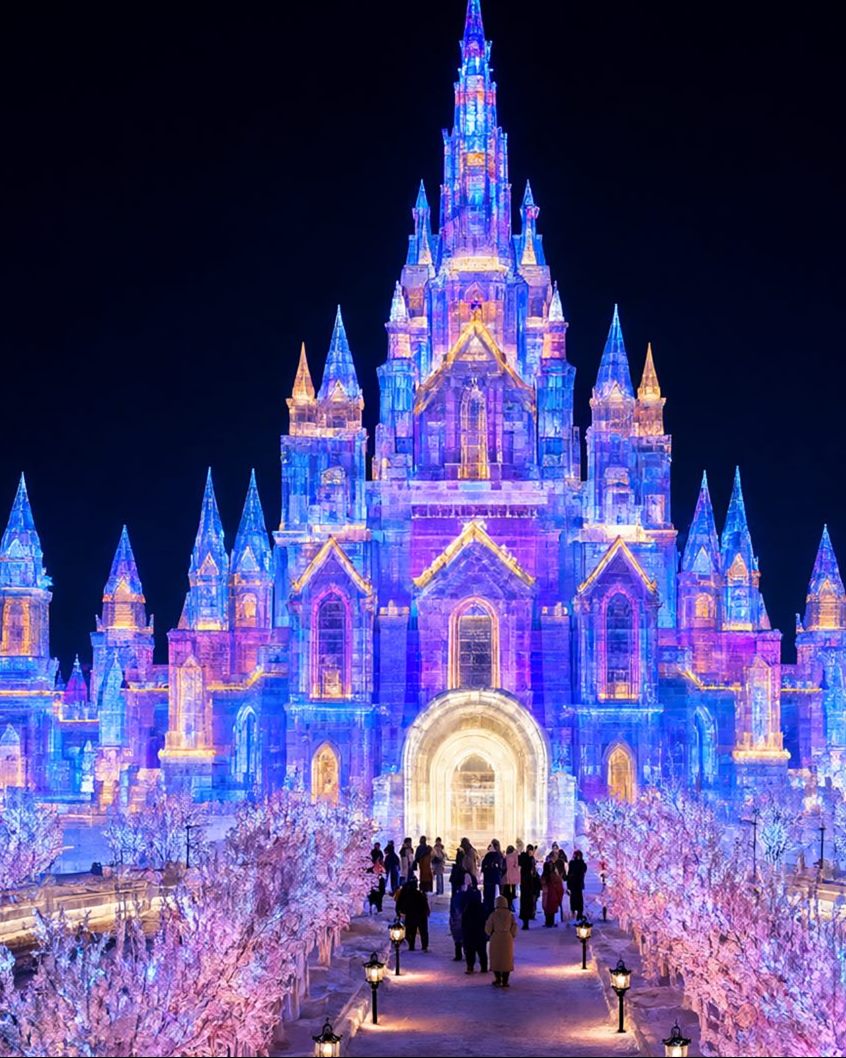
Ice and Snow World is the largest ice-architecture event on earth: about 600,000 square metres, a quarter of a million cubic metres of ice cut from the Songhua River, and a skyline built in roughly twenty-five days by several thousand workers, then demolished in March. It is a theme park with a frozen city inside it, and it costs ¥320–400 to walk in.
The scale is the point and also the problem. Everything is bigger than the photographs suggest, the distances between the big structures are longer than they look, and at -25°C you have about three hours of walking in you before the cold makes the decisions for you.
The dates are not fixed
The park opens when the ice is thick enough — usually between 20 and 25 December, occasionally a few days later if the river is slow to freeze. It closes when the structures soften, which is late February in a cold year and the first week of March in a mild one. The official festival runs 5 January to 5 February, which is peak price and peak crowd.
The best two weeks are the ones either side of New Year: full site, fewer domestic tour groups, and the coldest, clearest air. The last ten days of February are cheaper and slushier, with some sculptures fenced off for safety.
Tickets, and the 15:00 arrival
Tickets are ¥320–400 depending on the day, with a surcharge at weekends and during the festival weeks. Night-only entry after about 14:00 is slightly cheaper, and children and seniors get a discount. Buy online with a passport or at the gate; there is no legitimate resale market, and anyone at the airport selling a ticket is adding a commission to a ticket you can buy yourself.
Arrive at 15:00. In late December the sun sets at 15:55, so you get forty minutes of daylight to see the structures as sculpture — white, blue-shadowed, absolutely enormous — and then the LEDs come on at about 16:30 and the same buildings turn into something else. By 18:00 the tour buses have unloaded, and by 20:30 they have reloaded and gone, taking half the crowd with them.
The ice slides are included in the ticket and the queue runs twenty to sixty minutes; a few of the bigger ones carry a small extra charge. The big structures are worth walking through twice, once in daylight and once lit. There is a heated food hall in the middle of the site and it is the correct place to be at 18:30 with numb hands.
Dressing for minus twenty-five
- Boots with a felt liner and a thick sole. Not fashion boots. The cold comes up through the sole before it reaches your toes. Buy or hire in Harbin for ¥100–200.
- Two pairs of gloves. A thin liner you can use a phone with, and a mitt over the top. You will take the mitt off forty times.
- A hat that covers the ears, and a buff. Ears are the first thing to hurt and the last thing to recover.
- Thermal base layer, fleece, down. Three layers, loose enough to trap air. Tight jeans are a mistake at this temperature.
- Heat packs. Two in the pockets, one in each boot, one taped to the back of the phone if you plan to photograph at night.
- No metal against skin. Earrings, watch straps, glasses frames: all of them conduct.
Phones die at -20°C in about ten minutes outdoors. Keep the phone in an inside pocket against your body, carry a power bank in the same pocket, and accept that the battery will read 40 per cent and then shut down. Cameras want two batteries, both warm, and a plastic bag to seal the lens when you come back inside so the condensation lands on the bag rather than the glass.
What is worth the money
- Ice and Snow World, yes. Three hours, once, arriving at 15:00. It is the reason you came.
- Sun Island snow sculpture expo, yes, in daylight. ¥200–330, open 9:00–17:00. Carved snow, not lit ice, and it needs the sun.
- Zhaolin Park ice lanterns, maybe. Small, central, forty-five minutes. Free in some years, ¥30–50 in others.
- Central Street, free. 1.4 kilometres of 1920s stone buildings, and the best place to be at -25 because every second door is a shop.
- The frozen river, free. Walk across it. The ice is a metre thick by January and the crossing takes ten minutes.
- The Siberian tiger park, no. The ethics are poor, the bus is a cage, and the cats are bored.
Harbin in January is not a city you endure. It is a city that has decided the cold is the attraction, and built a temporary skyline to prove it. Field desk · Daoli, Harbin
Getting there and getting warm
The airport is 35 kilometres out: the bus is ¥20 and takes 45 minutes, a taxi is ¥110–140. Metro Line 2 runs to Sun Island and Ice and Snow World for ¥2–6 and is the only warm way to arrive. In town, taxis are cheap and impossible to find at 21:00 on a festival night, so use the metro or a ride-hailing app and wait indoors until the car is at the door.
Yabuli, the ski resort, is two hours by high-speed train if you want a second winter activity. The China Snow Town is five hours by road and best overnight. Both are better in the second half of January, when the snow base is deep and the holiday crowds have gone home.
Questions travellers ask
- When does Harbin Ice and Snow World open?
- Usually between 20 and 25 December, when the Songhua River ice reaches about 30 centimetres. It closes in late February or early March as the structures soften. The official festival runs 5 January to 5 February, which is the busiest and most expensive fortnight.
- How cold is Harbin in January?
- Daytime around -13 to -18°C, night -22 to -30°C, and colder on the river and at the ice park. Wind makes it feel ten degrees worse. With proper boots, a down jacket, two pairs of gloves and a hat, three hours outdoors is comfortable.
- Is the Harbin ice festival worth the ticket price?
- Yes, once, if you time the arrival for 15:00 so you see the site in daylight and then lit. Three hours is enough. Skip the tiger park and put the money towards Sun Island's snow sculptures, which need daylight and are the other half of the festival.