Field guide · Beijing hutongs
By the ChinaTravel.fly field desk 6 min read Updated Nov 2026
- Start
- Gulou Dajiemetro Line 8, exit A
- Distance
- 4 kmflat, no stairs, one park gate
- Time
- 4 hours7:00–11:00 is the window
- Budget
- ¥60–100six stops and a sit-down lunch
- Bring
- Tissuesand a working Alipay account
Beijing breakfast is not a restaurant meal. It is a cart, a window, a plastic stool, and a queue of people in slippers who know exactly what they are doing. The northern hutongs still work this way because they are still residential: 200,000 people live in these lanes, and the food follows the residents rather than the other way round.
This walk runs four kilometres from the Drum Tower to Andingmen, eats five or six times, and costs ¥60–100. Start at seven. Everything worth eating is finished by half nine.
The route, in five legs
- Gulou Dajie to Yandai Xiejie, 15 minutes. Out of exit A with the Drum Tower on your right, then west along the willow-lined lane to the Silver Ingot Bridge. At 7:15 it belongs to dog walkers and one man selling jianbing.
- Houhai east shore to Baochao Hutong, 20 minutes. North at the bridge, then away from the lake. The lanes here are residential, and the breakfast windows serve neighbours rather than visitors.
- Baochao to Ju'er Hutong, 25 minutes. Cross the souvenir street quickly and turn east. Ju'er is quiet, has two small cafés and a noodle shop that opens at ten.
- Ju'er to Guozijian Street, 30 minutes. The only street in Beijing lined with ancient cypresses on both sides. The Confucius Temple at the end costs ¥30 and opens at 8:30.
- Guozijian to Wudaoying to Andingmen, 40 minutes. North across the ring road into a lane of coffee places, then east to Andingmen on Line 2.
First stop: whichever cart has a queue
The rule is the same everywhere in the city: join the longest queue of people wearing slippers. A jianbing — the savoury crêpe with egg, coriander, chilli paste and a sheet of fried dough folded inside — costs ¥8–15 and takes ninety seconds to make. Youtiao are ¥3–4 a pair, hot soy milk ¥3–5, a steamed pork bun ¥2–4. Nothing opens before 6:30 and the carts are gone by 9:30, which is the entire reason this walk starts early.
Cash is technically accepted and practically unwelcome. Set up Alipay or WeChat Pay before you arrive, or bring small notes and expect a shrug and a wait while someone finds change.
The breakfast canon
- Jianbing (煎饼), ¥8–15. Buckwheat and wheat batter spread on a hot plate, egg cracked on top, spring onion, coriander, chilli, crisp fried dough. Ask for 加蛋 for a second egg, about ¥2.
- Youtiao and doujiang (油条 · 豆浆), ¥6–9. Fried dough sticks and hot soy milk, sweet or savoury. You dip; you do not sip.
- Baozi (包子), ¥2–4 each. Steamed buns, pork or vegetable. The best ones come from a window with a queue down the pavement and a stack of bamboo steamers taller than the person serving.
- Chaogan (炒肝), ¥15–25. Pork liver and intestine in a thick garlicky gravy, eaten with buns at eight in the morning by people who have earned it.
- Lurou huoshao (卤煮火烧), ¥25–35. Pork offal and soaked flatbread in a dark broth. A winter dish that keeps you warm until dinner.
- Tanghulu (糖葫芦), ¥8–15. Candied hawthorn on a stick, sold from October. In summer the syrup runs and the whole thing is a mistake.
Two things that divide opinion
Douzhi (豆汁) is fermented mung bean liquid, grey-green, sour, served hot with a plate of pickles. It is the most divisive breakfast in China and the test is simple: smell it, and if it does not make you step back, try a mouthful. ¥5–8. Nobody will be offended if you leave the bowl.
The second is baodu (爆肚), blanched tripe dipped in sesame and coriander sauce, ¥30–45 a plate. It is a lunch dish rather than a breakfast one, and the good versions are boiled for a precise number of seconds by shops that have done nothing else for forty years. Order it sitting down, with a beer, at eleven.
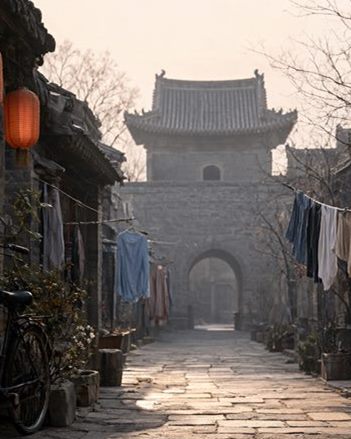
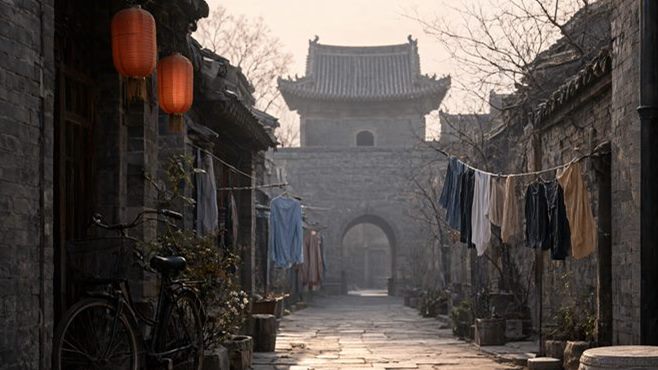
A hutong is not a museum of old Beijing. It is a working neighbourhood with a very good breakfast and no patience for anyone who blocks the lane to photograph a bicycle. Field desk · Dongcheng, Beijing
Sitting down at eleven
By eleven the carts have gone and the restaurants are opening. Zhajiangmian — thick wheat noodles with fermented bean sauce, pork and raw vegetables — is ¥18–28 and the correct thing to order in a shop with plastic stools and a television on the wall. Add blanched greens, ¥12–18, and a bottle of local beer, ¥8–12.
If you would rather have a courtyard, the lanes north of the Drum Tower hold several: ¥60–100 a head for a set lunch, bookings wise at weekends, and an English menu that is usually worse than the Chinese one. Point at what the next table is eating. It is what everyone does.
Pavement rules
- Scooters are silent. They use the lane, the pavement and occasionally the doorway. Step aside rather than brace.
- Toilets exist. Public ones every few hundred metres, marked in English, generally clean, never stocked. Carry tissues.
- The brick is uneven. Original slabs, lifted by tree roots, wet in the morning. Trainers with a sole, not sandals.
- Dogs are off the lead. Small, loud, entirely uninterested in you.
Finish at Andingmen with an hour to spare and walk the moat instead of taking the metro. The wall of the old city ran here, the willows are a hundred years old, and the water is full of men with fishing rods who have caught nothing since 1998.
Questions travellers ask
- What time should you start a hutong food walk?
- Seven in the morning. The breakfast carts open around 6:30 and are gone by 9:30, and the lanes are at their best before the shops open. By eleven you have moved on to noodles, and by noon the tour groups have arrived at the Drum Tower.
- Is hutong street food safe to eat?
- Generally yes, if it is cooked in front of you and busy. Choose queues, eat hot food hot, and skip anything that has been sitting uncovered. The jianbing, buns and fried dough are all made to order, which makes them the safest and also the best.
- Do you need cash in the Beijing hutongs?
- Almost never. Alipay and WeChat Pay are accepted by every cart, window and restaurant, including the ¥8 jianbing. Set either up before you arrive, link an international card, and keep ¥100 in small notes as backup for the occasional older vendor.