Practical · Alone
By the ChinaTravel.fly field desk 7 min read Updated Nov 2026

- Safety
- Very highviolent crime is rare; traffic is the real risk
- English
- Limitedhotels yes, restaurants and taxis rarely
- Metro
- to ≈23:00then night buses or ride-hailing
- Dining
- Easynoodle shops and hotpot suit one
- Tibet
- Group onlypermits require an agency and a guide
The first two days are admin: a SIM, a metro card, a hotel that learns your name. By the third you have a routine, and the routine is the thing that makes a country feel like yours.
We travel solo here often, and the honest summary is this: you will not be in danger, you will occasionally be lonely, and you will eat better than you expect.
Safety, in plain terms
Street crime is genuinely uncommon. Phones are not snatched from hands in the way they are in some European capitals, and a woman walking home at 11pm through a Chinese city is doing something unremarkable. The police are numerous, visible and, in our experience, patient with foreigners who have lost a passport.
The real risk is traffic. Electric scooters are silent, fast, and come at you from the wrong direction on the pavement. Cross with the crowd, look twice in both directions, and never assume a turning car has seen you. Add altitude, heat and the occasional bad air day to the list of things that will actually affect your health.
For women travelling alone, the picture is broadly good: staring is common and mostly harmless, photography without asking happens, and late-night street harassment is rare but not unknown. The usual precautions apply, and a DiDi booked through the app is a reasonable substitute for a walk at midnight.
The scams worth knowing
| Situation | How it starts | What to do |
|---|---|---|
| Tea ceremony | A friendly student invites you to a traditional tea tasting near Wangfujing | Leave before the bill; it runs to ¥1,000+ |
| Art student | A young person wants to practise English, then shows you a gallery | Decline; the paintings are priced per square metre |
| Airport taxi | A driver says the meter is broken and quotes a flat fare | Use the official queue or the DiDi app |
| Hotel closed | A driver insists your hotel is closed or full | Call the hotel; do not follow the alternative |
| Fake monk | A robed man offers a blessing and a bracelet, then asks for money | Return the bracelet, walk away |
| Tourist market pricing | No prices displayed, quoted three times the local rate | Ask the price first, walk away once, then decide |
None of this is pervasive. Most transactions are exactly what they appear to be, and the scams cluster around the handful of streets where tourists concentrate. Learn to say no thank you in Chinese, 不用, and keep walking.
Language, without fluency
Outside hotels and the odd coffee shop, English is scarce. This is not hostility, it is arithmetic: very few Chinese adults have had a reason to learn it. A translation app with a camera handles menus, and a screenshot of your hotel address in Chinese handles taxi drivers. Learn four phrases and use them badly: hello, thank you, how much, not needed.
The most useful habit is to photograph the Chinese name and address of every place you plan to return to, and to keep the hotel's business card in your pocket. When you are lost, hand the phone to a shopkeeper and point. It works almost every time.
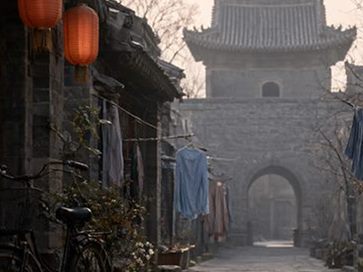
The loneliness in China is not the dangerous kind. It is the kind that arrives at 7pm in a restaurant full of families, and leaves the moment you order the second dish. Field desk · Xi'an, a Tuesday
Eating alone, without eating badly
China is a good country for the solo diner, provided you choose the right rooms. Noodle shops, dumpling houses and breakfast stalls are built for one person, and nobody will look at you twice. Hotpot is a social meal, but a solo pot is normal in Chongqing; ask for 一位, one person, and a smaller pot.
Restaurants with round tables and shared dishes are harder. Order two dishes instead of four, expect to overeat, and skip the theatre of the set menu. There is no tipping, service is brisk rather than warm, and you can eat at 5:30pm without embarrassment because everyone else does. Takeaway through the apps is cheap and works in any hotel room.
Night transport and the 23:00 problem
Metros in the big cities stop between about 22:30 and 23:15, earlier on some lines, and the last train is genuinely the last train. After that it is night buses, which are cheap and incomprehensible, or ride-hailing through DiDi, which is cheap, tracked and the sensible default. Licensed taxis are fine; unlicensed ones that approach you at stations are not.
Several cities run women-only carriages at one end of the train during peak hours. They are optional and enforced loosely. Stations empty out quickly after the last train, and the taxi rank outside is where the touts work.
The solo rhythm that works
Three nights in a place beats one. Hostels in the big cities are sociable and cheap, with dorm beds at ¥80–150; mid-range hotels charge ¥350–600 for a room that would take two. Day tours are a way to meet people and a way to be herded; private guides cost ¥400–800 a day and are worth it once, in a place whose language you cannot read.
Tibet is the exception to all of this. Foreign travellers cannot move independently; a permit requires a licensed agency, a guide and an itinerary, so solo travel there means joining a small group. Everywhere else, the country is unusually easy to do on your own.
The card in your pocket
Hotel card, in Chinese. Every hotel has one. Take two. One in the wallet, one in the phone case.
Offline maps and screenshots. Download the city before you leave wifi. A metro map image is more useful than an app that will not load underground.
¥200 in small notes. Enough for a taxi, a bowl of noodles and a toilet with an attendant, on the day the phone dies.
Questions travellers ask
- Is China safe for a woman travelling alone?
- Broadly yes. Violent crime is rare and public transport is safe at most hours. Expect staring and occasional unsolicited photography, and take the usual care after midnight. Ride-hailing is tracked and cheap, which removes most of the awkward night walks. Reports from solo women are generally positive.
- Can I travel independently in Tibet?
- No. Foreign passport holders need a Tibet Tourism Bureau permit, obtained through a licensed agency, and must be accompanied by a guide for the whole trip. Solo travellers join small group tours. The permit is checked on arrival by air or rail, and travelling without one is not possible.
- Do I need to speak Chinese to travel alone?
- No, but you need a translation app with camera mode and a data connection. English is uncommon outside hotels, and taxi drivers will not read pinyin. Photograph addresses in Chinese, learn four phrases, and expect most conversations to happen through a screen.