Field guide · Zhangjiajie
By the ChinaTravel.fly field desk 7 min read Updated Nov 2026
- Park ticket
- ¥224four days, all shuttles included
- Bailong elevator
- ¥72326 m, 66 seconds, one way
- Cable cars
- ¥76Tianzi and Yangjiajie, each way
- Gates
- 4Forest Park, Wulingyuan, Tianzi, Yangjiajie
- Pillars
- 3,000+quartz sandstone, up to 300 m
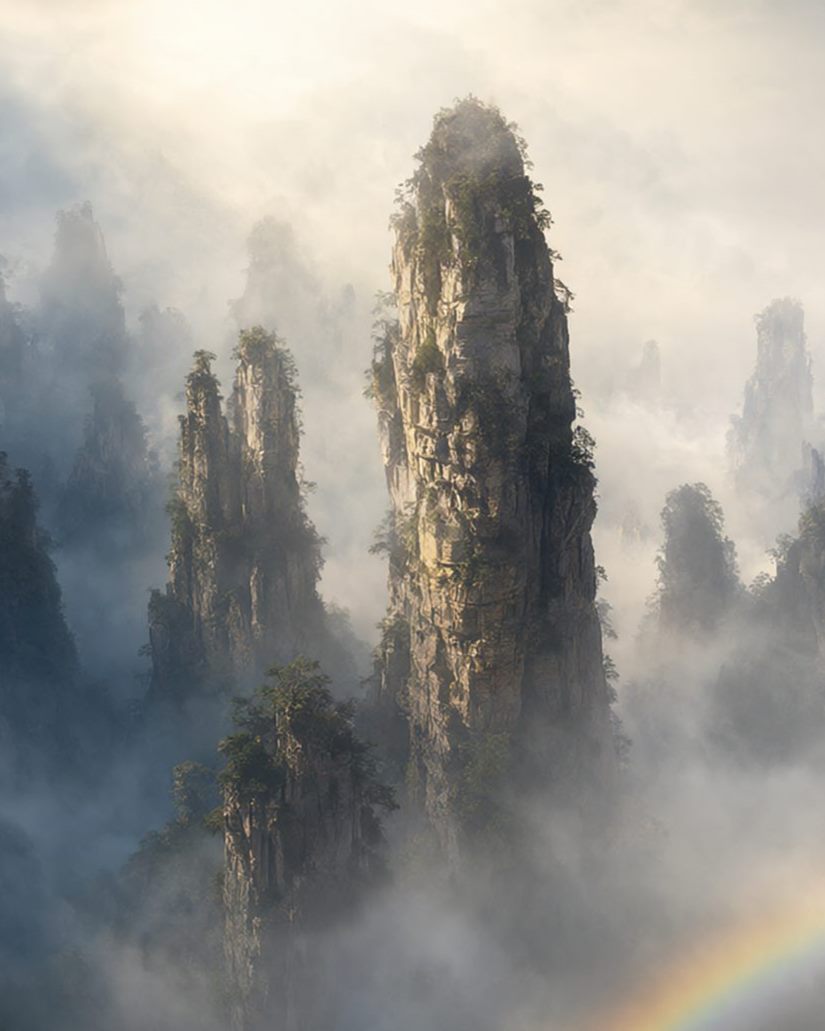
The place everyone calls Zhangjiajie is three separate attractions that share an airport. Wulingyuan Scenic Area is the pillars, the ticket at ¥224 and the reason you came. Tianmen Mountain is a 1,500-metre limestone massif on the edge of Zhangjiajie city, with its own ¥275 ticket and a cable car 7,455 metres long. The Grand Canyon glass bridge is a third, at ¥138, forty minutes away.
This guide is about Wulingyuan, because that is where the two days go. The core ticket covers four days, all internal shuttles and four gates, is bought against a passport, and is activated by a face scan. It does not cover the elevator, the cable cars or the mini train. Budget ¥350–450 per person for transport inside the park over two days, on top of the ¥224.
The gates, and why they matter
Four gates lead in, and the one you choose decides your first hour. Forest Park gate, in the south, is the classic entrance and puts you at the start of Golden Whip Stream. Wulingyuan gate, in the east, is where the town's hotels are and where most tours enter, which makes it the busiest between 7:30 and 9:00. Tianzi gate in the north and Yangjiajie gate in the west are quieter and useful for a second day.
Staying in Wulingyuan town rather than Zhangjiajie city saves an hour each way. The city is 35 kilometres away and its tour buses leave at 7:30 to arrive at 8:30, which is already too late for the elevator.
Day one: Golden Whip to Yuanjiajie
Enter at Forest Park gate at 7:00. Golden Whip Stream runs 7.5 kilometres along the valley floor, flat the whole way, and takes two and a half to three hours at a walk. It is the best thing in the park and the least photographed, because everyone takes the elevator up and never comes down to the water. Monkeys, herons, and pillars going up 200 metres on both sides.
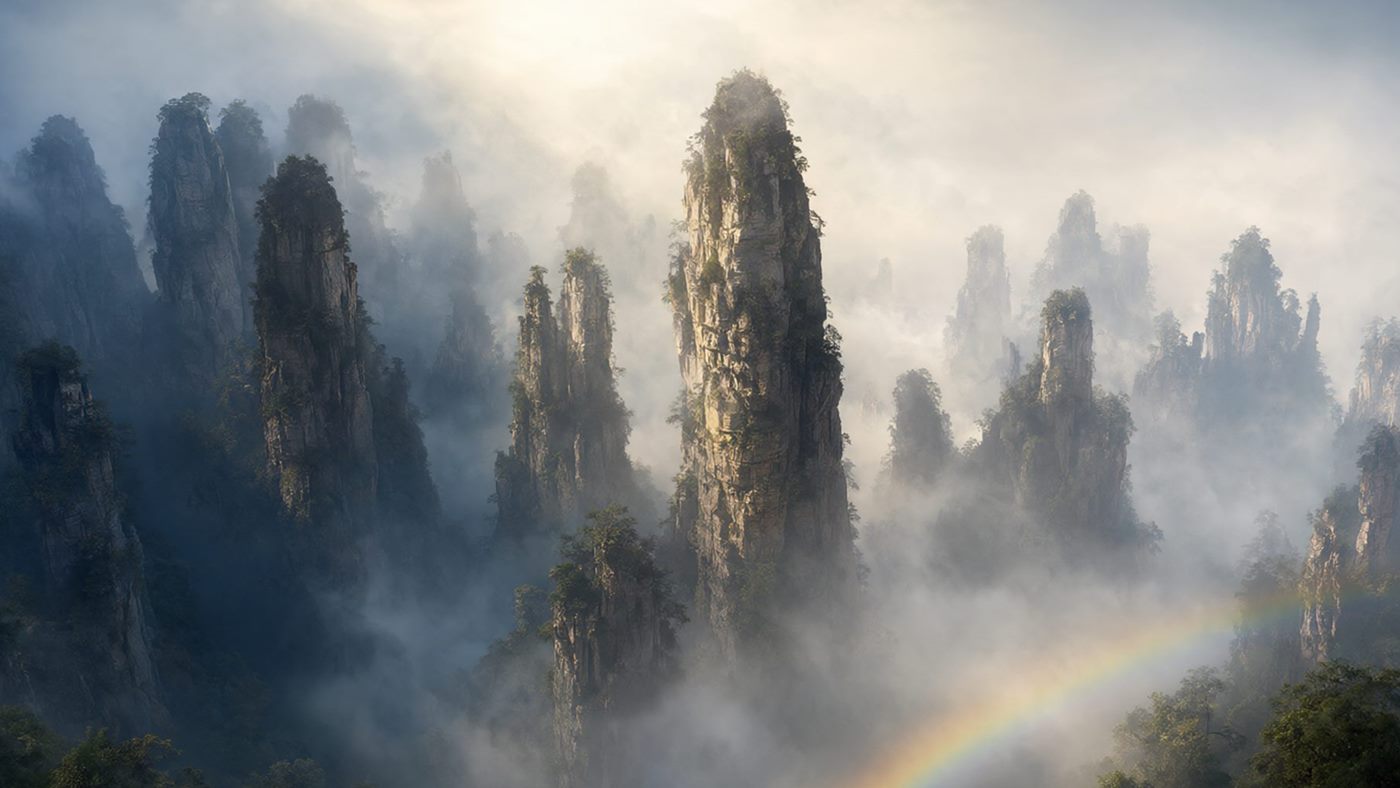
At the end of the stream, the Bailong elevator lifts you 326 metres in 66 seconds in a glass box bolted to a cliff. At 9:30 the queue is ten minutes. At 11:00 it is ninety. Then the shuttle to Yuanjiajie, the ridge with the Avatar Hallelujah Mountain and the First Bridge Under Heaven, a natural arch 40 metres long that everyone walks over without noticing. Two hours there, then a shuttle to Tianzi Mountain and the cable car down.
Day two: Yangjiajie and Tianzi
Enter at Wulingyuan gate, take the shuttle to the Yangjiajie cable car, and ride up into the quietest of the three areas. The ridge walk from the cable car to Tianzi takes about two hours, passes the Natural Great Wall — a fin of rock with a walkway along its top — and delivers the pillar views without the railings and selfie queues of Yuanjiajie.
Finish on Tianzi Mountain: Helong Park, the Imperial Writing Brush peaks, and the Western Sea viewpoint, which is the one that looks like a painting because it is the one that was painted. Cable car down ¥76, or 3,000 steps if your knees are better than your patience.
Elevator, cable car, or your legs
| Way up | Cost | Time | Verdict |
|---|---|---|---|
| Bailong elevator | ¥72 | 66 sec | Spectacle and shortcut; queue after 9:30 |
| Tianzi cable car | ¥76 | 8 min | 2,084 m long; best descent at dusk |
| Yangjiajie cable car | ¥76 | 6 min | Quietest of the three, best for day two |
| Ten-mile gallery train | ¥38 | 5 min | Walkable in 25 minutes; skip it |
| On foot | free | 1–2 h | 3,000 steps up; no queue, no view until the top |
The honest advice is to pay for one ascent and walk one descent. The stairs are steep, paved and endless, and going down 3,000 of them at the end of a day is a genuine athletic event. Going up them at 7:30, in cool air, with nobody else on the path, is one of the better hours the park offers.
In Wulingyuan the mountains are not the problem. Forty thousand people arriving at the same elevator at the same hour are the problem, and a 6:40 alarm solves it. Field desk · Wulingyuan, Hunan
Crowds, weather, and when it is empty
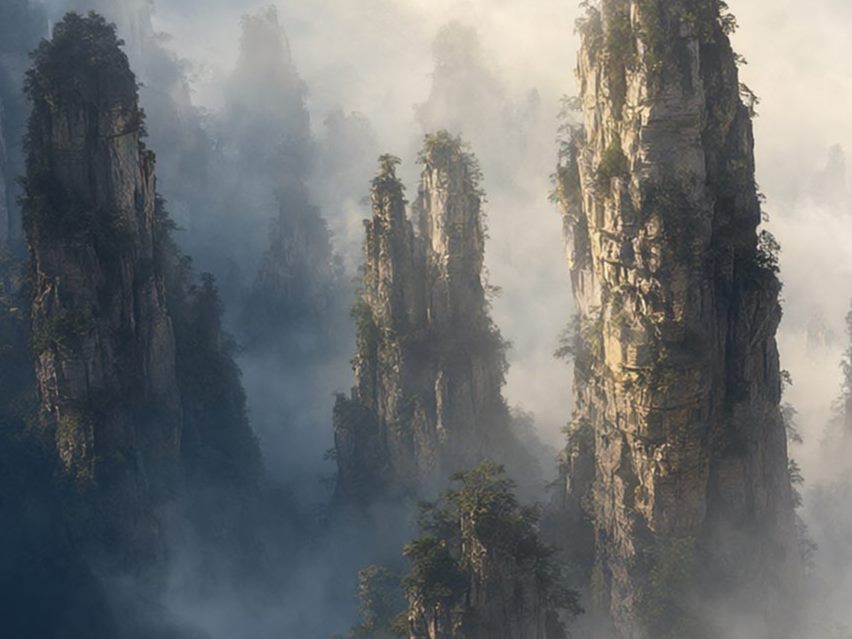
The park can take 40,000 people a day and does on public holidays. Weekends in April, May, September and October are busy; the first week of October is a stampede. Rain is your friend: the cloud sea forms after a wet night and the pillars appear and disappear in it, which is the photograph everyone wants and almost nobody plans for.
Winter brings ice on the steps, closed upper trails and very few visitors. June to August is hot, wet and crowded, with afternoon thunderstorms that shut the cable cars. The best window is late April to May and September to early November: 15–25°C, decent visibility, and enough rain to make the cloud.
If you have a third day
Tianmen Mountain, in the city, is a separate day at ¥275: the long cable car, the 999 steps to the Heaven's Gate arch, and a glass walkway bolted to the cliff. It is more theme park than wilderness and it is genuinely spectacular. Baofeng Lake, ¥96, is a two-hour boat trip between pillars and a good rest day. Fenghuang, the riverside town, is two hours west and best overnight.
Skip the glass bridge unless the idea of queueing an hour for 400 metres of transparency appeals. Put the money towards a second morning on the ridge instead, when the cloud is still in the valleys and the first shuttle has not yet arrived.
Questions travellers ask
- How many days do you need in Zhangjiajie?
- Two full days for Wulingyuan, staying in Wulingyuan town rather than the city. Three days adds Tianmen Mountain or a rest day at Baofeng Lake. The ¥224 ticket is valid for four days, so a third day in the park costs nothing extra beyond the cable cars.
- Is the Bailong elevator worth it?
- Yes, once, for the 66-second glass ride up a cliff. It is also the fastest way from Golden Whip Stream to Yuanjiajie. Go before 9:30 or after 15:00, when the queue drops from ninety minutes to ten, or walk the 3,000 steps instead.
- What is the best time to visit Zhangjiajie?
- Late April to May, or September to early October. Temperatures sit at 15–25°C, the cloud sea forms after rain, and the trails are manageable. Avoid the first week of October and Chinese New Year entirely, and expect ice and closed upper paths from December to February.