Field notes · No. 20 · Zhangjiajie
By the ChinaTravel.fly field desk 7 min read Updated Nov 2026
- Park ticket
- ¥228four days, shuttle buses included
- Gate
- 07:006:45 in July and August
- Cable car
- ¥72one way, Tianzi or Bailong
- Cloud window
- 08:00–09:30after overnight rain, light wind
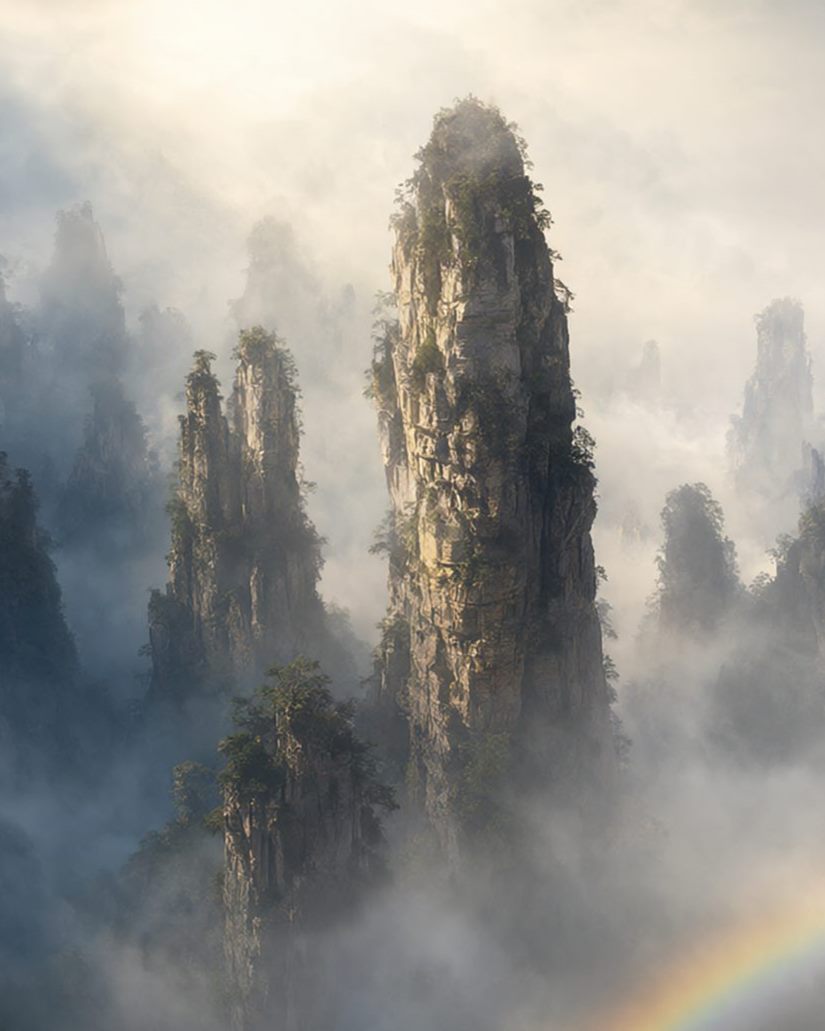
There are 3,000 sandstone pillars in Zhangjiajie and on most days you can see about nine of them. The rest are in cloud, which is the point: the landscape only works when half of it is missing. What visitors call the sea of cloud — yunhai — is not weather you wait for passively. It has a schedule, and the schedule is mostly about the night before.
The forecast that actually matters
Ignore the sunrise time. Look at three numbers: whether it rained after midnight, the wind at 6am, and the gap between the daytime high and the overnight low. Rain puts moisture in the gorges, a drop of eight degrees or more condenses it, and wind above about 15 km/h stirs it into nothing. Get all three and the cloud will sit in the valleys between 7:00 and 9:30, which is exactly when the park is emptiest.
That is why the good months are April to June and September to November. Summer gives you rain without the drop; winter gives you the drop without the moisture. The park claims mist on 200 days a year and that is believable. What is not guaranteed is the vertical kind — the kind that fills a gorge to the height of your knees while the pillars stand out of it.
Which rim, and which gate
Go to Tianzi Mountain. The overlooks at Helong Park and the West Sea Stone Forest sit above the pillars rather than level with them, so the cloud reads as sea and the stone as islands. Yuanjiajie, where the Avatar pillar stands, is more spectacular and much worse: the rim is a railed platform, the queue is a rope line, and the view is the back of somebody's phone.
Take the Wulingyuan gate rather than the Forest Park gate if Tianzi is the plan. The shuttle from Wulingyuan reaches the Tianzi cable car in twenty minutes and the cable car opens at 7:30. Be at the gate at 6:45 for the first bus. The Bailong elevator is the famous one, but it climbs the wrong side for cloud, and at eight in the morning the queue is forty minutes long.
At eight you are on the rim with perhaps thirty people, most of them Chinese photographers with tripods and a flask of tea. At 9:30 the first tour group arrives with a flag and a loudspeaker. By ten the platform is a queue with a view.
The cloud does not make the place quiet. It makes the noise come from below, which from a distance is the same thing. Field desk · Wulingyuan, Hunan
The crowd below
From the rim you hear the valley before you see it. The Golden Whip Stream path runs along the floor between the pillars, and by 8:30 it is a line of people in yellow ponchos. The sound of them — shoes on wet stone, a guide's speaker, a child — rises through the mist like a radio left on in another room.
The mist does something useful to that noise. It softens it, removes the direction, and turns a crowd into weather. That is the honest pleasure of the cloud sea: you are not alone in the park, you are alone on the rim, which is a different and better thing.
Below, at the same time, the macaques are working the path for snacks, the plank walk at the narrow section has a queue, and the elevator is lifting 1,200 people an hour up the cliff. None of it is visible from Tianzi. All of it is audible.
Standing still for forty minutes
The cloud moves in two ways. It rises slowly, filling the gaps between the pillars from the bottom, or it drains all at once and the gorge appears. Both take about twenty minutes and both are worth standing in the rain for. Bring a cloth for the lens: the temperature difference fogs a camera the moment the cap comes off, and a 70–200mm is the only lens that does anything here. Wide angle turns the pillars into grey sticks.
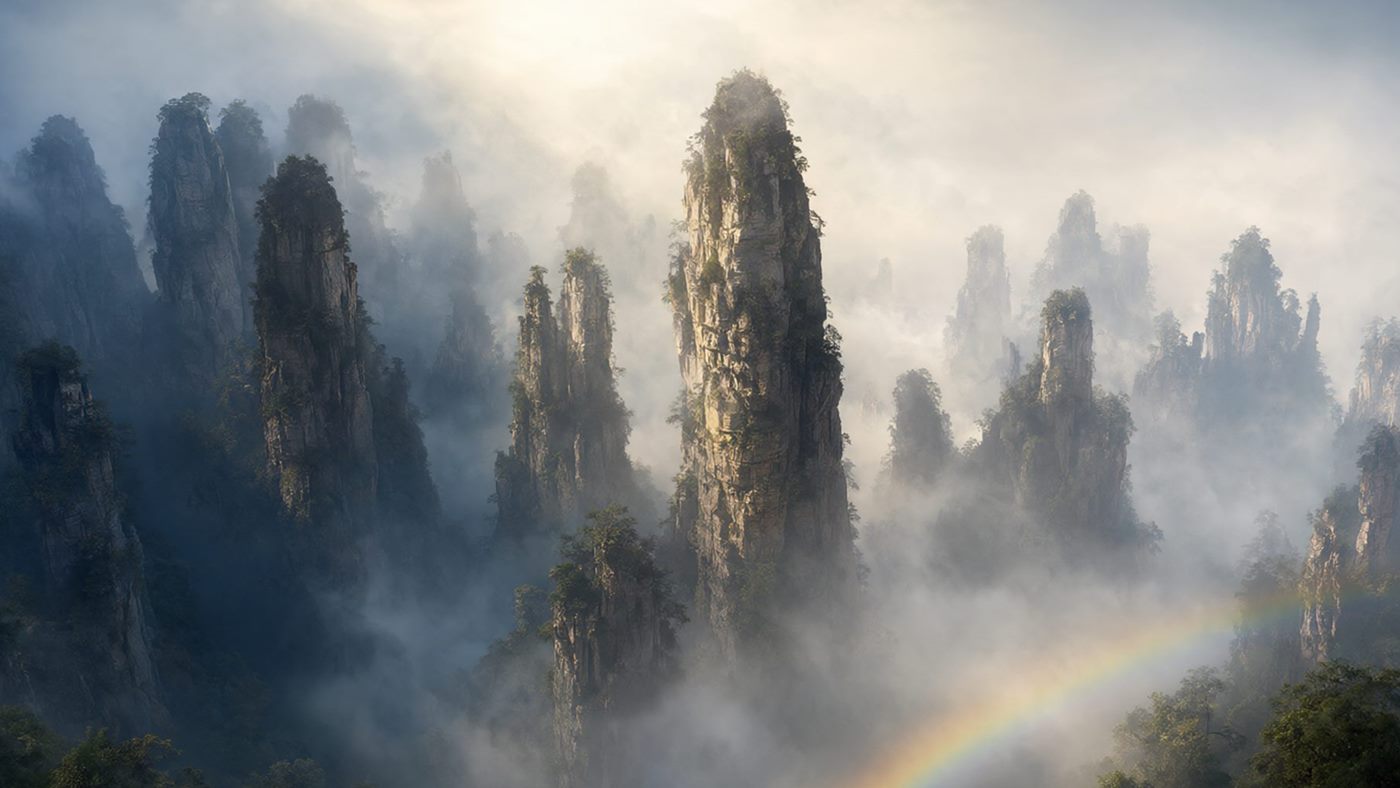
The rainbow in the photograph happens when the sun comes out while the mist is still up, usually around 8:30 and usually for four or five minutes. Nobody plans it. Everybody on the rim gets it, which is the closest thing to fairness the park offers.
Tickets and timings
The four-day park ticket is ¥228 and covers the shuttle buses. The Tianzi cable car is ¥72 one way, the Bailong elevator ¥72, the mini train in the Ten-Mile Gallery ¥38. Bring the passport; the gate scans it.
Gates open at 7:00, earlier in the July–August peak. The last shuttle down leaves around 18:00 and staff start clearing the rim at 17:30.
You cannot sleep inside the core area. The nearest beds are in Wulingyuan town, twenty minutes from the gate, or in the villages outside the Forest Park gate. Both mean a 6:15 alarm.
Questions travellers ask
- When is the best time to see the cloud sea at Zhangjiajie?
- April to June and September to November, after overnight rain and with little wind. Be at the gate by 6:45 and on the Tianzi rim by 8:00. The cloud usually holds until 9:30 and is gone by 10:30. Check the overnight low, not the sunrise forecast.
- Can you stay inside Zhangjiajie park?
- No. Hotels and guesthouses were moved out of the core area years ago and camping is not allowed. Stay in Wulingyuan town, twenty minutes from the gate, or outside the Forest Park gate, and take the first shuttle. The 7:00 gate is early enough.