Field notes · No. 21 · Dunhuang
By the ChinaTravel.fly field desk 7 min read Updated Nov 2026
- Entry
- ¥120high season, shuttle included
- Climb
- 20 minwooden ladder, 200 m of sand
- Camel ride
- ¥100–13040 minutes, up and back
- Sunset
- 19:40mid-September, an hour earlier in November
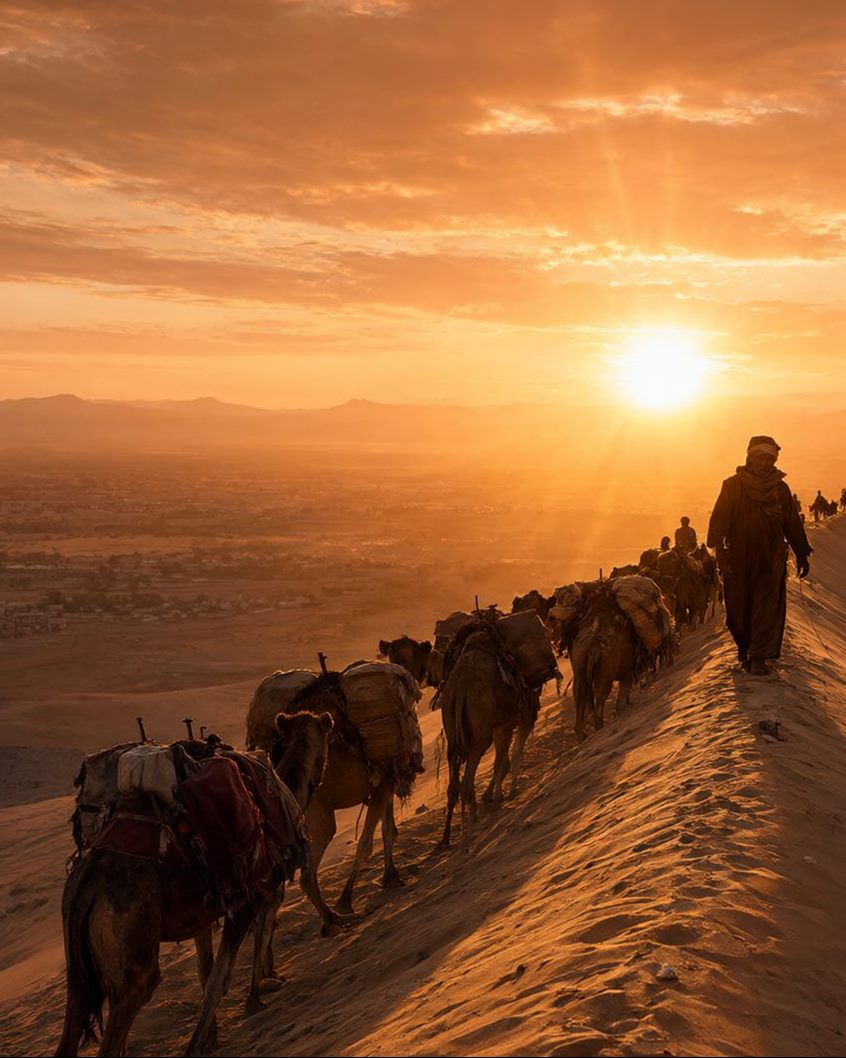
The gates at Mingsha Shan are ten minutes from the centre of Dunhuang, and last entry is at seven in the evening in September, which sounds late and is not. By the time you have hired shoe covers, queued for the wooden ladder and climbed two hundred metres of sand, the sun is on the horizon and the whole dune has gone the colour of a peach.
The hour before the hour
The mistake is to arrive at seven. Arrive at six, when the heat has left the sand but the light is still high enough to see the shape of the place: a crescent of dunes with the town on one side, the Gobi on the other, and Crescent Lake in the hollow like a dropped mirror with a pavilion at its edge.
Tickets are ¥120 in high season and include the shuttle from the gate. Shoe covers are ¥15 and worth it; the sand is fine enough to get into the stitching of a trainer and stay there for a week. Water at the gate is ¥5. Water at the top does not exist.
Up the ridge
There are two ways up. The wooden ladder on the eastern ridge is the one to take: a double row of slats pegged into the sand, two hundred metres of climb, twenty minutes at a steady pace, with a handrail on one side that is more decorative than structural. The other way is straight up the face, which takes forty minutes and costs you a lung.
At the crest the wind is steady and cold — the temperature drops eight degrees between the bottom and the top after sunset — and the queue of camels winds below you like a seam. The ridge itself is narrow, perhaps three metres, with sand falling away on both sides, and everyone stands on it facing west as if waiting for a train.
You climb a dune to watch a sunset you have seen a hundred times, and it is different, because the ground is moving under your feet. Field desk · Mingsha Shan, Gansu
The singing sand
Mingsha means singing sand, and the sound is real: a low booming hum, somewhere between a cello and a distant lorry, that starts when a sheet of dry sand slides over itself. The physics is unglamorous — dry quartz grains of a particular size, moving together at a particular speed, setting up a vibration around 80–100 Hz. The conditions are specific: hot dry sand, a steep slope, and a lot of it moving at once.
Which means you hear it best in the afternoon, sliding down a slope in shoes, not at sunset when the camel bells are ringing and a thousand people are talking. We heard it at 16:40, on the lee face, when a man and his son ran down together and the dune made a noise like a door closing in a cellar. At sunset, with the bells, you hear nothing but bells.
The drivers know. Ask one and he will tell you the sand sings when it is dry, which is most of the year and never after rain.
The camel question
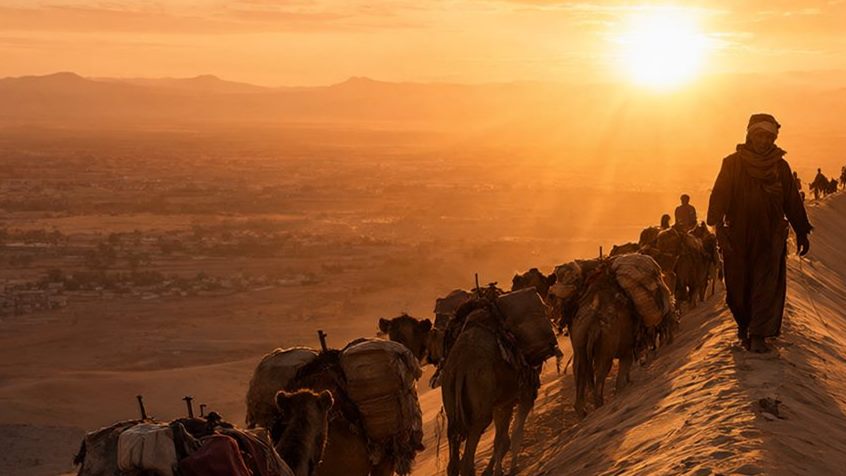
There are about a thousand camels working these dunes in season, in numbered strings of five or six, and a ride is ¥100–130 for forty minutes up and back. It is a queue, an animal with a nose peg, and a photograph you have seen before. It is also the only livelihood in the village at the foot of the dune for six months of the year, and the animals are better cared for than the average visitor expects.
Our advice is to walk. You see more, you are not in a line, and you can stop where the light is good rather than where the string stops. Ride it if you want the photograph, which everybody does, but do it once, at the end of the day, and let the last string go up without you.
Timings, tickets and the cold
Sunset is 19:40 in mid-September, 20:20 in July, 18:00 in November. Last entry is around 19:00 to 19:30 in summer, an hour before the sun goes, and you can stay on the ridge until staff clear it at about 21:00.
Bring a jacket, even in August: the crest is 15 degrees cooler than the town by nine at night. Bring a torch for the walk down, because the ladders are not lit.
The dunes are 5 km from the centre. A taxi is ¥15–20, a city bus ¥2, and the last bus back leaves at 21:00 in season.
Questions travellers ask
- Can you visit the Dunhuang dunes without a camel ride?
- Yes, and it is the better option. Entry is ¥120, the wooden ladder takes twenty minutes, and you can walk the ridge and the lake shore on foot. Camel rides cost ¥100–130 and run in strings; walking gives you the light and the quiet.
- When can you hear the singing sand?
- On a dry afternoon, sliding down a steep face, ideally when few people are around. The hum is loudest between 15:00 and 17:00 in summer. At sunset the camel bells and the crowds drown it, so go early if the sound is the reason you came.