Field notes · No. 23 · Beijing
By the ChinaTravel.fly field desk 7 min read Updated Nov 2026
- Opening
- 08:30closed Mondays
- Ticket
- ¥60 / ¥40online only, seven days ahead
- Daily cap
- 40,000sold out on holidays
- Axis walk
- 1.5 kmMeridian Gate to the north gate
The queue at the Meridian Gate starts moving at 8:30 and it moves fast, because the gate is wide and the ticket is a passport scan. What happens next is the most useful thing to know about the Forbidden City: ninety per cent of the people who enter stop within forty metres to photograph the gate they have just walked through, and the courtyard beyond it is empty.
Keep walking. Through the second gate, across the vast stone square, past the bronze lions, and up the steps to the Taihe Hall. Four minutes at a normal pace. At 8:36 we counted eleven people in a courtyard designed to hold a thousand officials.
Where the light is at 8:40
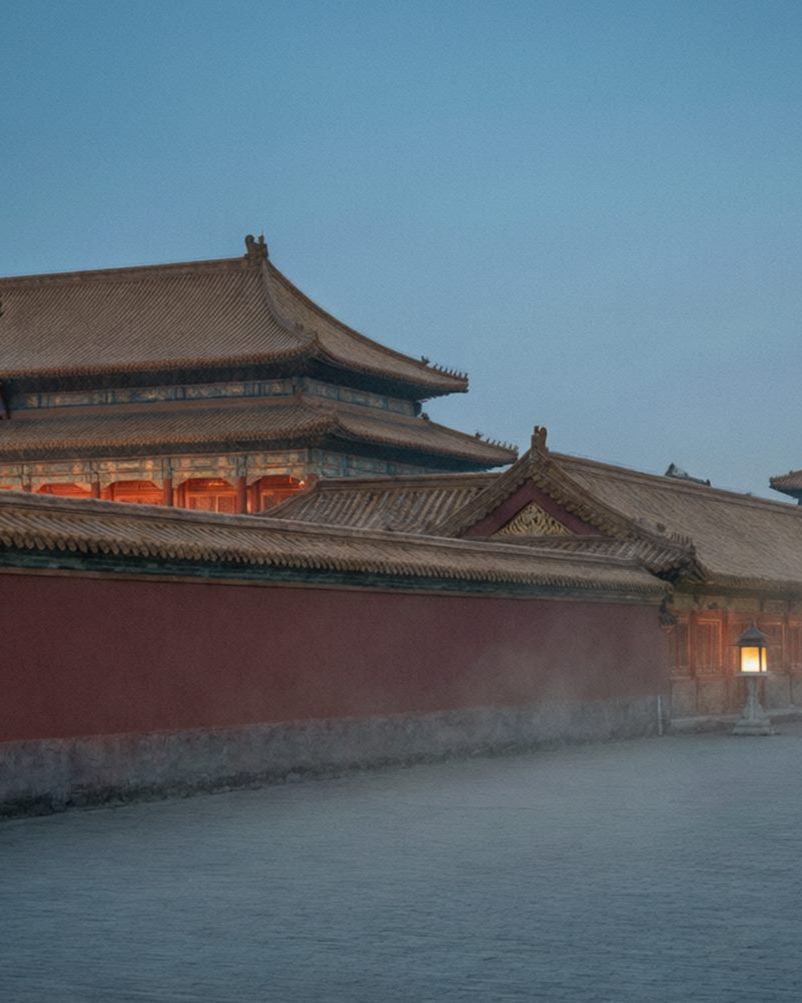
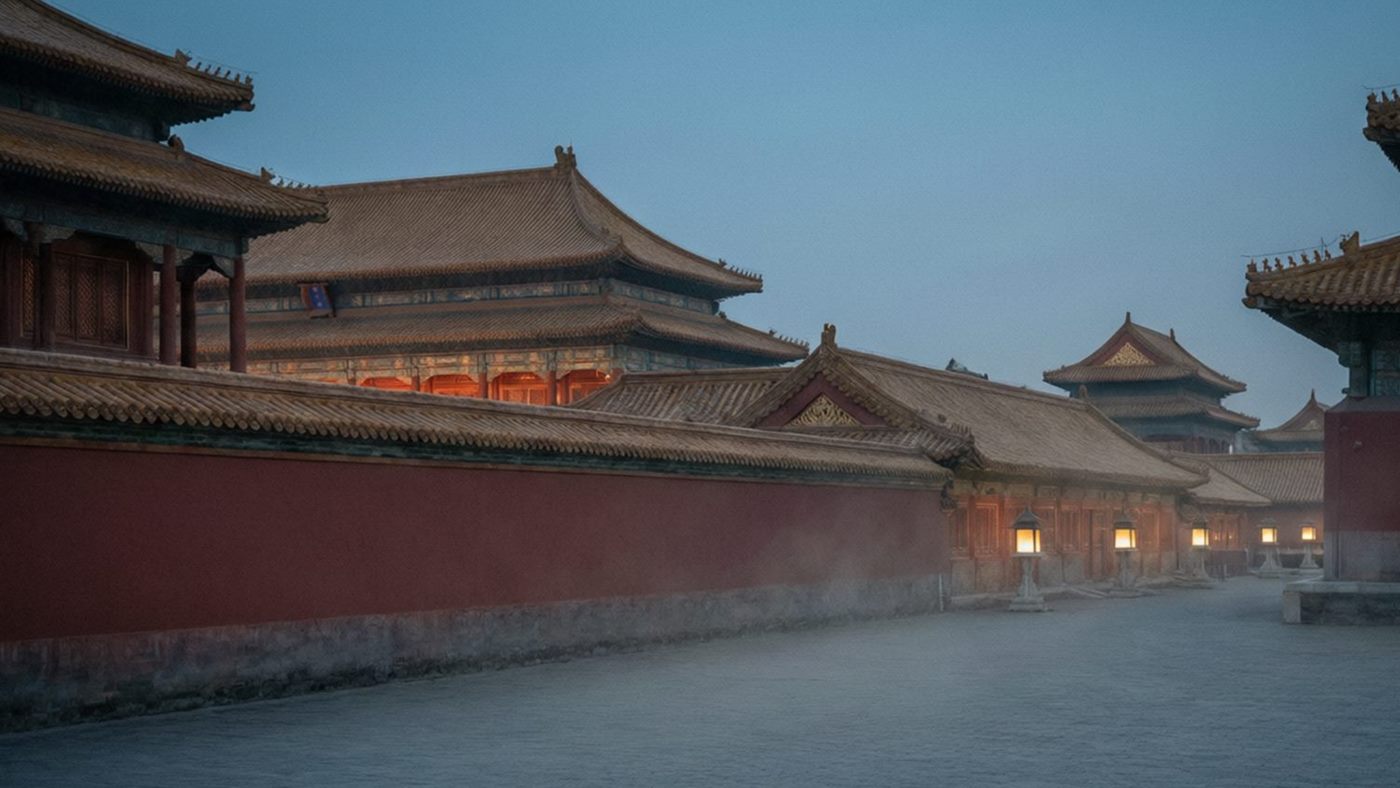
The palace faces south, so the morning sun comes over your left shoulder as you walk north, and the west side of every courtyard is in shadow while the east side is lit. That matters more than it sounds. The yellow tiles on the east range throw a warm reflection into the colonnade; the red columns on the west stay flat and dark until about ten.
The best light of the day is between 8:30 and 9:15, when the sun is low enough to rake across the marble balustrades and put the carved dragons into relief. By ten it is overhead and the square is a white glare. Everyone who arrives at eleven gets the same buildings and none of the shadow.
The palace is not best at opening because it is empty. It is best at opening because the sun is still low enough to describe the carving. Field desk · Dongcheng, Beijing
The side galleries nobody enters
The central axis is a corridor of crowds; the wings are where the museum actually is. On the east side, the Hall of Literary Brilliance holds the ceramics collection — Song celadon, Ming blue-and-white, a room of monochromes that is almost always empty. Next to it, the Hall of Martial Valour shows painting and calligraphy on rotation, with labels in English.
Further north, the Treasure Gallery in the northeastern palace charges ¥10 on top of the ticket and is worth every yuan: gold, jade, a set of imperial seals, and objects that make the furniture in the main halls look plain. The clock gallery nearby holds mechanical toys made for the Qianlong court, including a figure that writes.
On the west side, the sculpture gallery in the old empress's quarters has stone Buddhist figures from the sixth to the tenth centuries, most with the faces worn away, displayed at eye level with no queue at all.
The gardens at the back
Most people turn left at the northern end and head for the exit. The imperial garden is small, planted with cypress older than the republic, and at half past nine it is the quietest place in the complex: a handful of people on the rockery, a cat asleep on a warm wall, the exit turnstiles clicking somewhere beyond the trees. Ten minutes here is worth an hour on the axis.
The shape of the visit
The palace is 72 hectares and the walk from the Meridian Gate to the northern gate is 1.5 km. Three hours is the honest minimum, five is comfortable if you go into the wings. The bottleneck is the three great halls on the axis: do them first and quickly, then leave for the side courtyards when the groups arrive at 9:30.
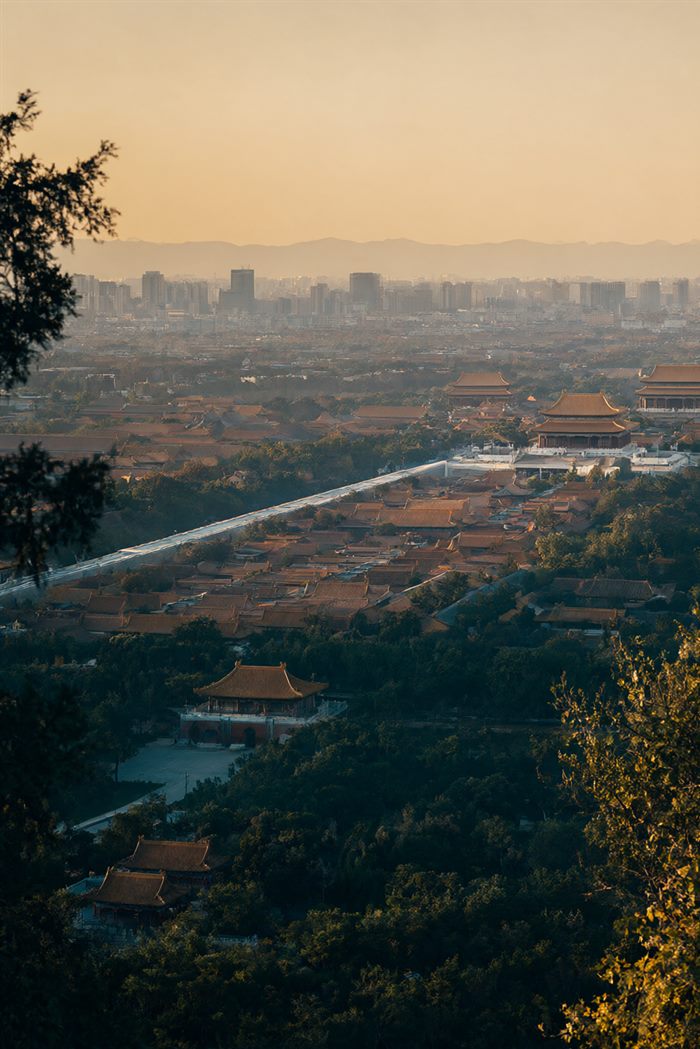
The exit at the north leads into Jingshan Park, and the climb up the hill is the correct ending — from the top you see the roof-sea in one frame, the axis you have just walked, and the modern city behind it. The pavilion at the summit is crowded at sunset and empty at nine in the morning, which is another argument for going early.
Booking, gates and what not to bring
Tickets are ¥60 from April to October and ¥40 from November to March, sold only online through the official mini-program, seven days ahead, with a passport number. The palace closes on Mondays. There is no ticket window.
Foreign passports are checked at the west side of the Meridian Gate, where there is a service window and usually no queue. Bring the physical passport; a photograph of it will not scan.
Bags go through a scanner. Tripods, drones and selfie sticks are refused; water is allowed. There is a café and there are toilets in the wings, and almost nothing on the axis.
Questions travellers ask
- Can you buy Forbidden City tickets at the gate?
- No. Tickets are sold only online, through the official mini-program, up to seven days ahead, and they sell out on weekends and holidays. You need your passport number to book and the physical passport to enter. Monday closure applies except on public holidays.
- How long do you need in the Forbidden City?
- Three hours for the main axis and one wing, five if you want the ceramics, the treasures and the clocks. Go at 8:30, walk the axis first, and spend the crowded middle of the day in the side galleries. The north gate leads into Jingshan Park.