Field notes · No. 07 · Jinshanling
By the ChinaTravel.fly field desk 9 min read Updated Nov 2026
- Ticket
- ¥65bought the evening before; east gate on foot, about 40 min
- Car
- ¥700–1,000Beijing round trip with the driver waiting
- Cloud
- under 10 km/hwind ceiling; rain the day before, a clear night
- Best month
- Mid-Octgold poplars, low humidity, clearest air of the year
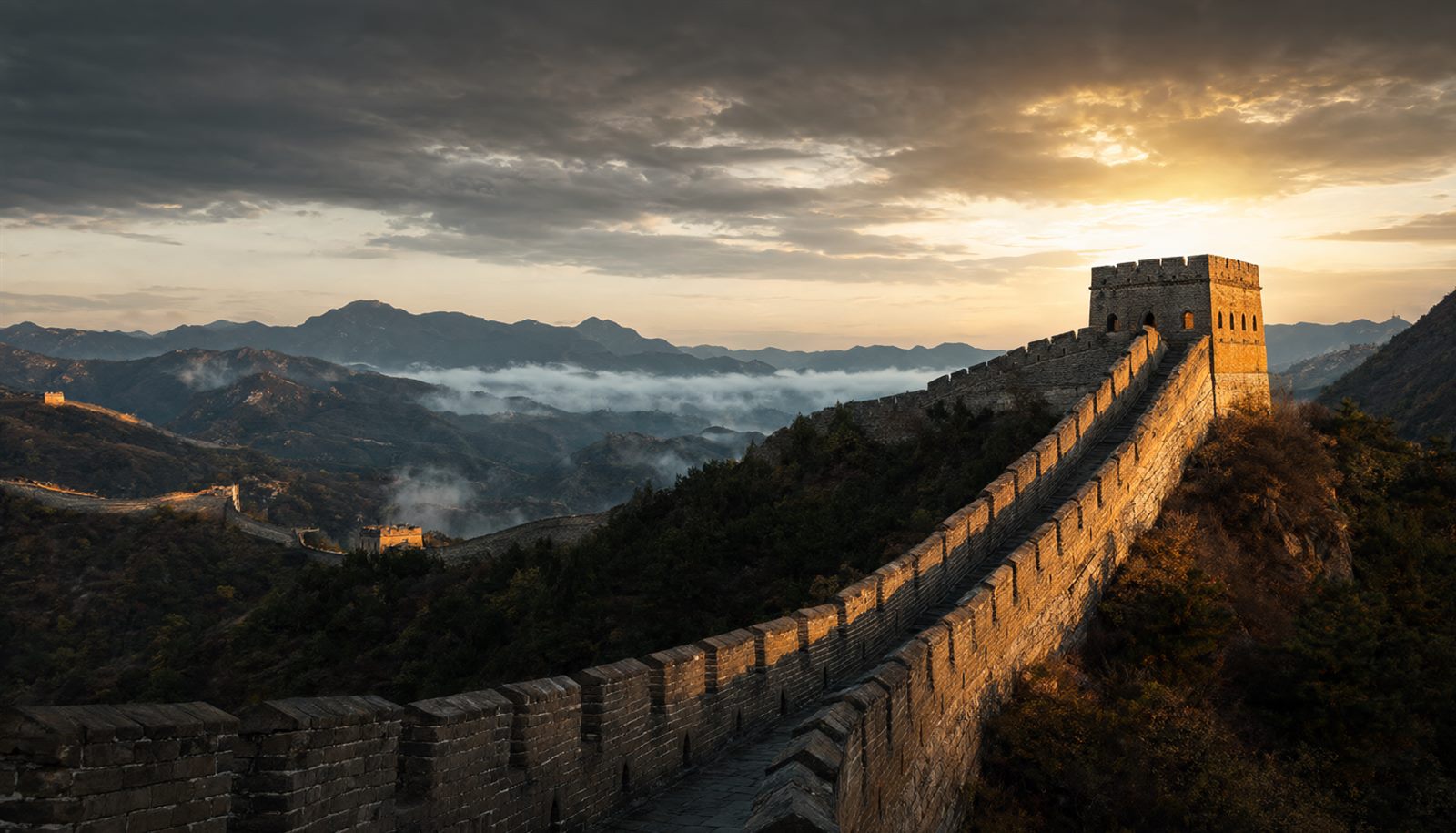
There is a version of the Great Wall that belongs to tour buses, and a version that belongs to you. They are usually the same stones, separated by about ninety minutes. The trick is not which section you choose — although it is Jinshanling — it is that you have to be standing on it in the dark, before the gate staff have finished sweeping the courtyard.
Why Jinshanling and not Badaling
Badaling is the easiest wall to reach and the hardest to photograph: eight lanes of steps, a funicular, and a crowd that arrives from Beijing before the light does. Mutianyu is the honest middle ground — restored, gorgeous, with a chairlift, and quiet for the first hour after opening. Jinshanling is the one you go for if you want the wall as a ridge, unrepaired in places, running east and west out of sight in both directions with maybe forty people spread along it.
The classic composition looks east. The wall climbs away from you toward Little Jinshan, the towers are angled to catch the first sun, and the saddles below collect whatever cloud the night left behind. Looking west is prettier at dusk; looking east is the photograph everyone means when they say dawn on the Wall.
The Wall is not a monument you look at. It is a stairway that happens to be four hundred years old, and you have to climb it in the dark like everything else. Field desk · Luanping County, Hebei
The 4:50am problem
No public transport reaches the wall before the tour buses do, so everyone who shoots sunrise there pays a driver. A round trip from Beijing in a private car with the driver waiting runs roughly ¥700–1,000, which is expensive for one person and completely reasonable split three ways. Book the night before through your hotel or a driver you find via the guesthouses; the same names come up repeatedly.
The cheaper and better option is to sleep at the wall. The farmhouse guesthouses south of the Jinshanling gate are basic, warm, serve an enormous breakfast, and are a twenty-minute walk from the east entrance. Two hours of driving saved, one alarm instead of two, and you can abandon the shoot if the sky is wrong without having wasted a day of the itinerary.
Reading the morning
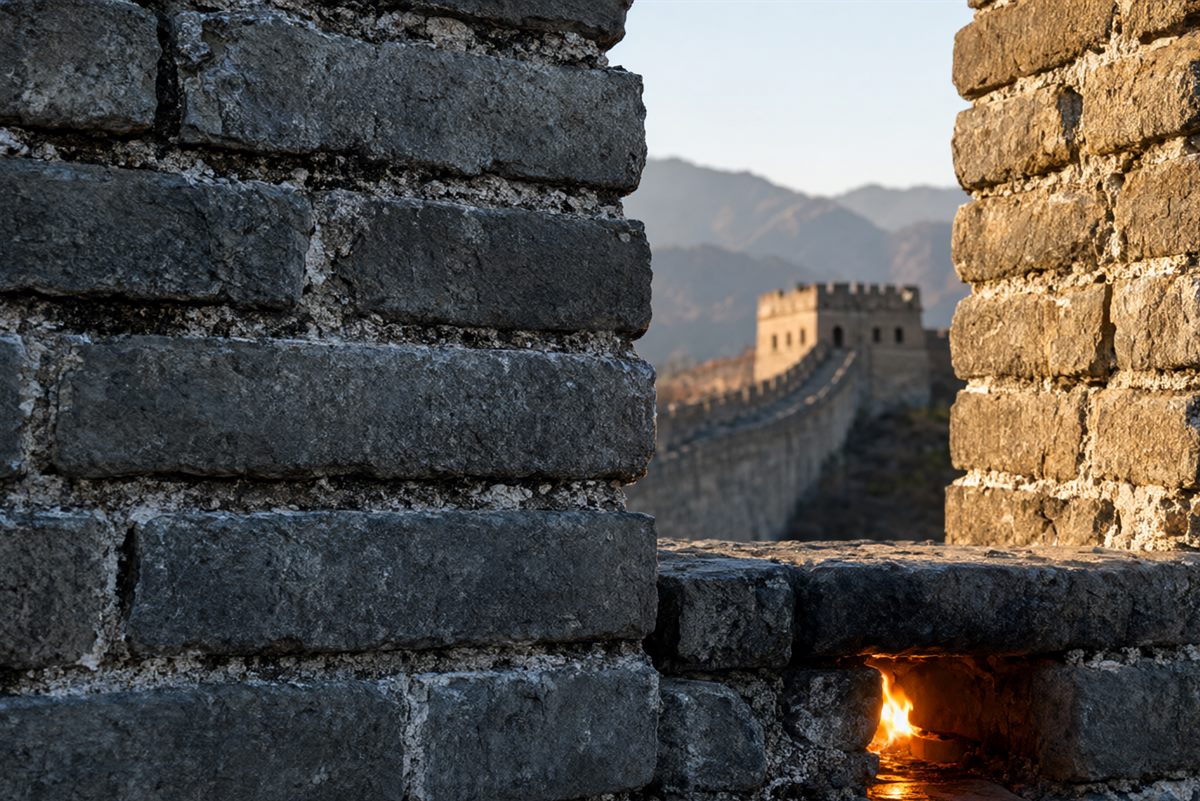
The sea of clouds is not luck, it is a recipe: rain the previous day, a clear night, wind under about 10 km/h, and a temperature drop of ten degrees or more. That combination puts cold, wet air in the saddles and leaves the ridge above it. Check the wind and the overnight low rather than the sunrise forecast — if it is windy, the cloud will not sit and you should sleep in.
- Blue hour is the working hour. Twenty minutes before the sun, the towers are still in shadow and the valley is blue. This is when the image has depth; after sunrise it flattens fast.
- Bring a headlamp and use the lowest setting. The steps are uneven, some are sixty centimetres high, and the loose rubble on the unrestored stretches moves under you.
- Two lenses, not three. A 24–70 for the ridge, a 70–200 for towers and brickwork. You will not change lenses on a windy parapet, so set the second body up in the dark.
- Gloves. The stone is at freezing and you will be steadying yourself with your hands.
What you are allowed to walk
Between the ticketed sections there are stretches of "wild wall" that are technically closed, and the rules have tightened: Hebei and Beijing have both fined hikers for entering unopened sections, and some access paths now have gates and staff. The honest position is that the ticketed east and west walks at Jinshanling are long, beautiful, and completely legal — the west route to Zhuanzhi Pavilion is about two hours round trip and gets almost nobody. Do that before you consider any unmarked traverse, and never do one alone.
Drones are a separate problem. Nationwide registration with the CAAC is required, most scenic areas around Beijing are no-fly zones, and several wall sections sit near military installations. Assume the answer is no, because in practice it is.
Shoot like a local
Get the ticket the night before. The gate office sells the next morning's tickets in the evening, so you can walk in at first light instead of queueing at the window. ¥65; the east section is reached on foot in about 40 minutes from the east gate.
Then get the water. There is nothing on the wall — no kiosk, no toilet, no shade. Two bottles, and take the bottles back down.
Stay for the second light. Everyone leaves at 7:30. The hour after that is softer, the ridge is empty, and the cloud is usually gone — which is when the long, raking shots of the brickwork work best.
Practical, in one paragraph
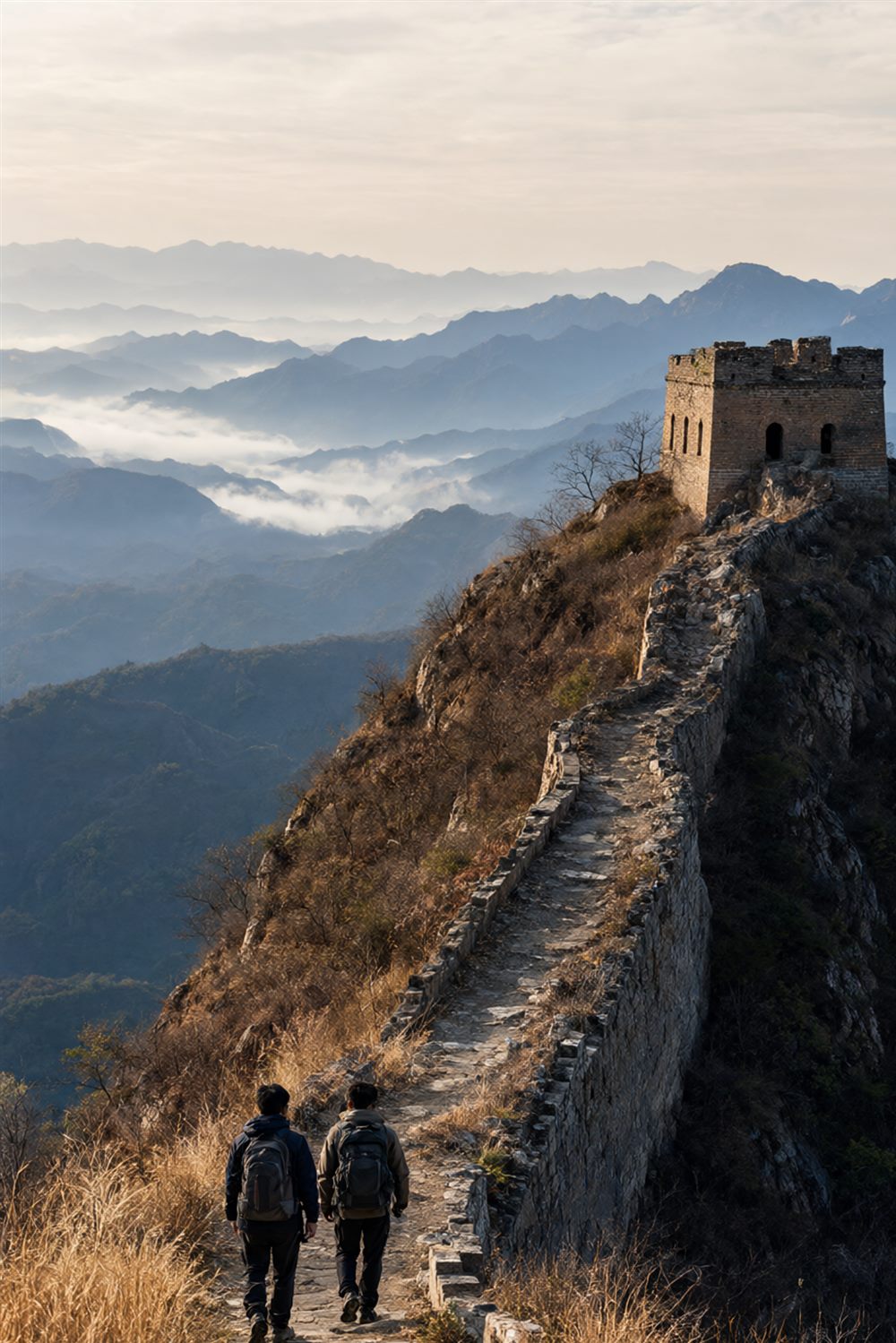
Gate opens around 7:00 in high season and later in winter, but the walk up is what takes the time — allow forty minutes from the east gate to the good towers. Mid-October gives gold poplars, low humidity and the clearest air of the year; December gives frost, one hour of usable light and no one else; April gives wind and dust. The nearest alternative for a night shoot is Simatao, the only section lit after dark, which pairs with Gubei Water Town and is a two-day trip rather than an alarm.
Questions travellers ask
- Do you need a car to shoot sunrise at Jinshanling?
- Yes, unless you sleep at the wall. No public bus reaches the gate before the coaches, so a private round trip from Beijing with a waiting driver runs ¥700–1,000 and splits well three ways. The cheaper option is a guesthouse south of the gate, twenty minutes' walk from the east entrance, which removes the drive entirely.
- What time should you start, and what does entry cost?
- Be on the steps by 5:00 for an October sunrise; the walk from the east gate to the good towers takes about forty minutes in the dark. Tickets are ¥65, and the gate office sells the next morning's tickets the evening before. Bring a headlamp, gloves and two bottles of water — there is nothing on the wall.