Field guide · Great Wall
By the ChinaTravel.fly field desk 7 min read Updated Nov 2026
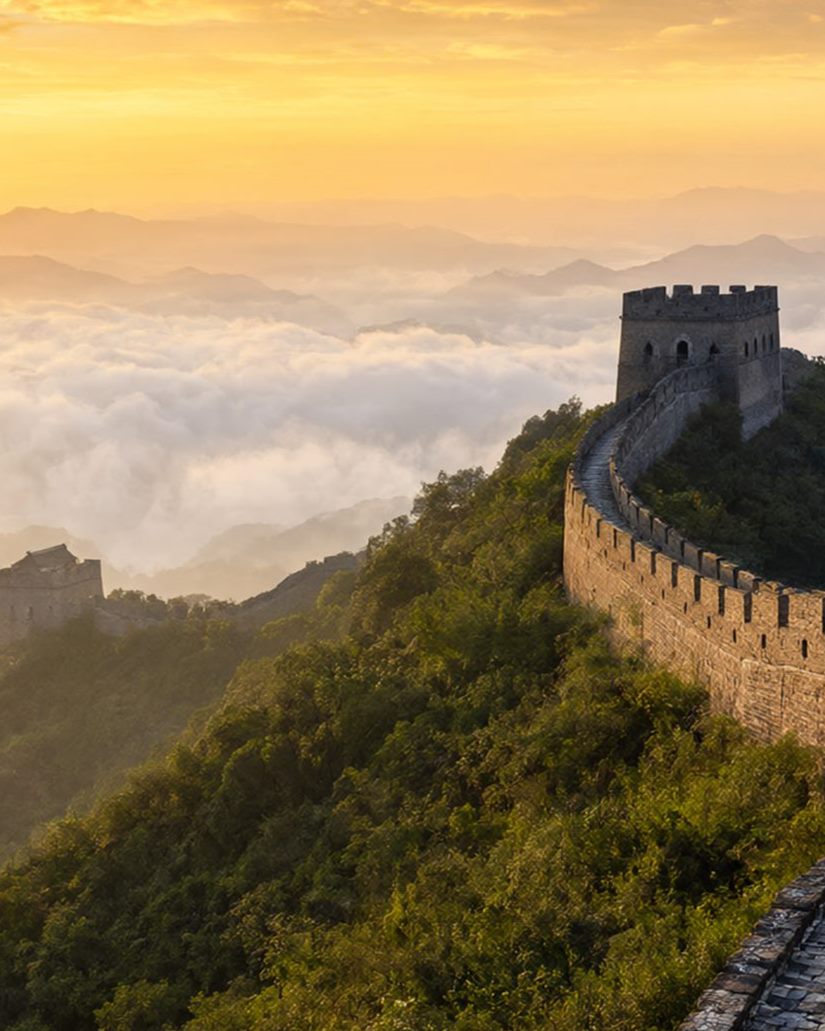
- Tickets
- ¥40–65cable cars and shuttles add ¥15–140
- Closest
- Badaling70 km, 30 min by high-speed train
- Quietest
- Jinshanling130 km; 10 km of wall, 67 towers
- Best month
- Octoberdry air, gold poplars, 20°C
- Closed
- Jiankoufenced and staffed; fines reported
The Great Wall runs 21,000 kilometres, and the parts near Beijing are a small, heavily restored sample of it. What you are choosing between is not history. It is restoration, transport and crowd density, in that order.
Tickets run from ¥40 at Badaling to ¥65 at Jinshanling, with cable cars and shuttles adding ¥15–140 on top. The far sections cost ¥500–900 in car hire if you do not sleep out there. The brickwork is Ming in every case, give or take a 1980s re-pointing programme, so the real question is how many people you want to share it with and how far you can walk before the light goes.
Badaling: the default, with the infrastructure to match
Seventy kilometres north-west, with its own high-speed station and a cable car to the ridge, Badaling is where every coach goes. It is genuinely spectacular — the wall follows a knife-edge with towers every few hundred metres — and it is also a queue with a view. ¥40 in high season, ¥35 in winter; cable car ¥100 one way, ¥140 return. The express train from Beijing North takes about 30 minutes and costs ¥25–30, which makes this the only section you can reach car-free without a plan.
Go if you have a single day in Beijing, limited mobility, or a train to catch. If you do, take the first service, walk west from the upper station rather than east, and be back on the platform by 11:00. After that the cable car unloads several hundred people at a time onto twenty steps of wall, and the photographs stop working.
Mutianyu: the compromise that holds
Mutianyu, seventy kilometres north-east, is restored to a similar standard but spread over 2.5 kilometres and 23 towers, so the crowd thins the moment you walk away from the lift. ¥45 plus a ¥15 shuttle from the car park; cable car ¥100 one way, with a chairlift and toboggan at similar prices. Gates open at 7:30 in high season and the first hour is close to empty.
Direction is everything. Almost everyone rides up and turns left, toward tower 14 and the postcard bend. Turn right, downhill toward tower 6, and you can walk an hour past twenty people with the wall dropping into a wooded valley on both sides. Take the toboggan down if the queue is under ten minutes; walk if it is not, because at 11:00 that queue runs to forty minutes in the sun.
The difference between a good day on the Wall and a bad one is rarely the section. It is whether you are standing on it before the second cable car starts running. Field desk · Huairou, Beijing
Jinshanling and Simatai: ridge, ruin and light
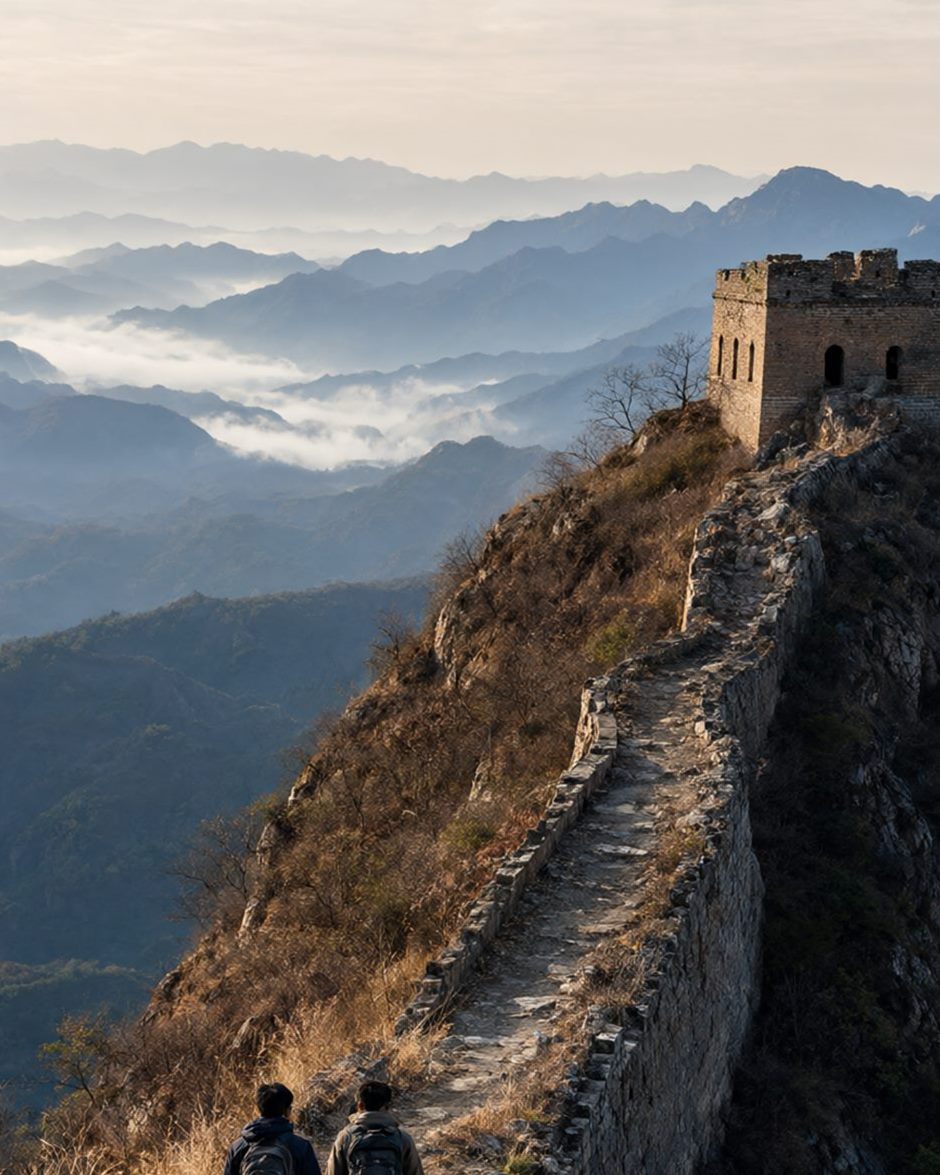
Jinshanling is 130 kilometres out and ¥65, and gives you ten kilometres of wall and 67 towers, roughly half of it unrestored. Two ticketed walks leave from the east gate; the western route to Zhuanzhi Tower is about two hours round trip and sees almost nobody. Farmhouse guesthouses south of the gate run ¥200–400 a night and put you on the wall at sunrise without a 4am drive from the city.
Simatai, twenty minutes further, is the only stretch lit after dark, and you reach it through Gubei Water Town: ¥140 for the town, cable car about ¥110 one way. It is a two-night trip rather than a dawn raid, and the rebuilt water town plus a floodlit wall is either extraordinary or faintly theatrical, depending on your tolerance. Do Jinshanling at dawn; do Simatai only if night photographs are the point of the journey.
Huanghuacheng and Jiankou: water and collapse
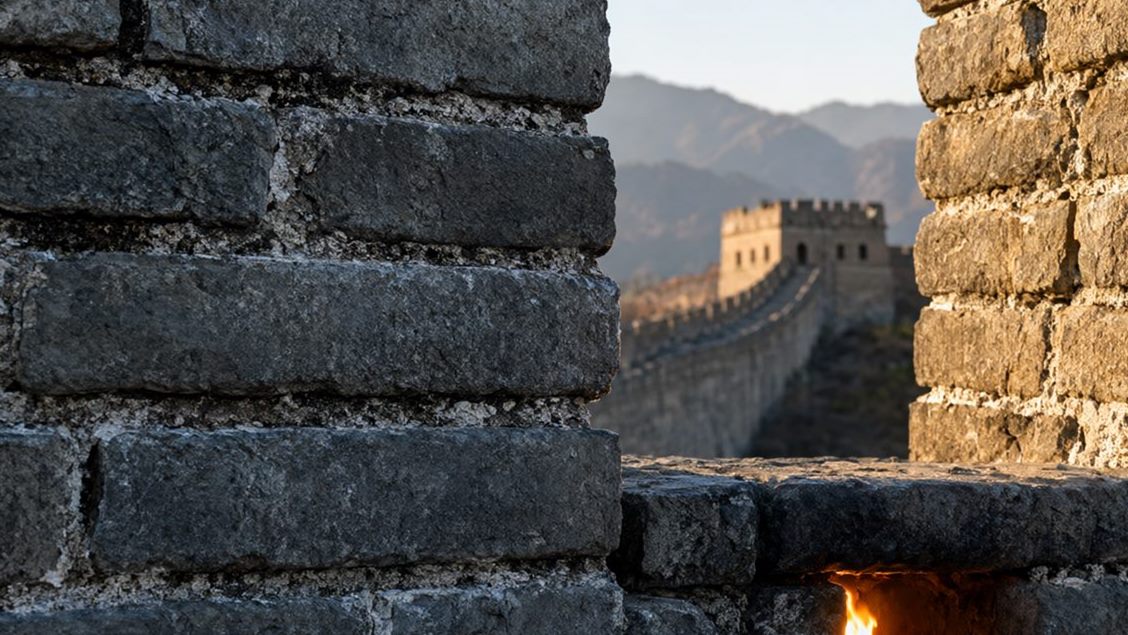
Huanghuacheng, 65 kilometres north, is where the wall walks into a reservoir and stops. ¥45–60, steep, unrestored, and photogenic from the far bank when the lake is full. It is a half-day and a car. In a dry spring the waterline drops twenty metres, the reflection disappears, and the shoreline is a mudflat.
Jiankou is the wild one: the Beijing Knot, a run of collapsed wall on a 900-metre ridge above Xizhazi village. It has been formally closed for years and the enforcement is real — fences, staff, and fines reported between ¥100 and ¥500. If you want ruin and exposure without the legal risk, Jinshanling's western towers deliver most of the feeling with a ticket in your pocket.
Getting there without a coach
- Badaling by rail. High-speed from Beijing North, 30 minutes, ¥25–30, then a 15-minute walk to the gate.
- Mutianyu by bus. The 916 Express from Dongzhimen to Huairou, ¥12–15, about 90 minutes, then a local taxi for the last 20 kilometres at ¥50–80.
- Jinshanling by shared van. ¥120–150 a seat, arranged by the guesthouses; a private car with waiting time is ¥700–1,000 return.
- Any section, one way. A driver for a full day costs ¥600–900 and removes the timetable problem entirely, which is worth it for three or more people.
Timing, weather and closures
Gates: Badaling 6:30–16:30 in summer, shorter in winter; Mutianyu 7:30–17:30; Jinshanling roughly 6:00–18:00. Lightning closes the ridge without argument, ice closes the steep unrestored stairs, and the week around Chinese New Year is the busiest of the year by a wide margin. Mid-October gives colour, dry air and 20°C. Late November gives hard light, bare trees and nobody. January gives frost and a wind that removes hats.
Carry water. Jinshanling and Huanghuacheng have no kiosk, no toilet and no shade once you are on the wall, and the steps on unrestored sections are 40–60 centimetres high with rubble that moves underfoot. Boots with a heel, not trainers. Check the section's own WeChat account the night before: maintenance closures are announced there, often with less than a day's notice.
The shuttle is not optional
At Mutianyu the car park sits 3.5 km from the gate and the ¥15 shuttle is compulsory, so budget for it. At Jinshanling there is no shuttle at all: you walk from the village, which takes 20 minutes and is half the reason to sleep out there.
One last thing worth knowing: the sections are not interchangeable and the famous photographs are not evenly distributed. Badaling gives you the wall as infrastructure, Mutianyu gives you the wall as a walk, Jinshanling gives you the wall as landscape. Pick the one that matches the day you actually have, and the picture usually follows.
Questions travellers ask
- Which Great Wall section is best for a first visit?
- Mutianyu. It is restored, safe, reachable by bus or car, and quiet for the first hour after the 7:30 opening. Badaling is faster by train but far busier; Jinshanling is better and much further, which makes it a two-day commitment rather than a day trip.
- Can you walk the unrestored Great Wall at Jiankou?
- Not legally. Jiankou has been closed for years and access is fenced and staffed, with fines reported for those who go around. The legal alternative is Jinshanling's western towers, which are unrestored, steep and ticketed, and give a similar sense of ruin without the risk.
- How much does a taxi to the Great Wall cost?
- A private car from Beijing to Mutianyu or Badaling runs ¥600–900 for the day, waiting time included, or ¥700–1,000 to Jinshanling. Shared vans arranged by guesthouses cost ¥120–150 a seat. The high-speed train to Badaling is ¥25–30 per person, and the 916 bus to Huairou is ¥12–15.