Field notes · No. 28 · Mutianyu
By the ChinaTravel.fly field desk 7 min read Updated Nov 2026
- Entry
- ¥40plus ¥15 shuttle; cable car ¥100–140
- Wet-season
- Jul–Augheaviest rain; October gets single wet days
- Towers
- 23 in allthe cable car lands near the 14th; the west end is a further hour
- Last shuttle
- 17:3017:00 in winter; the cable car stops earlier in wind
The rain starts north of Huairou, without drama, and by the time the shuttle drops you at the foot of the ridge the steps are already dark. On a dry morning this car park holds sixty coaches and a queue for the cable car that bends around the building. This morning it held four coaches, two of them school groups whose teachers were on the phone to Beijing, and a woman selling ponchos out of a cardboard box.
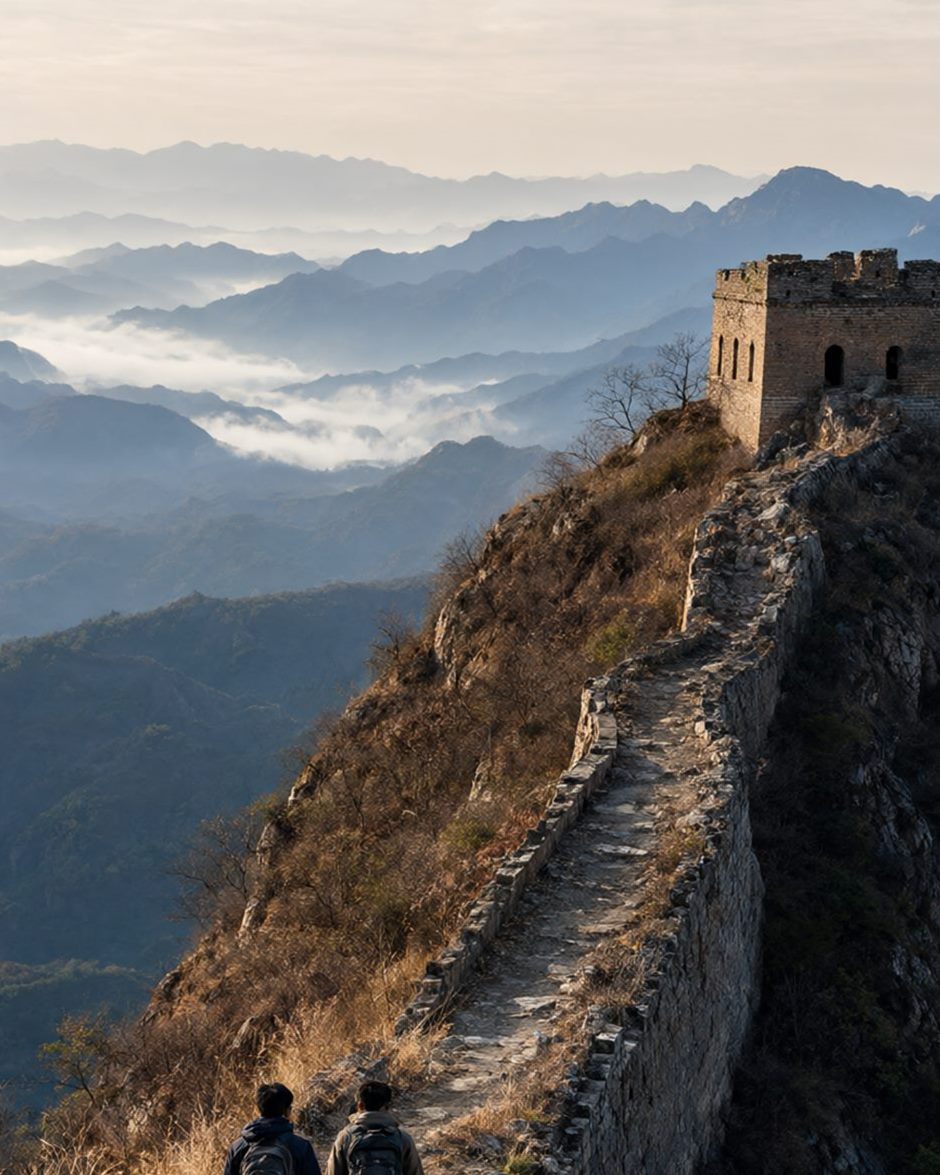
A wet wall is not a ruined wall. The restored stretch is a walk of twenty-two towers along a ridge, and in rain you do it at your own speed, with nobody's selfie stick in your eye line. The trade is simple: you lose the view and gain the building.
Rain does not spoil the Wall. It removes the postcard and leaves the masonry, which was the interesting part all along. Field desk · Mutianyu, Huairou District
Why the coaches cancel
Rain is the one weather that empties the place. Snow keeps people away for a morning; wind clears the ridge by noon; rain cancels tours outright, because a group itinerary with a wet wall in it is a complaint waiting to be written. The cancellations go out at six, and the wall is left to people who arranged themselves.
The gate arithmetic is unchanged: ¥40 entry, ¥15 for the shuttle, ¥100–140 for the cable car. A ¥10 poncho at the bottom is the best value on the mountain, and the ¥5 plastic bags for your shoes keep the water out for about an hour, which is roughly how long you will last before you want dry socks more than dignity.
What water does to Ming brick
The steps are the hazard, not the parapet. They were cut for soldiers in cloth boots and have been worn into shallow bowls by six hundred years of feet: polished in the centre, still sharp at the edges, and treacherous in a way dry photographs never suggest. On the restored stretch the surface has been re-pointed and is merely slick. West of the cable car station it is clay, leaf litter and loose rubble, with a drainage channel along the inner wall that you will step into while looking at the view.
Going down is worse than going up. You lean back, the heel lands first, and the step you cannot see is the one that takes you. Two of our four sat down hard on the same flight below the fourteenth tower, ten minutes apart, both uninjured and both suddenly careful.
Fog, and what it is good for
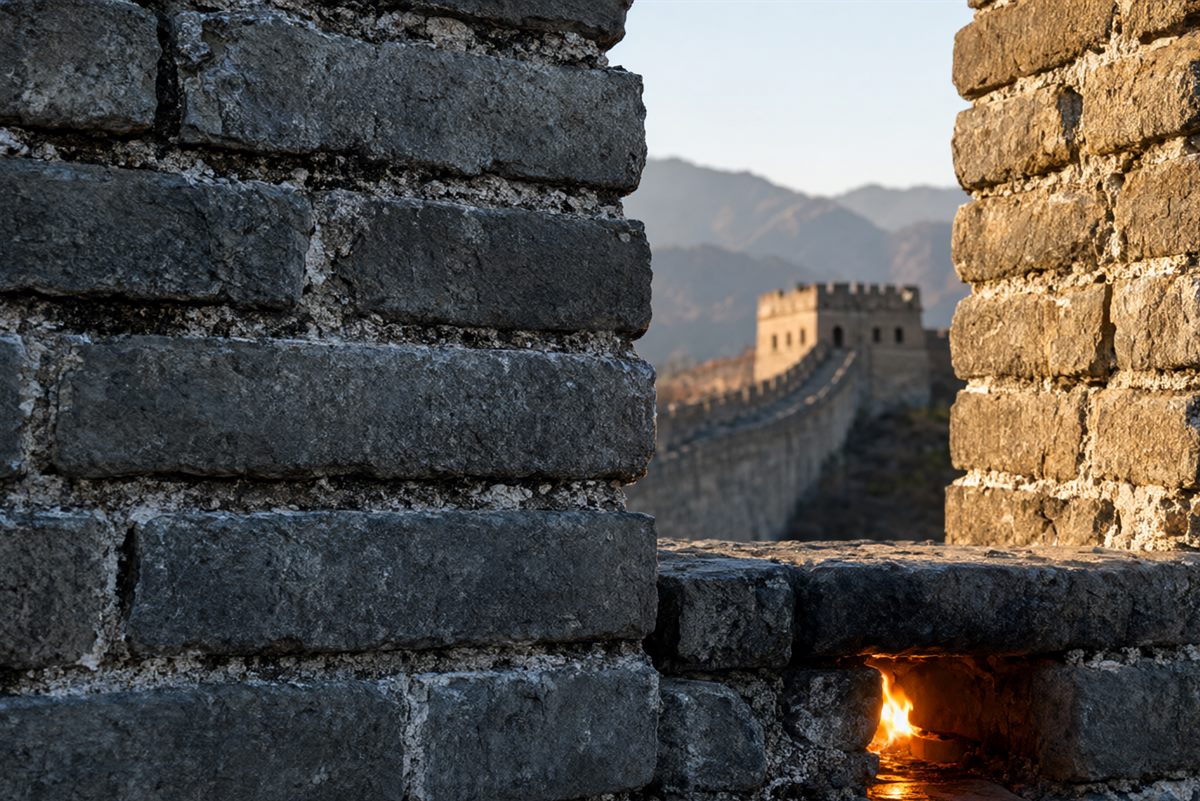
At 600 metres the ridge goes into cloud and the wall stops being scenery. Visibility closes to about forty metres, which is two towers. The next one arrives as a darker grey, resolves into an arch, then a parapet with water running off it, and then there is another. Sound changes too: the wind drops behind a tower and returns from an unexpected side.
Photographically this is a gift, provided you stop trying to make the picture you came for. Fog gives you separation, which a wide view of a ridge never has. Shoot the tower that is half-erased. Shoot the steps vanishing upward. Wipe the lens every third frame, because a smear in flat light is invisible until you are home.
The kit that decides the day
- Boots with tread. Trainers on wet granite are a decision you will regret on the second descent; ankle support helps more than grip.
- A shell, not an umbrella. Umbrellas are useless in ridge wind. A hooded waterproof with taped seams beats a poncho above the treeline; the poncho is for the queue.
- Spare socks in a dry bag. Wet feet, not wet shoulders, end the day. One pair, sealed, changed at the cable car station, buys three more towers.
- Gloves and a hat. The stone is cold and you will be using your hands on the rail. Wet wind at 600 metres is not the temperature on your phone.
- A zip bag for the phone. Touchscreens do strange things with rain on the glass, and a wet pocket is a wet phone.
The wet-wall plan
Buy the ticket at the gate; in rain there is no queue and the window opens at 7:30. Take the cable car up and walk down, not the reverse: descending wet steps is what hurts, and the ¥100 is worth it when your legs are shaking.
Lightning is the one thing that should change your plan. If thunder arrives, get off the ridge and down to the treeline; the wall is the highest thing for a kilometre and towers are struck. The cable car stops in high wind, and the toboggan closes in rain, so check before you commit to the top.
The hour after it stops
Some time between three and five the rain thins to nothing and the stone starts to steam. This is the best light of the day and nobody is on the wall to see it: the coaches have gone and the ridge is a dark line of brick with mist coming off it in strips. The steps dry from the edges inward, which means the centre is still wet where you put your foot.
We came down at half five, boots squelching, and ate rainbow trout and a bowl of noodles in the village at the bottom for ¥60 between two. The trout is farmed in the streams off the ridge and appears on every menu, with bones. Somebody's grandmother was watching the rain from a doorway and told us, via a grandson, that we had chosen a good day. She was right, and she had not been up there.
Questions travellers ask
- Is the Great Wall worth visiting in the rain?
- Yes, if you have boots and a shell. Rain empties the coaches, so the towers are quiet and the masonry reads clearly in flat light. You lose the long view entirely. The steps become genuinely slippery, so take the cable car up and walk down slowly, and keep a spare pair of socks sealed in a bag.
- Do they close the Wall in bad weather?
- The gate usually stays open in rain, but the cable car and the toboggan stop in high wind, and sections close in lightning or heavy snow. Access can be suspended without much notice, so check at the ticket office before paying for the cable car. Thunder means leaving the ridge, not waiting it out.