Month · March
By the ChinaTravel.fly field desk 6 min read Updated Nov 2026
- National range
- 2–24°CHarbin thawing to Kunming in bloom
- Rain
- 20–90 mmlight in the north, steady in the south
- Crowds
- lowapart from blossom weekends and 8 March
- Daylight
- 12hequal day and night at the equinox
- Prices
- shoulderBeijing ¥300–500; Guilin ¥250–400
Spring in China is not a temperature, it is a schedule. It reaches the far south in February, the Yangtze delta in the second half of March, and Beijing somewhere around the middle of April. March sits in the middle of that relay, which means the country is simultaneously in two seasons and you can choose which one to join.
The other thing March has is air movement. The same wind that clears the winter haze picks up dust from the Gobi, so the north gets its clearest skies and its dirtiest days in the same fortnight.
The blossom, in order
Plum blossom, 梅花, is finishing in Nanjing, Hangzhou and Wuhan as the month opens; it is a cold-weather flower and looks best against grey stone. Cherry follows in the last ten days of March, and the university campus in Wuhan and the lake gardens of Beijing both fill on the weekend the news declares a peak.
Rapeseed is the bigger event because it changes a whole valley. Wuyuan in Jiangxi and Luoping in Yunnan turn yellow from mid-March, and both are rural enough that you can walk out of the village and have a hillside to yourself. Magnolia and forsythia open in Beijing at the same time, ahead of the peony, which waits until mid-April in Luoyang.
| Region | Weather | Crowds | Verdict |
|---|---|---|---|
| North | 3–14°C, windy, brown trees | Low, rising at weekends | Cheap and empty; wait for April light |
| Silk Road west | 0–14°C, wind and dust | Almost none | Only for the caves; Tibet from April |
| South-west | 14–22°C, dry, sunny | Low except rapeseed valleys | The best month before the rains |
| Yangtze delta | 10–17°C, cool, some rain | Blossom weekends busy | Gardens and canals at their freshest |
| Karst south | 15–20°C, mist and showers | Low | Green karst, rising water, low rates |
Where to go this month
North. Beijing is 12°C and blustery, with the willows turning and the walls of the Forbidden City at their reddest against a grey sky. Xi'an is 14°C and pleasant. The Wall is brown and exposed, and the cable-car sections are still running half-empty, which is the reason to go now rather than in May.
Silk Road west. Still the wrong month. Dunhuang is 10°C with wind that carries sand into everything, and the oasis feels like a building site. Lhasa is 12°C and bright, but permits are easier from April; if Tibet is the goal, spend March planning it rather than going.
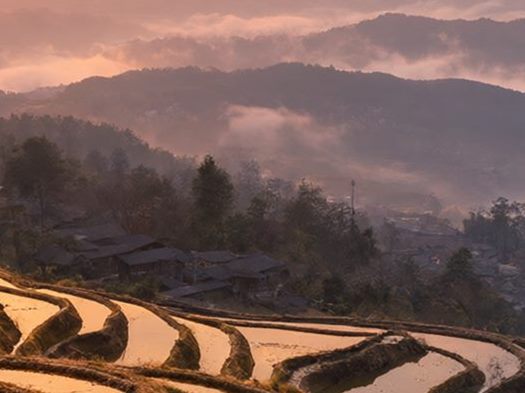
South-west. The strongest choice. Kunming and Dali are dry at 20°C, Luoping's rapeseed is at its peak, and the terraces at Yuanyang are still flooded until planting. Sichuan is green and mild; Chengdu's teahouses are full of people who have taken the afternoon off, which is the correct response.
Yangtze delta. Shanghai at 14°C, Suzhou's gardens coming into leaf, Hangzhou's lake lined with willow. It is cool and occasionally wet rather than warm, but the light is soft and the crowds are a fraction of May's. The canal towns on a weekday are close to perfect.
Karst south. Guilin warms to 18°C and the rain begins in earnest, which is not a problem: mist between the peaks is the picture everyone came for. The Li river is rising. Yangshuo is green, cheap and quiet before the April school trips.
March is not a season in China so much as a set of appointments, three weeks apart, that you either keep or miss. Field desk · Wuyuan, second week of March
Dust, and what to do about it
The yellow haze arrives on a north-west wind, usually twice or three times in the month, and turns the sun into a dull coin. Visibility drops to a kilometre, the hills behind Beijing disappear, and hiking stops being a good idea. Forecasts give a day's warning, which is enough to swap the Wall for a museum.
A dust-day plan
Move indoors rather than cancelling: the Capital Museum, the Shaanxi History Museum and the terracotta pits all work in bad air.
A proper mask, not a scarf. Pharmacies sell KN95 for ¥5–15 and they are the difference between a headache and a normal day.
Photograph in the haze if you like it — the palace roofs against a yellow sky are extraordinary — but do not climb anything you cannot see the top of.
What to book, and when
Blossom weekends are the only pressure point. Hotels near Wuhan's cherry avenue and the Beijing lake gardens sell out about three weeks ahead for the peak weekend, and trains to Wuyuan fill on Friday evenings. Everything else can be booked a week out. The terraces at Yuanyang need a guesthouse and a driver, both arranged two or three weeks ahead. The Forbidden City releases timed slots seven days ahead, and March slots rarely vanish.
What March costs
Still winter pricing in most of the country, with a small blossom premium in the south-east. Beijing hotels run ¥300–500, Shanghai ¥350–520, Guilin ¥250–400, Kunming ¥220–380, Lhasa ¥260–420. Flights are cheap until the last week of the month, when the approach to Qingming and Labour Day begins to lift them.
Questions travellers ask
- Is March a good time to visit China?
- For Yunnan and the south-east, yes: dry, mild and quiet, with rapeseed and cherry at their peaks. For Beijing and the Wall, it is early — windy, brown and prone to dust days, though the sights are empty and cheap. If you want one trip that covers the classic route, wait three weeks for April.
- Where can you see blossom in China in March?
- Cherry peaks in the last ten days of March in Wuhan and Beijing. Plum blossom is finishing in Nanjing and Hangzhou as the month begins. Rapeseed turns Wuyuan in Jiangxi and Luoping in Yunnan yellow from mid-March, and magnolia opens in Beijing at the same time. Peony waits until mid-April in Luoyang.