Food · Sichuan hotpot
By the ChinaTravel.fly field desk 7 min read Updated Nov 2026
- Pot
- ¥40–90plus a per-person seating fee of ¥6–10
- Bill
- ¥90–160 ppwith beer, for anyone with a normal appetite
- Tripe
- 15 secin the boiling centre, then straight into the dip
- Dip
- sesame oilnot sesame paste; garlic, coriander, vinegar
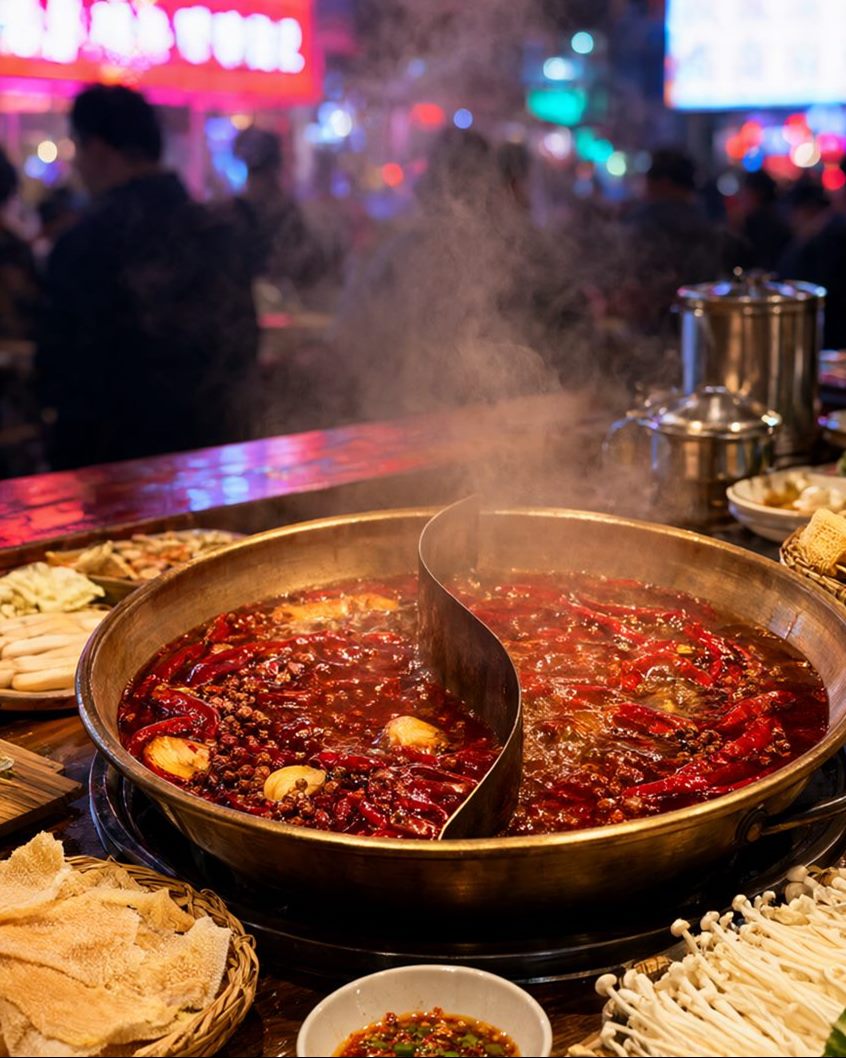
There are two hotpot cities and they do not agree. Chongqing uses beef tallow, a hard block of it, and a broth that sets like wax when the gas goes off. Chengdu leans on vegetable oil, slightly lighter. Both are Sichuan hotpot in the sense that matters: a rolling cauldron of chilli and Sichuan pepper that you cook raw things in, one piece at a time.
Decision one: the broth
红汤 is the red broth and the default. 牛油红汤 is the tallow version, heavier, and the one that leaves a scent in your coat that survives two washes. 清油 is the vegetable-oil version, popular in Chengdu. 鸳鸯 is the split pot: red on one side, pork or mushroom broth on the other. 九宫格 is the nine-grid, all red, divided by metal walls — not a flavour choice but a temperature map, with the centre boiling hardest.
Two things about heat. 微辣 is not mild; in Chongqing it means the kitchen has agreed to be polite and then cooked normally. If you cannot eat chilli at all, order 鸳鸯 and accept that the table will find this funny for ninety seconds. If you can, order 中辣. Drink soy milk, sour plum juice, or the local beer, which is weak and correct for the job.
Decision two: the dip
The small bowl at your place setting is a coolant. Fill it at the condiment station: sesame oil from the tap, a spoon of raw garlic, coriander, a splash of black vinegar, and a ladle of broth once the pot is going. The oil is the point — it coats each piece and drops its temperature ten degrees or so, the difference between tasting tripe and being punished by it.
Sesame paste, the beige kind used for Beijing hotpot, is not the thing here, and nor is a dry chilli dip. If a waiter brings a bowl of oil with nothing in it, add the garlic yourself; the condiment station is along one wall, next to the tissue box.
Decision three: the order of cooking
Hotpot rewards sequencing. Start with things that flavour the broth and take time: potato, lotus root, mushroom, or a handful of 酥肉, the fried pork strips that arrive hot and are eaten while the pot comes up. Then work through the quick items in bursts, and finish with leaf vegetables, which release water and dilute everything. Never tip a whole plate in; the strainer ladle is the only tool you need.
| Item | Time in the boil | Note |
|---|---|---|
| Tripe, 毛肚 | 15 sec | seven up, eight down; any longer and it is rubber |
| Duck intestine, 鸭肠 | 10–15 sec | until it curls and stiffens |
| Aorta, 黄喉 | 30–40 sec | crisp, not chewy |
| Sliced beef, 肥牛 | 20 sec | thin rolls, one at a time |
| Potato, 土豆 | 4–5 min | in a corner, not the centre |
| Tofu skin, 豆皮 | 30 sec | drains the dip, so dip twice |
The two items that decide whether the table respects you are tripe and intestine, and both are about undercooking rather than overcooking. Order two plates of tripe for three people, one offal, one beef, and three vegetables. Add 脑花, pork brain, only if the whole table is committed; it needs fifteen minutes in a corner and a certain moral confidence.
Nothing in the pot is a soup. It is a working fluid, and the only correct end for it is the drain. Field desk · a second-floor hotpot house, Chongqing
Decision four: the oil
At the end of the meal the pot holds a centimetre of dark, set fat. You do not drink it, spoon it over rice, or take it home. Restaurants collect used oil for regulated disposal — the old practice of filtering and reusing it, 老油, was banned across Sichuan and Chongqing and is a genuine red flag if you suspect it. You will see the staff pour the remains into a steel drum by the kitchen door. That is the system working.
What you can do is protect your clothes. Take the apron and the paper sleeves, and hang your coat on the back of the chair rather than over it. The oil jumps: a bubble of tallow at 180°C lands on a sleeve and stays.
The table, in practice
Tick sheet or QR code, both fine. The paper form is faster with a group, because everyone can point at it at once. Prices are ¥12–38 a dish, which is why nobody counts.
The bill includes a seating fee per person (¥6–10), a dip fee (about ¥5), and tissues. Pay at the till by the door on the way out. No tip.
Afterwards: congee for breakfast, ¥5, and a walk. The second hotpot is always better than the first, which is how the city gets you.
What it costs, and how long it takes
Three people, two beers each, too much tripe: ¥250–350 in total, two-thirds of it food. A pot alone is ¥40–90. The meal takes two hours at foreign pace, three at local pace; the table beside you will have been there since five and will still be there when you leave.
Book nothing. The good places in Chongqing and Chengdu hand you a plastic stool and a number, and the queue at seven on a Saturday is forty minutes. Go at five, or go at nine, and eat with the shift workers rather than the queue.
Questions travellers ask
- How spicy is Sichuan hotpot really?
- Hotter than most visitors expect, and the oil makes it linger. 微辣 still carries real heat; 中辣 is what confident eaters should order. The sesame-oil dip is what makes it manageable, because it coats each piece and cools it. Keep soy milk or beer to hand, not water, which spreads the capsaicin.
- Can you take leftover hotpot oil home?
- No, and you would not want to. The pot ends as set fat and stock, collected by the restaurant for regulated disposal; reusing it was banned in Sichuan and Chongqing. Ask for the solids to be packed if you like, but leave the oil. Take the apron and wear clothes you do not love.