Month · February
By the ChinaTravel.fly field desk 6 min read Updated Nov 2026
- National range
- −26 to 24°CHarbin nights to Xishuangbanna afternoons
- Rain
- 5–75 mmsnow in the north, drizzle in the south
- Crowds
- 15–22 FebSpring Festival, the peak of the year
- Daylight
- 10h 30mBeijing by the end of the month
- Prices
- double, then dropscenic hotels 17–22 Feb; cheapest week after
The date sets everything. Chinese New Year falls on 17 February in 2026, and the travel period around it, 春运, runs for forty days from early February. The worst direction is inbound: everyone trying to reach a family table before the reunion dinner on the 16th. Trains open fifteen days ahead at 08:00 Beijing time and the useful seats go in minutes.
There are two sensible strategies and one bad one. Come deliberately for the festival and stay in a single city, or come after 23 February when the country has exhaled and prices collapse. The bad one is to attempt a long rail journey on 15 or 16 February with a ticket bought late.
The two Februaries
The first ten days behave like late January. Beijing sits between −1 and 6°C, dry and bright; Harbin's ice is at its thickest; Shanghai is 7°C and grey; Kunming is 17°C and cloudless. From the 13th the railways fill, cities begin to empty of the people who work in them, and any scenic area within two hours of a big city doubles its room rate.
After the holiday, the country does something unusual: it goes quiet. The week from 23 February is one of the cheapest and least crowded of the entire winter, with the bonus that the plum blossom is opening in Hangzhou and Nanjing.
| Region | Weather | Crowds | Verdict |
|---|---|---|---|
| North | −6 to 6°C, dry, sunny | Festival week, then quiet | Temple fairs and ice; avoid the rail peak |
| Silk Road west | −8 to 10°C, clear, cold nights | Almost none | Mogao and Lhasa, if permits allow |
| South-west | 12–18°C, dry sun | Busy at the terraces | The best weather in the country |
| Yangtze delta | 6–9°C, grey and damp | Cities empty, sights busy | Plum blossom from late February |
| Karst south | 13–17°C, mist, drizzle | Low | Cheap, atmospheric, occasionally sodden |
Where to go this month
North. Beijing's temple fairs run for the first five days of the new year, with sugar-figure sellers, diabolo players and more people than the hutongs see all winter. The Forbidden City and the Wall are open throughout, though the holiday crowds arrive by the third day. Harbin's ice holds until late February.
Silk Road west. Dunhuang stays dry and near freezing, with the caves effectively private. Lhasa is bright at 10°C, and the pilgrimage circuit around the Barkhor is busy in the days around Losar, the Tibetan new year, which falls within a week of the Chinese one this year.
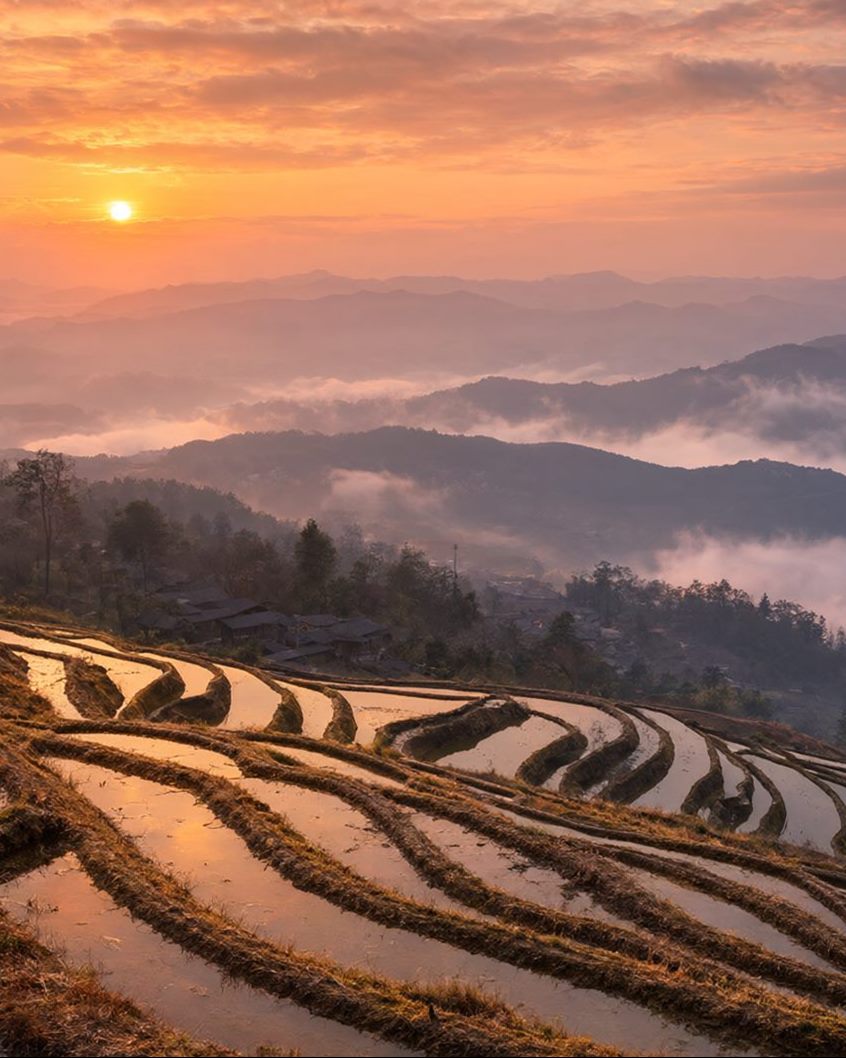
South-west. The strongest case for February. Kunming is 17°C and dry, Dali is mild, and Yuanyang's terraces are at their mirror peak before planting begins. Chengdu is 12°C and damp but the pandas are active in the cold, which is when they are worth the early start.
Yangtze delta. Shanghai is grey and cold, but the festival empties it in a way that never happens otherwise: the roads clear, the museums are calm, and half the good small restaurants shut because the staff have gone home. Suzhou and Hangzhou are quiet and cheap.
Karst south. Guilin at 13°C under low cloud, the peaks appearing and vanishing; the Li river is quiet and the cruise boats half full. Yangshuo is at low-season rates. It is a photographer's month and a poor one for a sunburn.
For three weeks in February the country is not travelling to see anything. It is travelling to eat dinner at its mother's table, and every timetable bends around that. Field desk · a ticket hall, three days before the new year
What the festival actually gives you
The first three days are the best of it. Roads empty, temple fairs open, fireworks set off by families in the street rather than by a council, and a city that belongs to the people who actually live in it. The fifteenth day of the new year, the lantern festival, falls on 3 March in 2026, so February ends before the lanterns do.
Booking across the new year
Set an alarm for 08:00 Beijing time, fifteen days before you travel. For 13–22 February that minute decides whether you have a seat.
Hotels in scenic areas impose minimum stays and non-refundable rates over the holiday. Read the cancellation terms before you pay.
Expect a third of small restaurants to close for three to seven days. Hotel dining rooms and chains stay open, and convenience stores never shut.
What to book, and when
Trains for the festival window go on sale fifteen days out and are the binding constraint; book the outbound leg first and build the trip around it. Yuanyang guesthouses and Harbin hotels should be secured six to eight weeks ahead. For the quiet week after 23 February, three or four days' notice is enough almost anywhere, and flights into Shanghai or Chengdu are at their cheapest of the season.
What February costs
Two different price lists. During 15–22 February, hotels near any temple fair, ski slope or terraced valley charge double or more, and Harbin is ¥600–1000. From 23 February the same rooms fall to ¥280–450 in Beijing, ¥300–480 in Shanghai, ¥220–380 in Guilin. The gap is wide enough to justify moving your dates by a week.
Questions travellers ask
- What is the weather like in China in February?
- Cold and dry in the north, with Beijing between −1 and 6°C and Harbin still at −20°C at night. The south is damp and grey at 7–13°C, and Yunnan is the outlier at 17°C in bright sun. Snow is possible in Beijing and along the Wall, and the terraces at Yuanyang are flooded and reflective all month.
- Should you visit China during Spring Festival?
- Only if the festival is the point. Stay in one city, book trains the moment sales open, and accept that a third of restaurants close. Otherwise come after 23 February, when the holiday ends, prices halve and the country is unusually calm. The lantern festival on 3 March is a gentler reason to plan a trip.