Season · Winter
By the ChinaTravel.fly field desk 6 min read Updated Nov 2026
- Harbin
- −25°CJanuary nights; ice festival from 5 January
- Beijing
- 2°Cdry, clear, and the Wall to yourself
- Guangzhou
- 18°Cplus damp; the south is not reliably warm
- Tibet
- permitslimited in winter; check before booking
Chinese winter is not one thing. The north-east is a genuine continental winter, dry and brutal, with ice festivals and heated taxis. The Yangtze delta is a damp 5°C that feels colder than Harbin's minus twenty because nothing is insulated. Yunnan is 16°C at noon and near freezing at dawn. And the high west is largely closed.
Choose the winter you want and the season is excellent. Choose by accident and you spend three days in a hotel room in a city that was not built to be warm.
The north-east, and why −20 is bearable
Harbin's ice festival runs from about 5 January to late February, with trial opening in late December. The sculptures are built from blocks cut out of the Songhua river and lit from inside; the biggest site is a city of ice with slides, and the smaller one on the river is free and better for photographs. January is the coldest and clearest month, with highs near −13 and nights at −25.
It is manageable because the cold is dry and the city is organised for it: heated shops every fifty metres, taxis at ¥10, and a diet of stewed pork, sauerkraut and hot soy milk. Two pairs of gloves, one thin enough for a phone. Boots with a real sole. Cover your ears and face. Charge the phone inside your jacket, because the battery dies at −20 in twenty minutes of camera use.
Yunnan, the winter loophole
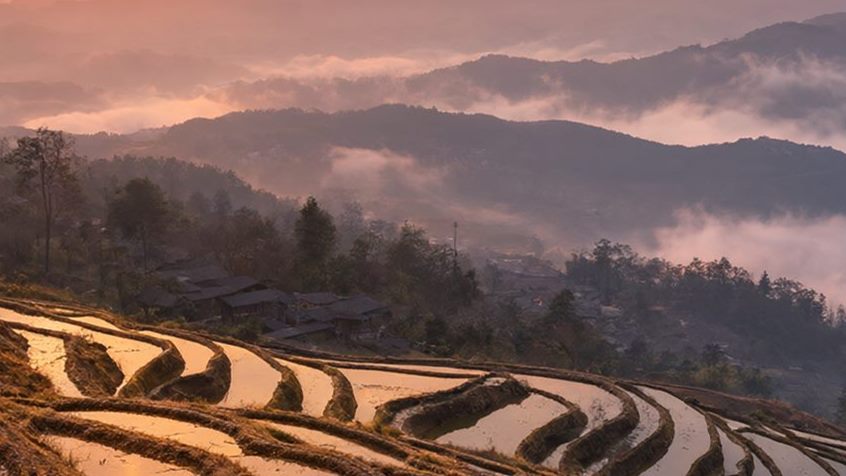
Kunming sits at 1,890 metres and calls itself the spring city, which in January means 16°C by day and 3°C at night, under a hard blue sky. Xishuangbanna in the far south is 25°C and tropical. Dali and Lijiang are cold at night and bright by day, and the rice terraces at Yuanyang are flooded and mirror-like from January to March, precisely when they are worth the drive.
This is the best winter destination in the country for anyone who does not want ice: dry, sunny, cheap in January. Bring layers for the temperature swing and sunscreen for the altitude.
In winter, China is three countries with three different opinions about a coat, and the train between them takes eight hours. Field desk · Harbin, −24°C, 4:40pm

The south, which is not warm everywhere
Guangzhou and Shenzhen run 15–20°C in January, which is pleasant, and 8°C in a cold snap, which is not, because the buildings have no heating. Guangxi is similar, and Guilin in winter is grey, damp and cheap, with the karst half-hidden in mist — atmospheric for photographs and miserable for a river trip. Hainan is the exception: 25°C, beaches, and prices to match in February.
Shanghai in January is the least rewarding version of Shanghai: 8°C, damp, dark by five, restaurants with the door open and a heater inside. Still a great city, but the pleasure is indoor. Suzhou's gardens in light snow are worth the cold.
What closes
- High passes and plateau roads. Some Sichuan-Tibet routes close or become impassable.
- Tibet. Permits are restricted in winter and group requirements tighten; Lhasa stays open but the bureaucracy is less forgiving.
- High parks and grasslands. Alpine areas in Sichuan and Qinghai shut trails from November, and the grasslands are brown and empty.
- Seasonal hotels. Guesthouses in mountain villages close from November to March; those that stay open may have no heating beyond an electric blanket.
- Nothing in the cities. The Forbidden City, the Wall, the terracotta army and the museums run normally, with shorter hours and, in January, no queue at all.
Winter, in practice
Spring Festival falls on 17 February in 2026, and the two weeks around it are the worst time of year to move: trains full, small restaurants closed, prices up. The week after is one of the quietest.
The Wall in January is the best value in Chinese tourism. Clear skies, no crowds, ¥45 at Jinshanling, and a farmhouse lunch for ¥40. Bring gloves; the stone is below freezing.
Pack for indoors as well as outdoors. Northern buildings are heated to 22°C, so you will carry a coat and wish you had a T-shirt. Layer, and keep the outer shell thin.
What winter costs
Cheap. January and early February are low season almost everywhere except Harbin and Hainan: Beijing hotels ¥300–500, Shanghai ¥380–600, Guilin ¥200–350, Lhasa ¥250–450. Harbin in ice season is the exception, at ¥500–900 near the festival site.
Questions travellers ask
- Is Harbin worth visiting in winter?
- Yes, if you accept the cold. The ice festival runs from about 5 January to late February, with daytime highs near −13°C and nights at −25°C. The city is built for it: heated shops, cheap taxis, and a diet of hot stews. Book accommodation two months ahead and bring boots with a real sole.
- Where is warm in China in winter?
- Yunnan is the best answer: Kunming at 16°C by day, Xishuangbanna at 25°C, and the Yuanyang terraces flooded and mirror-like. Guangzhou and Shenzhen run 15–20°C with cold snaps, and Hainan is 25°C but expensive in February. The Yangtze delta is damp and cold, not mild.