Practical · Health
By the ChinaTravel.fly field desk 8 min read Updated Nov 2026
- Lhasa
- 3,650 mthe airport sits slightly lower, 3,570 m, an hour down the valley
- Shangri-La
- 3,160 mYunnan's plateau town, a gentler introduction
- Namtso
- 4,718 ma day trip that catches people out
- Acclimatise
- 48 hrest, water, no alcohol, no gym
- Descend
- 500–1,000 mthe only reliable treatment for serious symptoms
The airport is an hour down the valley, the hotel lift counts as exercise, and the first staircase you climb will tell you more about your body than any fitness test at home.
Altitude illness is not a badge of toughness. It is a set of symptoms with a clear threshold, and the treatment is not to push through but to stop, or to go down.
The numbers, place by place
| Place | Altitude | What it means |
|---|---|---|
| Xining | 2,260 m | The usual staging point; almost nobody feels it |
| Shangri-La | 3,160 m | Sleepy, dry, a good first plateau night |
| Lhasa | 3,650 m | Breathless on stairs for a day or two |
| Shigatse | 3,840 m | Lhasa plus 200 m, noticeably drier |
| Namtso lake | 4,718 m | A day trip that catches people who felt fine in Lhasa |
| Everest base camp | 5,200 m | Serious altitude; acclimatisation is not optional |
The pattern is not linear. A jump from Lhasa to Namtso adds 1,000 metres in three hours, and the headache arrives before the lake does. If you are going above 4,000 metres, spend two nights at 3,600 first, and do not combine the climb with a cold.
Train or plane, and whether it matters
The train from Xining to Lhasa takes about 21 hours and climbs gradually through 4,000 and 5,000 metres, with oxygen supplied in the carriages. It is a beautiful journey and a gentle introduction, but it still delivers you to 3,650 metres, and the first night is the same either way. Flying is not dangerous; it is simply faster, which means less time to notice how you feel.
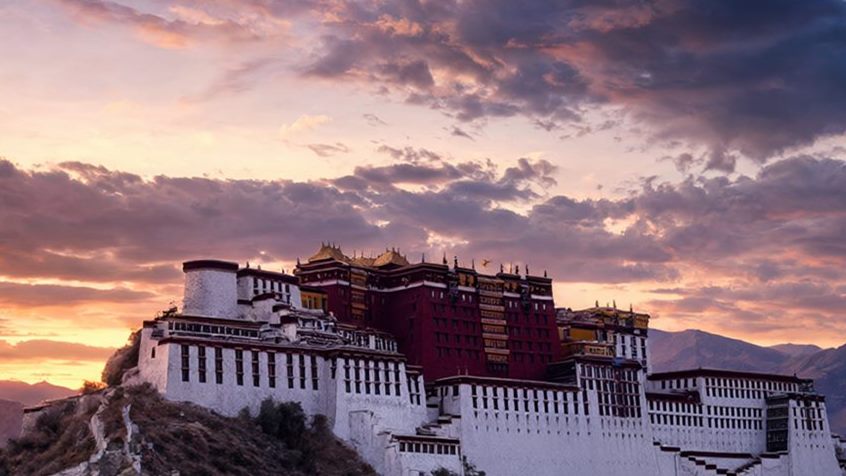
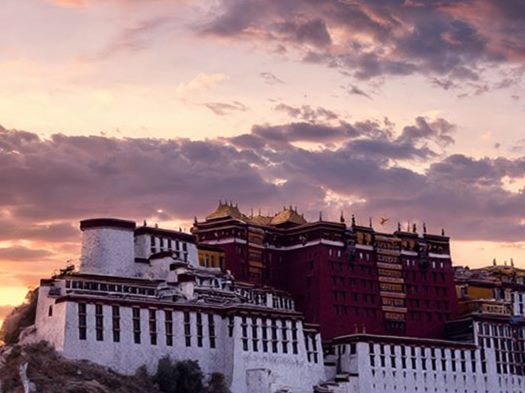
What matters more than the mode is the first day. Arrive, check in, walk slowly, drink water, eat a proper meal, and go to bed early. Do not climb the Potala on arrival day, however good you feel at 4pm. The stairs are the trap: 300-odd steps at 3,700 metres, taken too fast, is how a mild headache becomes a bad night.
The first 48 hours, in practice
Drink three to four litres of water a day and expect to wake twice a night. Eat carbohydrates even when you are not hungry; the body is burning them faster. No alcohol for the first two nights, no strenuous exercise, no sauna. Keep warm, because shivering and altitude pull in the same direction.
Sleep is the strange part. Many people wake at 3am with a racing heart and a dry mouth, which is normal and passes. Sleeping pills and heavy sedatives are a bad idea at altitude because they suppress breathing; if you must, ask a doctor first. A hot shower is fine in a warm bathroom. Being cold afterwards is not.
Altitude does not care how fit you are. It cares how fast you went up, how well you slept, and whether you were honest about the headache. Field desk · Lhasa, second morning
Symptoms: the line that matters
| What you feel | What it probably is | What to do |
|---|---|---|
| Headache, poor sleep, breathless on stairs | Mild acute mountain sickness | Rest, water, paracetamol; do not ascend |
| Nausea, no appetite, dizzy | Worsening AMS | Stop ascending, consider acetazolamide, see a doctor |
| Breathless at rest, cough, gurgling chest | Possible HAPE | Oxygen, descend now, hospital |
| Confusion, stumbling, unable to walk straight | Possible HACE | Emergency: descend and get medical help |
The heel-to-toe walk is a crude test: if you cannot walk in a straight line along a corridor, that is not a headache, that is a neurological sign. HAPE and HACE are uncommon below 4,000 metres and rare in people who ascend slowly, but they are the reason altitude deserves respect rather than fear.
A pulse oximeter is a useful toy and a poor doctor. Readings of 88–92% at rest in Lhasa are common and not alarming; 75% with breathlessness at rest is. Do not buy oxygen to feel better at a number. Buy it if you are short of breath doing nothing.
Medication, honestly
Acetazolamide, sold as Diamox, is the standard preventive. A common regimen is 125 mg twice a day starting 24 hours before ascent, continued for two or three days at altitude. It speeds acclimatisation rather than masking symptoms. Side effects include tingling fingers, a metallic taste in beer, and more urination, which is inconvenient on a train.
Dexamethasone is for serious AMS and cerebral symptoms, not for prevention on a normal trip. Nifedipine is used in some HAPE-prone patients. All of these are prescription decisions, and the right person to make them is a travel doctor at home, not a pharmacist in Lhasa. A small portable oxygen canister is cheap and widely sold; save it for genuine breathlessness.
When to descend
Descent of 500–1,000 metres usually resolves mild to moderate symptoms within hours, and it is the only treatment that reliably works. From Lhasa, that means Shigatse is the wrong direction and Nyingchi, at 3,000 metres, is the right one. From Namtso, it means back to Lhasa, not onward to Shigatse.
Descend at night rather than wait for morning if someone is confused, breathless at rest or coughing pink sputum. Lhasa has hospitals with oxygen and hyperbaric facilities, and travel insurance that covers evacuation is worth the extra premium on a plateau trip. Check that your policy covers trekking above 4,000 metres before you buy it.
The Lhasa arrival day
Morning arrival. Taxi to the hotel, unpack, lie down for an hour. Drink a litre of water before lunch.
Afternoon. A slow walk around the Barkhor, flat and at 3,650 metres, for an hour. Sit in a teahouse. Do not climb anything.
Evening. Light dinner, no alcohol, early bed. Put the Potala on day two, and the Namtso day trip on day four at the earliest.
Questions travellers ask
- Do children and older travellers handle altitude worse?
- Not necessarily. Healthy children over about six usually adapt as well as adults, though they report symptoms less clearly. Older travellers with controlled conditions often do fine; those with heart or lung disease should ask a doctor before booking. Pregnancy above 3,000 metres is generally advised against.
- Should I take acetazolamide before flying to Lhasa?
- It is a reasonable choice for a first plateau trip, and a common one. Start 24 hours before arrival at 125 mg twice daily and continue for two or three days. It is a prescription drug in most countries, so arrange it at home. It reduces symptoms rather than eliminating them.
- Can I visit Tibet without a guide?
- No. Foreign travellers need a Tibet Tourism Bureau permit arranged through a licensed agency, and must travel with a guide for the duration. The permit is checked on the train and at the airport. Independent travel in the region is not permitted, and the rules are enforced.