Itinerary · 12 days
By the ChinaTravel.fly field desk 9 min read Updated Nov 2026
- Nights
- 11Xi'an 2, Lanzhou 1, Zhangye 1, Jiayuguan 1, Dunhuang 2, Lhasa 4
- Rail legs
- 4all on the Lanzhou–Xinjiang corridor, none over three hours
- Best months
- Sep–Octalso late May and June, before the heat
- Cost band
- ¥13,000–18,000per person, mid-range, with the Tibet guide and permits
- Book first
- 30 daysMogao A tickets, then the Tibet permit at 20
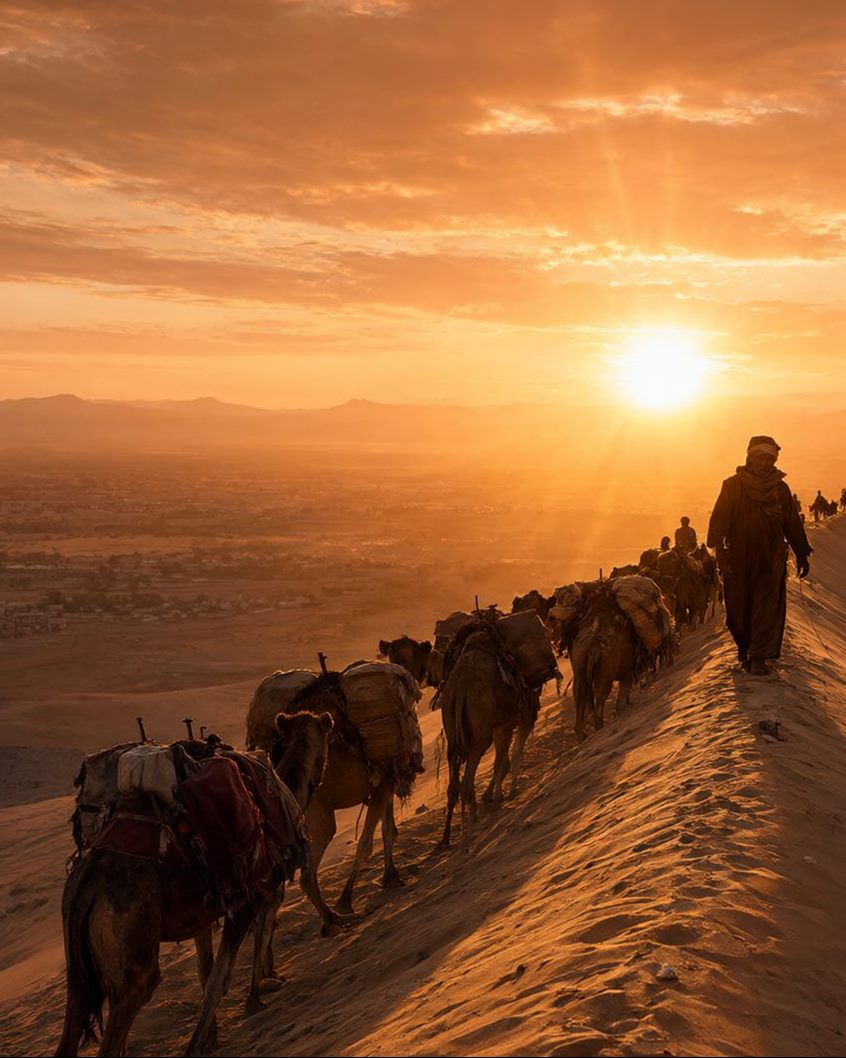
Everyone pictures this route as camels. It is mostly a train window: irrigated fields, then gravel, then nothing at all, with the Qilian mountains holding snow on the southern horizon for most of a day. The pleasure is the sequence — a walled city, a river town, a red rock valley, a fort at the edge of the empire, and finally a cliff full of painted caves above a crescent of sand.
Eleven nights, one corridor
Every train here is short: one to three hours, each leaving in the morning, each landing you somewhere with an afternoon still in it. Only the flight to Lhasa costs a day, and there is no way around that.
| Day | Base | The move | Sleep |
|---|---|---|---|
| 1 | Xi'an | Arrive; wall at dusk, Muslim Quarter | Xi'an |
| 2 | Xi'an | Army at 08:30, museum or pagoda | Xi'an |
| 3 | Lanzhou | 09:00 rail, 3 h; beef noodles, Yellow River walk | Lanzhou |
| 4 | Zhangye | 08:30 rail, 3 h; Danxia landform at 16:00 | Zhangye |
| 5 | Jiayuguan | 10:00 rail, 1 h 20; fort and Overhanging Wall | Jiayuguan |
| 6 | Dunhuang | 09:00 train, 2 h 20; dunes at 17:00 | Dunhuang |
| 7 | Dunhuang | Mogao at 08:30; Yumen Pass and Yadan after | Dunhuang |
| 8 | Lhasa | Fly via Xi'an or Xining; nothing after 16:00 | Lhasa |
| 9 | Lhasa | Potala at 09:30, Jokhang, Barkhor kora | Lhasa |
| 10 | Lhasa | Sera debate at 15:00, tea house, slow evening | Lhasa |
| 11 | Lhasa | Drepung, or a day out to the valley | Lhasa |
| 12 | — | Morning flight to Chengdu, 2 h 20 | — |
Xi'an to Lanzhou: where the green gives out
Three hours west of Xi'an the terraces thin, the villages turn to mud brick, and the train crosses the Wei River into country that looks like the idea of the Silk Road rather than the thing itself. Lanzhou is a river town with a beef noodle culture that is genuinely worth a night: ¥12–18 a bowl, pulled in front of you, eaten standing at eight in the morning.
The corridor is a thousand kilometres long and the train does it in a day, which is the only reason this route exists. Field desk · Zhangye West, 08:14
Two stops that repay a night each
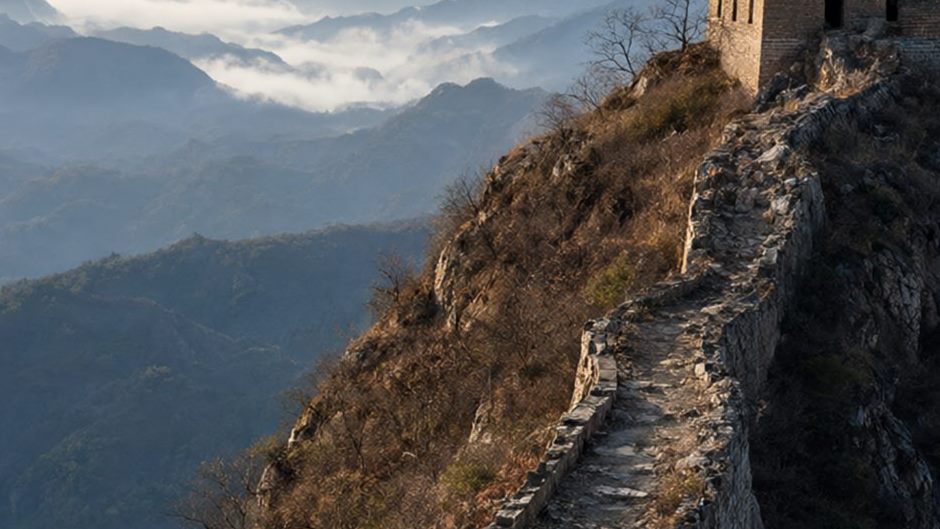
Zhangye is a small city with a large landform twenty minutes outside it: banded red and grey hills, best at four in the afternoon when the light goes sideways. ¥74 with the shuttle bus, and ninety minutes is enough. The next morning, an hour and twenty on the train gets you to Jiayuguan, where the Ming wall ends at a fort in the gravel — ¥110 for the pass and the Overhanging Wall above it, and a wind that has crossed nothing but grass for 400 kilometres.
Dunhuang is the reason for the whole trip
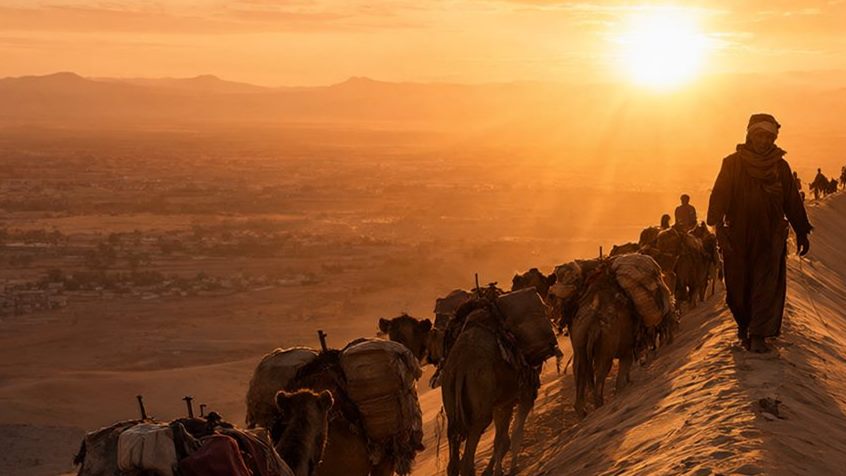
Mogao is 25 km outside town, 735 caves cut into a cliff, and a ticket system that rewards planning: the A ticket is ¥238, includes two films and eight caves with a guide, and sells out thirty days ahead in September. Go at 08:30, take the caves seriously, and skip the gift shop. In the late afternoon, the dunes at Mingsha are ¥110 for three days and the camel ride is another ¥100, which is a fair price for a photograph you have seen a thousand times and will still take.
The Lhasa extension, and its paperwork
There is no direct link from Dunhuang to Lhasa. The workable version is a morning flight to Xi'an or Xining and a connection onward, six to eight hours door to door, ¥1,100–1,800; the alternative is a train to Xining and the 21-hour Qinghai–Tibet line, which is a day and a night and worth doing once in a life. Either way the Tibet permit is the gate: 15–20 days ahead through an agency, with a guide attached for the whole stay, and the permit is checked at check-in before you board.
Give Lhasa four nights and treat the first as lost. You land at 3,650 m with two-thirds of the oxygen you are used to, and the Potala's steps are a genuine climb. Day nine is the palace in the morning and the Jokhang in the afternoon; day ten is Sera for the 15:00 debate and a tea house afterwards; day eleven is Drepung or nothing at all, which after ten days of moving is the better choice.
What it costs, and what it does not
¥13,000–18,000 per person at mid-range. The four rail legs total ¥600–750, which is the cheapest part of the trip. Gansu hotels are ¥250–450; Lhasa is ¥400–700 plus the permit, guide and vehicle at ¥700–1,200 a day. Mogao, the dunes, the fort and the Potala come to about ¥700. Add the two flights: Dunhuang–Lhasa at ¥1,100–1,800 and the exit to Chengdu at ¥1,200–2,500.
The awkward legs, named
Jiayuguan to Dunhuang. The high-speed line passes 130 km north at Liuyuan South, so the fast option is a train plus a two-hour bus. The through train to Dunhuang station is slower and simpler; take it and sleep.
Dunhuang to Lhasa. No direct flight worth relying on. Book the Xi'an connection, not the Xining one, unless you want the train.
The permit. It names your entry city and dates. Change either and the document is void, and the airline will find out before you do.
Questions travellers ask
- What is the best month for the Hexi Corridor?
- Late September and the first half of October: clear air, warm days, cold nights and the dunes at their best. May and June run it close with fewer people. July and August are crowded and 40°C at noon in Dunhuang, and winter is empty, beautiful and cold, with some caves closed.
- How far ahead do you arrange the Tibet permit?
- Fifteen to twenty days, through an agency, with a guide attached for the whole stay. The document names your entry city and your dates, the airline sees it at check-in, and your guide carries the original. Book flights only once it is confirmed, because changing either detail means a new application.