Field notes · No. 15 · Qinghai–Tibet line
By the ChinaTravel.fly field desk 8 min read Updated Nov 2026
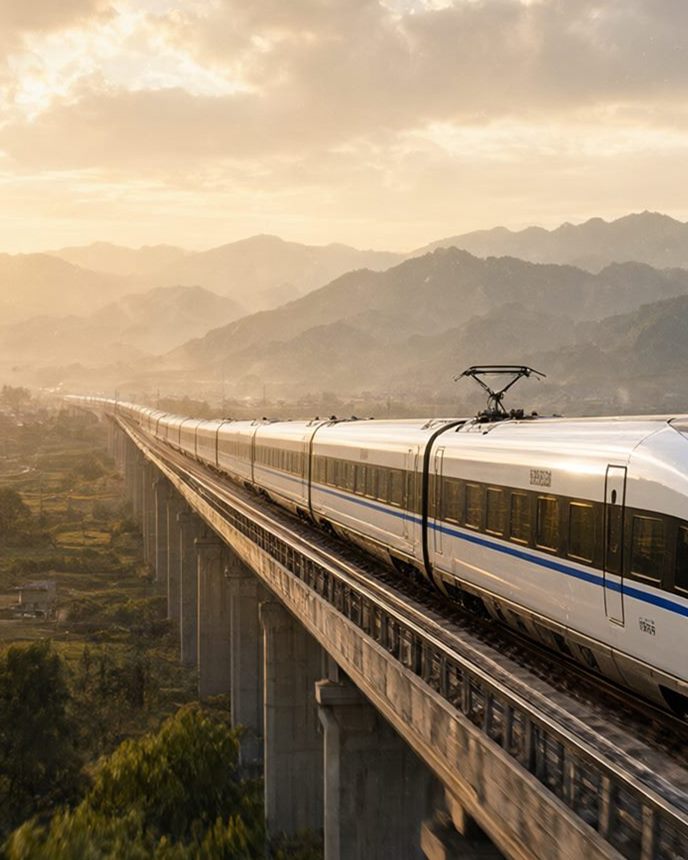
- Xining–Lhasa
- 21 habout 1,970 km, one night on board
- Highest point
- 5,072 mTanggula pass, shortly before dawn
- Soft sleeper
- ¥760–800four berths and a door; hard sleeper ¥480–510
- Permit
- ¥500–1,000via a licensed agency, two to three weeks ahead
The train leaves Xining in the evening and reaches Lhasa a little after four the next afternoon, which sounds leisurely until you look at what happens in between. The carriage is sealed and pressurised, the glass double-glazed against the plateau light, and every berth has a small oxygen outlet in the panel beside the window. Nobody tells you to use it. It is simply there, like a lifeboat on a comfortable ship.
A ticket that begins with a permit
Foreign passport holders cannot buy this journey like every other train in China. The Tibet Travel Permit is arranged through a licensed Tibetan agency, costs ¥500–1,000 depending on season and group size, and takes two to three weeks. It is checked at the gate in Xining and again on the platform at Lhasa, and without it the ticket is a piece of card.
The agency also books the ticket, usually a soft sleeper because that is what foreigners ask for. Four berths and a door: two lower, two upper, a table under the window, a thermos, and two cubic metres of shared life for twenty-one hours. The hard sleeper next door has six berths and no door and is the more sociable carriage.
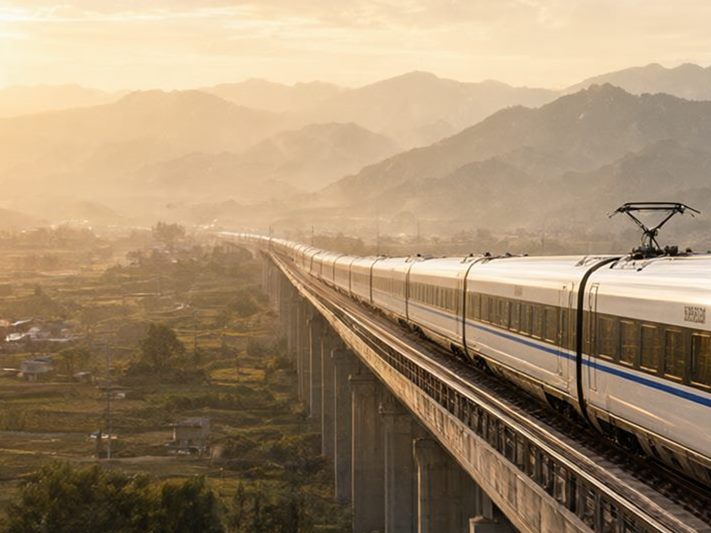
Dusk, and the last of the low country
For the first two hours the line runs along the southern shore of Qinghai Lake, the largest in China: a blue line under a brown range, and a tourist train on the far shore. Then the light goes and the plateau begins. Dinner came from the dining car at ¥35: rice, braised pork, greens, and a soup thickened with something. The dining car also sells oxygen canisters.
Our bay filled at Xining. A Tibetan family going home to a wedding, a monk in a maroon jacket, and a trader with eleven boxes of tea strapped together with tape. By eight the tea was open, the thermos was doing the rounds, and the monk had explained, through the eleven-year-old, that the train is the best way to arrive because it gives your body time to notice.
The whole point of the railway is that the altitude arrives slowly enough to be argued with. Field desk · Qinghai–Tibet line, 4,200 m
Night, and the oxygen question
The corridor display gives the temperature, the speed and the altitude, and by eleven half the carriage is standing in front of it. Golmud passes at midnight, 2,800 metres; the Kunlun pass at 4,767 comes at two in the morning and nobody sees it. What you feel is a dry mouth, a headache behind the eyes, and a pulse doing more work than it should. Saturation sits in the high eighties for most people; a ¥60 oximeter is worth it.
The outlets work. A woman two bays down had a bad night, and a conductor produced a plastic cannula and plugged her in, and she slept. It is not a medical service and there is no doctor in every carriage, but there is a protocol, and it is calm. Most people need water, less dinner, and to stop reading the altitude.
Kekexili at first light
At half five the sky is a thin grey line and the country outside is a frozen plain with no trees and no fences, at about 4,500 metres. This is Kekexili, the empty quarter, and the train crosses it at speed behind a fence built to keep the antelope off the track. We saw a herd of Tibetan antelope at a distance, or possibly rocks; a wild ass, definitely; and a river the colour of milk.
The Tanggula pass comes shortly after, 5,072 metres, the highest point on any railway in the world, and the train does not stop. The sun was up, the peaks were white, and the whole carriage was at the windows taking the same photograph. Then the line descends, and the descent is the strange part: the headache eases, the air thickens, and by Nagqu you can breathe through your nose.
Riding the altitude
Drink more than you think. The carriage air is dry enough to crack your lips by the second hour. Two litres of water, lip balm, and no alcohol, however much the trader offers.
Sleep on the lower berth if you can choose. It is warmer, it has the window, and you do not have to climb a ladder with a headache at three in the morning.
Do not plan anything for the arrival day. Lhasa is 3,650 metres; the first evening should be a short walk, noodles and an early night.
The last two hours, and the platform
After Damxung the valley widens, the river turns green, and the first barley fields appear with willows along the channels. The train runs beside the road, past a new town, into the outskirts of Lhasa, and the Potala is visible from the line for perhaps ninety seconds before the platform roof takes it away. Everyone on the left stands up at once.
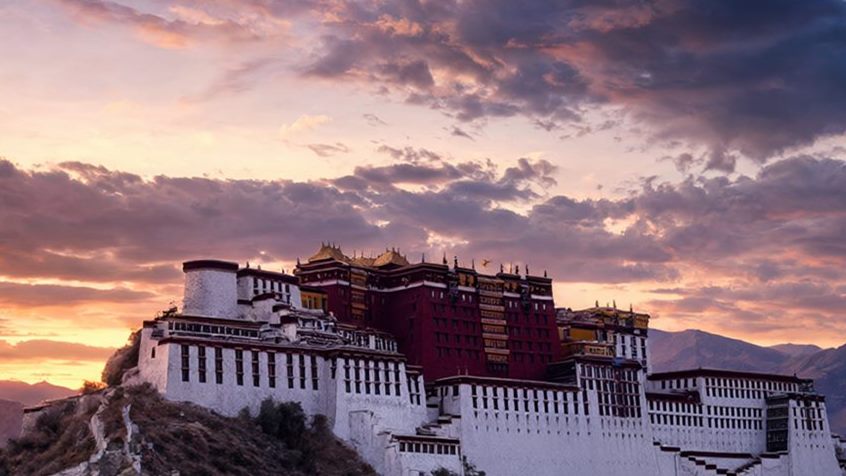
Lhasa station is a large, clean, heavily policed building where photography is discouraged and the taxi queue is organised by a man with a whistle. A cab to the Barkhor is ¥30–50 and takes twenty minutes. The first thing that strikes you is the light: under a sky at 4,300 metres the shadows are hard, the whites very white, and everything looks overexposed for a week.
We walked to the hotel slowly and stopped twice. The train had done the climbing for us, twenty-one hours of it, and the body had been given time to file a complaint. That is the argument for the railway, and it holds: you arrive tired, dry and slightly stupid, but upright.
Questions travellers ask
- Do you need oxygen on the train to Lhasa?
- The carriage is pressurised and enriched, so most passengers do not. Oxygen outlets sit beside every berth, and conductors can supply a cannula if someone feels unwell. Take water, lip balm and a pulse oximeter, skip alcohol, and use the outlet if your saturation drops below about 85 per cent.
- How far ahead should you book the Lhasa train?
- Six to eight weeks in summer, when Tibetan agencies are busy and berths sell out. The permit needs two to three weeks and the ticket is usually bought with it. In November to March, three to four weeks is often enough, and soft sleepers are easier to find.