Month · July
By the ChinaTravel.fly field desk 6 min read Updated Nov 2026
- National range
- 18–41°Cplateau nights to the Sichuan basin
- Rain
- 10–235 mmafternoon storms; the north-west stays dry
- Crowds
- peakschool holidays, the busiest six weeks
- Daylight
- 14h 50mBeijing, roughly 04:50 to 19:40
- Prices
- peakBeijing ¥450–750; Lhasa ¥450–700
The heat is not uniform, but it is relentless. Chongqing, Wuhan and Nanjing run 38–41°C for weeks, with nights that stay above 28. Shanghai is a few degrees cooler and much wetter, and 34°C at 85 per cent humidity is harder than 39°C in dry air, because sweat stops working. Beijing is 31°C and dry; Xi'an 33°C; Guilin 33°C with thunderstorms.
The remedy is geographic. Qinghai, Gansu, Tibet, the Sichuan highlands, Yunnan's mountains and the north-east all sit between 18 and 26°C. In July the sensible trip is a line from Xining to Lhasa, or Chengdu up to Kangding, or simply Harbin and the forests of Jilin.
Where the heat breaks
Altitude is the reliable lever: roughly six degrees for every thousand metres. Xining at 2,260 m averages 24°C. Lhasa at 3,650 m is 23°C by day and 9 at night, with a UV index that burns in twenty minutes. Shangri-La at 3,200 m is 20°C and green. Kangding, at 2,560 m, is 22°C and wet.
Latitude helps too. Harbin is 28°C, which sounds hot until you compare it with Nanjing, and the evenings cool down properly. The north-east also has the cheapest summer hotel rates of any region, because domestic travellers fly south to the beaches instead.
| Region | Weather | Crowds | Verdict |
|---|---|---|---|
| North | 22–33°C, dry heat | Peak | Early mornings only; book everything |
| Silk Road west | 18–36°C, dry, strong sun | Moderate | Dunhuang for sunrise and dusk, not noon |
| South-west | 20–31°C, afternoon storms | Moderate | Go up: Kangding, Shangri-La, Jiuzhaigou |
| Yangtze delta | 26–34°C, humid | Peak | Avoid; the heat index is the story |
| Karst south | 26–34°C, storms, typhoon risk | Moderate | Green and dramatic, but draining |
Where to go this month
North. Beijing at 31°C is survivable if you start at seven and stop at eleven. The Wall at Jinshanling is quieter than Badaling on weekdays, and unbearable at noon. Xi'an's terracotta pits have no air conditioning and no shade; go at 8:30. Harbin, four and a half hours north-east, is the coolest city on the list and the cheapest.
Silk Road west. Dry heat, which is a different proposition. Dunhuang is 36°C at 15 per cent humidity, so the dunes are best at sunrise and after eight in the evening, and the Mogao caves are cool inside. Turpan is hotter still. Lhasa is mild but cloudy, and the monsoon has arrived in Tibet, so mountain views are a gamble.
South-west. The best answer for a mixed trip. Chengdu is 31°C and sticky, but two hours west the road climbs into 22°C. Jiuzhaigou is cool and full of water, Yunnan's highlands are in the rains but pleasant at altitude, and Qinghai Lake is ringed with rapeseed through the month.
Yangtze delta. The worst of it. Shanghai, Suzhou and Hangzhou are 32–34°C with humidity to match, and the plum rain has given way to still, heavy air. If work brings you here, do the museums, the restaurants and the river at dusk, and save the gardens for a cooler season.
Karst south. Guilin is 33°C with 220 mm of rain, much of it in short violent storms. The karst is at its greenest and the river is full. Typhoon season is under way on the coast, and a typhoon will close ferries and flights for two or three days, so keep the last two days of the trip flexible.
July is not a month for choosing cities. It is a month for choosing a height above sea level. Field desk · Qinghai, 3,200 metres
The school holiday problem
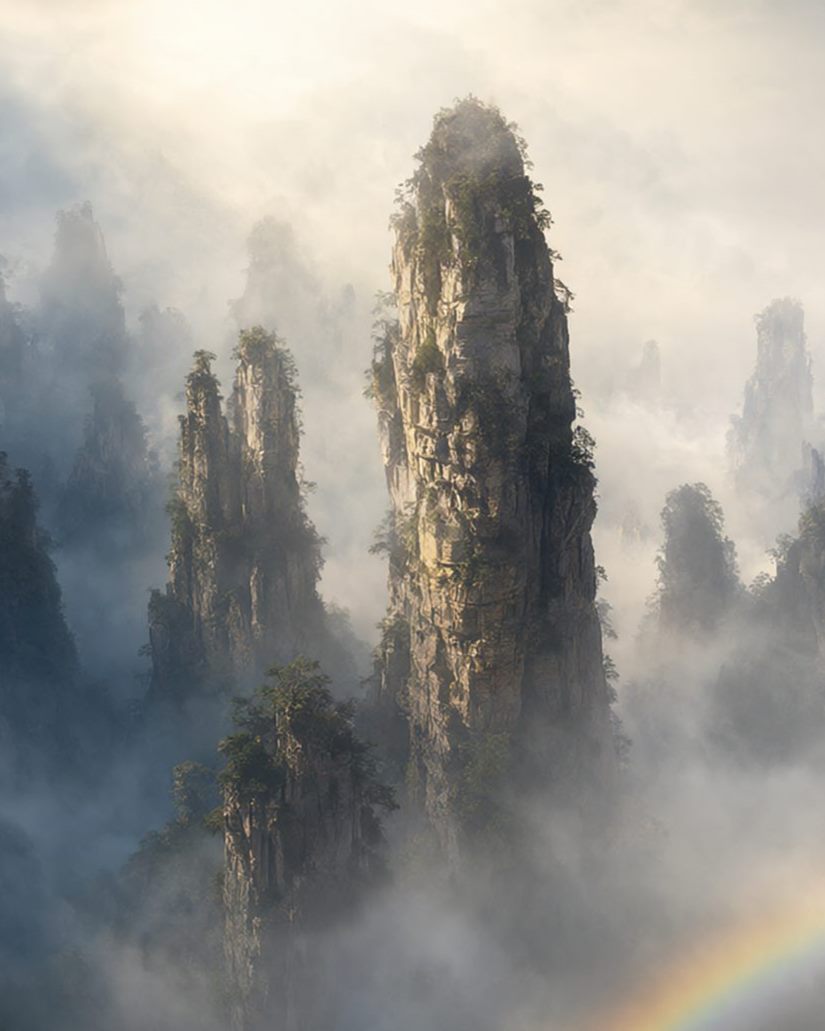
There is no public holiday in July, and it does not matter: the schools are out from the first week and the country travels anyway. The Forbidden City, the terracotta army, Zhangjiajie and Jiuzhaigou all sell out days ahead, Friday trains vanish, and any cable car has an hour's queue by ten. The exception is the last week of August, when families go home to prepare for term.
Heat, in practice
Sightsee before 9:30 and after 17:30, and give the middle of the day to a museum, a teahouse or the hotel. This is not laziness; it is how the cities themselves operate.
Drink more than thirst suggests, and add salt. The early sign of heatstroke is a headache and the odd sensation of having stopped sweating.
Carry a light long-sleeve layer for trains and museums. Chinese air conditioning is set to arctic, and the swing between street and carriage is 15 degrees.
What to book, and when
Everything, and early. Trains open fifteen days ahead at 08:00 and the good departures go in minutes; book the outbound leg first. The Forbidden City, Mogao, Jiuzhaigou and Zhangjiajie all use timed entry and release slots about seven days out. Tibet permits take twenty days in peak season and cannot be arranged locally. Hotels in Lhasa, Xining and Harbin are the ones that sell out; the eastern cities have rooms, at a price.
What July costs
Peak season, with the usual pattern: the cities with the worst weather are the cheapest. Beijing hotels run ¥450–750, Shanghai ¥500–800, Guilin ¥350–600, Chengdu ¥400–650, Lhasa ¥450–700. Flights to Xining and Lhasa are the most expensive of the year; the train is the sensible way in, if you can get a berth.
Questions travellers ask
- What are the best places to visit in China in July?
- Go north or up. Qinghai and its lake, Gansu and Dunhuang, Tibet, the Sichuan highlands around Kangding and Jiuzhaigou, Yunnan's mountains, and Harbin in the north-east all sit at 18–26°C. The eastern cities are 32–38°C and humid. Anywhere at 2,000 metres or more is comfortable, provided you acclimatise.
- Is July a bad time to visit China?
- Not if you avoid the eastern cities. The heat in Shanghai, Chongqing and Wuhan is genuinely draining, and the school holidays make the main sights crowded. But the plateau, the Silk Road and the north-east are at their best, and the long daylight means early starts are rewarded. Book trains and entry slots well ahead.