Season · Summer
By the ChinaTravel.fly field desk 6 min read Updated Nov 2026
- Hottest
- 38–41°CChongqing, Wuhan, Nanjing, late July
- Plum rain
- Jun–Julabout a month in the Yangtze delta
- Plateau
- 18–24°CXining, Lhasa, Shangri-La, all summer
- Crowds
- Jul–Augschool holidays; book trains early
China in July is two countries. One is the Yangtze basin and the south coast: 35°C, 80 per cent humidity, air conditioners dripping onto the pavement, and a wet-bulb temperature that makes walking three blocks a decision. The other is the plateau and the north-east: 22°C, dry wind, and a sun that burns through thin air. Between them lie four hours of flight and 2,000 metres of altitude.
The mistake is to treat summer as a season to endure in the cities you wanted to see. Move, or go early, or accept that you will be indoors from two until six.
The heat, measured honestly
Chongqing is the hottest large city in the country and takes a certain pride in it: 38–41°C for weeks, and nights that do not fall below 28. Shanghai is a few degrees cooler but wetter, and 34°C at 85 per cent humidity is worse than 39°C in the dry west, because sweat does not evaporate.
Practical consequences: sightseeing before 9:30 and after 17:30, with the middle of the day given to museums, teahouses and the hotel. Two litres of water a day, plus salt. Watch for heatstroke rather than sunburn; the early signs are a headache and the strange feeling of having stopped sweating.
The monsoon, which is not the same everywhere
The east gets plum rain, 梅雨, from roughly mid-June to mid-July: a month of grey, warm drizzle in Shanghai, Suzhou, Hangzhou and Nanjing, with humidity near saturation and laundry that will not dry. The south — Guangdong, Guangxi, Fujian — gets violent downpours from May, often at four in the afternoon. Typhoon season runs from July to September, and a typhoon will close ferries, flights and the Li river for two or three days.
Mountain Sichuan and Yunnan rain in the afternoons and clear in the mornings, which is workable if you start early. The north-west is dry; Dunhuang in July is 36°C at 15 per cent humidity, which is why people go in May and September instead.
In summer, the itinerary is an altitude chart. Every 1,000 metres you climb buys you about six degrees and a night of sleep. Field desk · a bus climbing out of Chengdu
The plateau escape
| Place | Altitude | July high | What it is for |
|---|---|---|---|
| Xining, Qinghai | 2,260 m | 24°C | gateway to Qinghai Lake and the rapeseed |
| Lhasa, Tibet | 3,650 m | 23°C | strong sun, cold nights, permits required |
| Shangri-La, Yunnan | 3,200 m | 20°C | monasteries, meadows, Tibetan Yunnan |
| Kangding, Sichuan | 2,560 m | 22°C | grassland and the Sichuan-Tibet road |
| Harbin, Heilongjiang | 150 m | 28°C | cool by comparison, and cheap in summer |
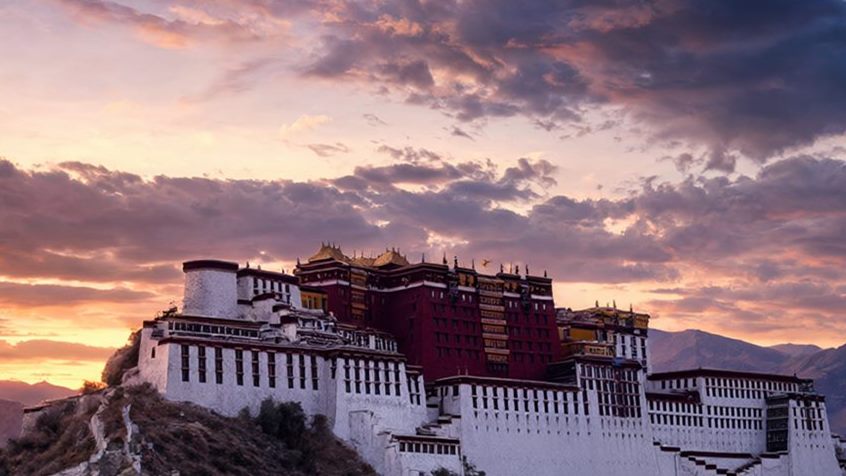
The plateau is the answer for anyone travelling in July with a tolerance for altitude. Qinghai Lake is ringed with rapeseed in July, the grasslands of Gansu and Sichuan are green and full of yaks, and Lhasa is at its warmest. Acclimatise over two nights below 3,000 metres, and remember that the sun at 3,600 metres burns in twenty minutes even when the air is 20°C.
Festivals and the school holidays
Dragon Boat, on the fifth day of the fifth lunar month — 19 June in 2026 — brings races on rivers and lakes, zongzi wrapped in bamboo leaves. It is worth seeing once, in a river town rather than a city.
The bigger force is the school holiday, from early July to the end of August, when Chinese families travel. Popular sights run at capacity, the Forbidden City and the terracotta army sell out days ahead, and Friday evening trains vanish. Book fifteen days out, the moment sales open, and prefer Tuesday to Saturday.
Surviving a Chinese summer
Carry a small towel and a change of shirt. Not romantic, but the difference between a comfortable afternoon and a miserable one in the delta.
Air conditioning in hotels is not always adjustable, and in the south many rooms have a fixed 26°C. Ask for a room with a controllable unit if you sleep badly in heat.
Hydration salts cost ¥5 at any pharmacy. So is a light rain shell: the monsoon downpour at four o'clock is short, but it is total.
What summer costs
July and August are peak domestic season, so the cheapest months are the ones you would least expect: June before the schools break up, and late August after they go back. Hotels in Chengdu or Xi'an run ¥300–550, Shanghai ¥450–700, Lhasa ¥400–650.
Questions travellers ask
- Is summer a bad time to visit China?
- Not if you choose the altitude. The eastern cities are hot and humid from July, but Qinghai, Gansu, Tibet, the Sichuan highlands and Yunnan's mountains sit at 18–24°C. Go early in the day in the cities, book trains the day sales open, and expect the main sights at capacity during the school holidays.
- When is the rainy season in China?
- It depends where. The Yangtze delta has plum rain from mid-June to mid-July; the south has monsoon downpours from May to September and typhoons from July; mountain Sichuan and Yunnan rain in the afternoons. The north-west stays largely dry, which is why Dunhuang is better in May and September.