Month · November
By the ChinaTravel.fly field desk 6 min read Updated Nov 2026
- National range
- −12 to 24°CHarbin nights to the Guangxi lowlands
- Rain
- 10–60 mmthe driest month in most of the country
- Crowds
- lowest of the yearno public holiday; weekends only
- Daylight
- 10hBeijing, roughly 07:00 to 17:00
- Prices
- lowestBeijing ¥250–450; Guilin ¥180–320
The month begins with the last of the colour. Poplars and maples are down to their last leaves, and the ginkgo takes over: Beijing's temple courtyards and Xi'an's old streets turn a yellow that looks edited, usually in the second week, for about ten days. Then the wind strips everything and the country settles into its winter browns.
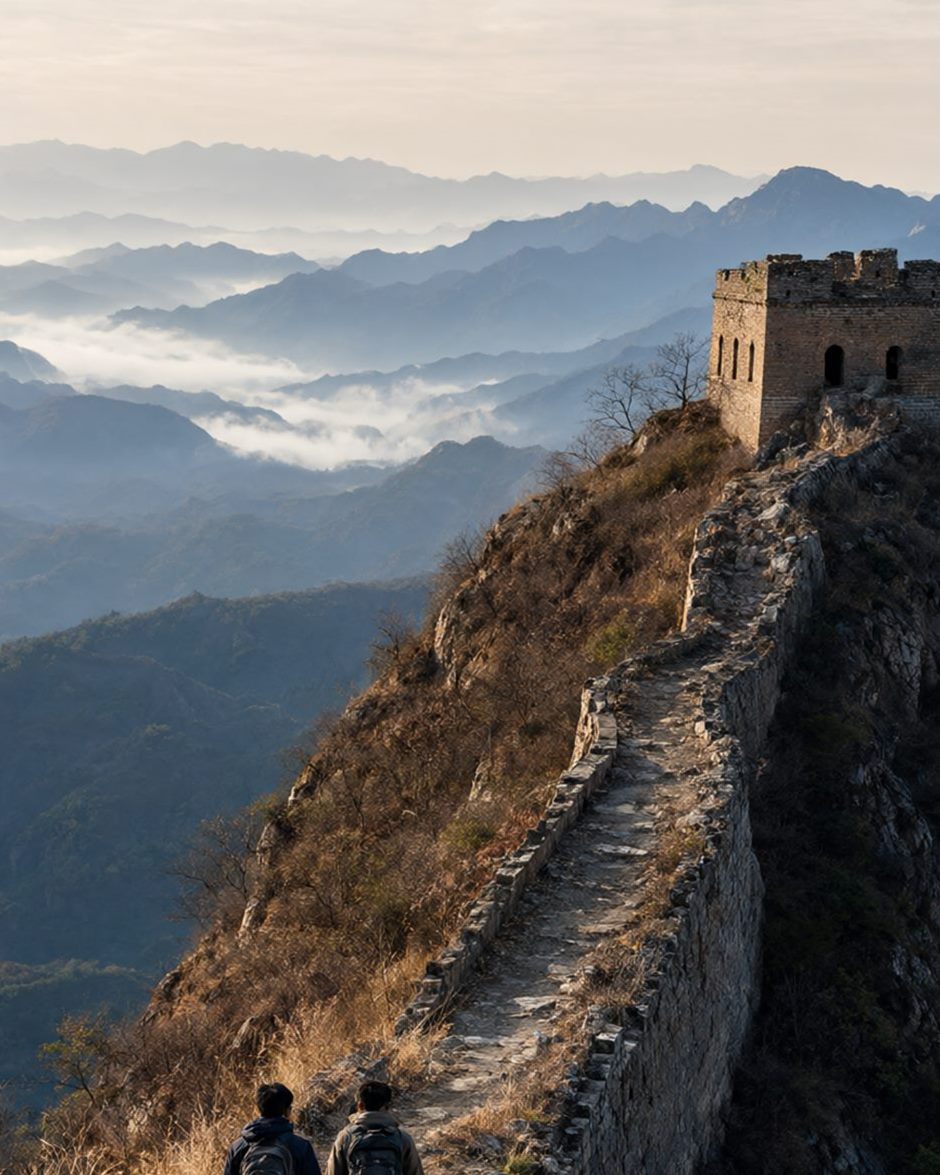
What remains is light and space. Visibility in the north is at its best of the year when the wind blows, the Forbidden City is quiet on a Tuesday, and the Wall has more towers than people. The trade-off is a short day and a real coat.
The temperature drops, in stages
Beijing runs 9°C by day and −2 at night, with the first hard frost around the middle of the month. Xi'an is 11°C, Shanghai 15°C and damp on grey days, Chengdu 15°C and overcast. Kunming stays at 16°C in bright sun, which is why Yunnan remains the winter loophole it always is.
In the north-east it is a different scale: Harbin is −5°C by day and the Songhua has not yet frozen solid, so the city is grey and the ice park is still a building site. The far south is still warm at 22°C, and Hainan is 27°C and filling for the winter.
| Region | Weather | Crowds | Verdict |
|---|---|---|---|
| North | 0–12°C, clear, frosty | Lowest of the year | The best month for empty sights |
| Silk Road west | −8 to 12°C, dry, cold | Almost none | Mogao is quiet; the dunes are freezing |
| South-west | 8–19°C, dry sun in Yunnan | Low | Kunming and Dali at their best |
| Yangtze delta | 10–18°C, grey spells | Low | Gardens in autumn colour, cheap rooms |
| Karst south | 14–21°C, mist | Low | Atmospheric; the river is quiet |
Where to go this month
North. Beijing at 9°C is bracing and beautiful: the palace roofs against a hard sky, the ginkgo in the temple courtyards, the Wall at Jinshanling with frost in the shade and nobody on the steps. Xi'an is mild enough for the city wall and the Muslim Quarter in the evening. Bring gloves for the morning.
Silk Road west. Cold, dry and empty. Dunhuang is 5°C, the dunes are rimed in the morning, and the Mogao caves are visited in coats. Lhasa is 12°C with brilliant sun and freezing nights, and the plateau is at its quietest. Only the high passes are a risk, and some close with the first snow.
South-west. Yunnan's best month of the dry season: 16°C in Kunming, clear skies, and the terraces at Yuanyang flooded again from late November as the new cycle begins. Chengdu is grey but mild, and Jiuzhaigou is closing down for winter, with some boardwalks already off limits.
Yangtze delta. Shanghai is 15°C, cool rather than cold, with the plane trees turning and the gardens of Suzhou at their best in yellow and russet. Weekdays are quiet, hotel rates are low, and the canal towns in morning mist are the version of Jiangnan that people write about.
Karst south. Guilin at 18°C with mist in the peaks and the river low and slow. It is not the dazzling month of October, but it is cheap, empty and moody, and Yangshuo's guesthouses are half price. The bamboo rafts still run unless the river is too low.
November is the month China's sights become rooms again: no queue, no timetable, no heat, and a guide with time to talk. Field desk · the Forbidden City, a Tuesday in November
Heating, haze and the first snow
Two things happen to the air in November. The first is that it gets much cleaner on windy days, because the cold front comes with a north-west wind. The second is that it gets much worse on still ones: the heating comes on around 15 November, the coal and gas plants fire up, and a windless week can push pollution to levels that close in the view.
The first snow usually falls in Harbin and the north-east in the second half of the month, and in Beijing in the last week or early December. It rarely settles for long in the city. In the mountains it settles and stays, which is when the wall photographs best and walks worst.
Reading the air
Check the AQI each morning, not the temperature. Anything over 150 changes the plan: museums and markets instead of viewpoints.
A still, cold, cloudless day is the worst combination for haze in Beijing. Wind is your friend, however unpleasant it feels at the time.
If you have respiratory trouble, plan the north for the first half of the month and keep Yunnan as an alternative. Kunming's air is clean nearly all winter.
What to book, and when
Almost nothing needs booking, which is the point. Mogao needs two or three days' notice, the Forbidden City is walk-up, and trains have seats a day ahead. Two exceptions: the ginkgo weekends in Beijing and Xi'an, when hotels near the temples fill, and Harbin for late December, which should be booked now if the ice festival is the plan. Trains for the February Spring Festival open fifteen days ahead, in early February.
What November costs
The lowest rates of the autumn, and in some cities of the year. Beijing hotels run ¥250–450, Shanghai ¥300–500, Guilin ¥180–320, Chengdu ¥250–420, Lhasa ¥220–400. Flights are cheap except to Hainan and Harbin, which start climbing as the winter season begins.
Questions travellers ask
- Is November a good time to visit China?
- Yes, for clear air and empty sights. Beijing is 9°C with low humidity, the ginkgo peaks in the second week, and hotel rates are the lowest of the autumn. The days are short and the north is cold. The south stays mild, and Yunnan is sunny at 16°C. It is a better month for cities than for mountains.
- What is the weather like in China in November?
- Dry and increasingly cold in the north, at 0–12°C, with hard frost mid-month and the first snow in Harbin. Shanghai sits near 15°C with grey spells, Chengdu 15°C and overcast, Guilin 18°C with mist. Yunnan stays dry at 16°C, and Lhasa is 12°C with freezing nights and strong sun.