Month · October
By the ChinaTravel.fly field desk 6 min read Updated Nov 2026
- National range
- 0–28°CHarbin mornings to the Guangxi lowlands
- Rain
- 10–70 mmthe driest month in the north
- Crowds
- 1–7 OctNational Day, then the quietest week of autumn
- Daylight
- 11h 30mBeijing, roughly 06:20 to 17:50
- Prices
- double, then lowholiday rates 1–7 Oct; ¥350–600 after
National Day marks the founding of the People's Republic on 1 October, and the seven days that follow are the largest leisure travel event of the year after Spring Festival. Hotel rates in scenic areas double or triple, high-speed trains sell out in minutes, and the Great Wall, the Forbidden City, Zhangjiajie and the terracotta army all operate at capacity.
Then, on the 8th, it stops. The country goes back to work having spent its annual leave, and the three weeks that follow are the quietest and best of the autumn. The weather does not change; only the number of people in the photographs does.
What October weather actually is
Beijing averages 20°C, Xi'an 18, Shanghai 23, Chengdu 21, Guilin 26, Lhasa 18, Dunhuang 20. Humidity is low across the north, the haze has gone, and the light lasts from about half past six until six. Nights fall to 8°C in Beijing and below freezing in Lhasa, so a jacket is needed after dark even on a warm day.
It is also the month when the north begins to shut down for winter without announcing it. The first frost comes in the second half, Harbin can see its first snow by the end of the month, and the trees go from gold to bare in about a fortnight.
| Region | Weather | Crowds | Verdict |
|---|---|---|---|
| North | 8–22°C, dry, deep blue | Worst 1–7, then low | The best month; go after the 8th |
| Silk Road west | 5–22°C, dry, cold nights | Busy early, quiet after | Dunhuang and Mogao at their peak |
| South-west | 12–25°C, dry | Moderate | Yunnan at its most reliable |
| Yangtze delta | 15–25°C, clear | Holiday surge, then calm | The best six weeks of the year |
| Karst south | 20–28°C, clearing | Moderate | Clearest month for the Li river |
Where to go this month
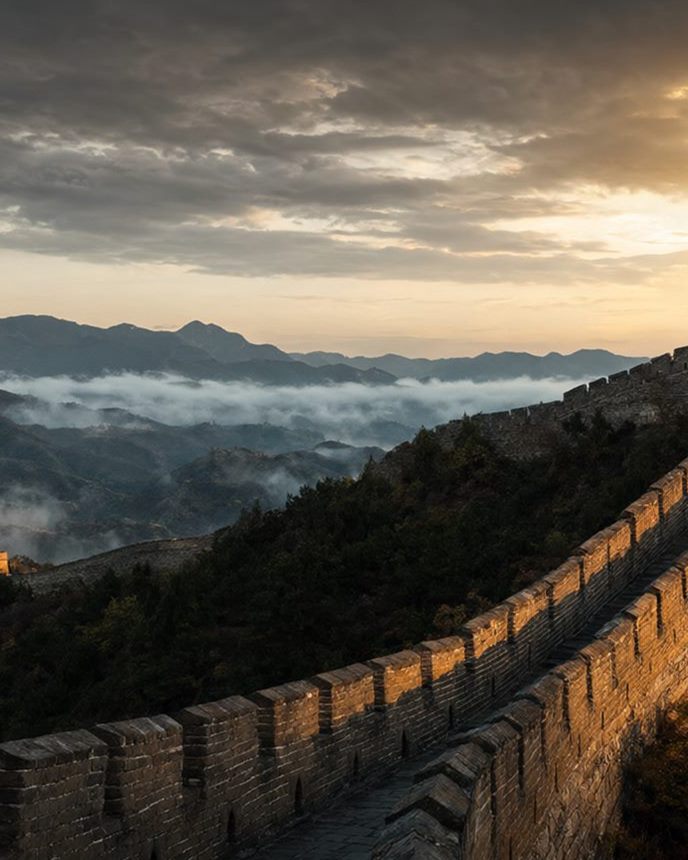
North. Beijing is at its best: 20°C, blue sky, the Wall running to the horizon, and the hutongs full of people sitting outside. The foliage peaks in the first ten days and is gone by the 25th. Xi'an is comfortable, and the city wall at dusk with a jacket on is the reason to give it two nights.
Silk Road west. The second great month, after September. Dunhuang is 20°C with cold nights, the dunes are at their most photographic, and Mogao is bookable with a week's notice. Lhasa is clear and cold, with the deepest skies of the year and far fewer people than in summer.
South-west. Yunnan is dry and sunny, Kunming at 19°C, and the terraces at Yuanyang have been cut and are turning from gold to stubble. Chengdu is 21°C and mild, and Jiuzhaigou's colour peaks in the middle of the month, which is also when its entry slots are hardest to get.
Yangtze delta. October and November are the delta's best two months: 23°C, osmanthus in the air, and canal towns that are pleasant to walk in. The first week is heaving; from the 8th it is close to perfect, and the light on the water in Suzhou at seven in the morning is the whole argument for the trip.
Karst south. Guilin is 26°C and finally clear, the Li river is at a good level, and the karst layers are visible behind each other for the first time since spring. Yangshuo's rice has been cut, so the valley is gold and stubble rather than green. This is the month for the river.
October is two months: the one everyone books, and the one nobody does, separated by a single week. Field desk · Beijing, 9 October
The foliage, and how to catch it
The poplars and maples along the Wall turn in the first ten days of October, then the wind strips them. Further north, in Jilin and Inner Mongolia, the colour comes earlier and is over by mid-month. The ginkgo is later: Beijing's temples and Xi'an's old streets turn yellow in the last week of October and the first two of November, which is the better-value foliage trip.
If you must travel in Golden Week
Go west, not east. Western Gansu, Qinghai, the Tibetan plateau and county towns in Yunnan stay bookable while Badaling and Zhangjiajie hit capacity.
Reverse the day. Be at the gate at opening, leave by eleven, and return after four; the crowds arrive between ten and two.
Book the train before the hotel. Seats are the scarce thing between 30 September and 8 October; rooms can always be found further from the entrance.
What to book, and when
For 1–7 October, everything should have been booked in August: trains at 08:00 fifteen days ahead, hotels two months out, and timed entries the day they open. For the rest of the month, a week is enough. Jiuzhaigou's colour weeks sell out about ten days ahead, the Forbidden City releases slots seven days out, and Mogao needs a week for an English guide. Tibet permits take fifteen to twenty days.
What October costs
Two price lists again, and a wide gap. During 1–7 October, Beijing hotels run ¥700–1100 and Guilin ¥550–900, often with minimum stays. From the 8th they fall to ¥350–600 and ¥280–500. The week of 8–15 October is the single best combination of weather, availability and price in the Chinese year.
Questions travellers ask
- What is the weather like in China in October?
- Dry, clear and mild almost everywhere. Beijing averages 20°C with low humidity and 8°C nights, Shanghai 23°C, Xi'an 18°C and Guilin 26°C. Dunhuang is 20°C and sunny, Lhasa 18°C with cold nights. Rain is minimal in the north. The first frost and even snow arrive in the north-east late in the month.
- Is October a good time to visit China?
- It is one of the two best months, with April. The air is clear, humidity is low and the foliage is at its peak in the north. Avoid 1–7 October, when National Day fills every train and doubles hotel rates. From the 8th onwards, the same trip is cheaper, quieter and just as bright.