Month · January
By the ChinaTravel.fly field desk 6 min read Updated Nov 2026
- National range
- −25 to 20°CHarbin at night to Guangzhou at noon
- Rain
- 2–75 mmalmost none in the north; drizzle in the south
- Crowds
- lowexcept Harbin, Hainan and the New Year rail ramp
- Daylight
- 9h 45mBeijing, roughly 07:30 to 17:15
- Prices
- lowest of the yearBeijing ¥300–500; Harbin ¥500–900
What January does share across the country is space. Outside the ice festival — and the fact that the lunar new year falls in mid-February this year — this is the emptiest China gets: no queue at the Forbidden City, hotel rates at their annual floor, and sections of wall where the only sound is wind in bare branches.
The catch is that the emptiness comes with short days and hard cold. Plan around light — roughly nine and a half hours of it in Beijing, less in Harbin — and the month is one of the most rewarding of the year.
Cold, dry, and clearer than you expect
North of the Yangtze the air is dry and the sky is often a hard blue, because the wind that brings the cold also scrubs out the haze. Beijing runs 2°C by day and −8 at night, Xi'an about 5°C, Lhasa 8°C at noon and −9 before dawn. It is manageable cold: buildings are heated to 22°C, taxis cost ¥10 to cross town, and the winter sun at altitude burns exposed skin even at zero.
The south is a different problem. Shanghai, Suzhou and Hangzhou sit at 6–9°C with humidity, no insulation and a wind off the river; most visitors find it colder than Harbin's minus twenty, because there is nowhere to warm up. Pack what you would wear in a British January, then add a layer you can shed indoors.
| Region | Weather | Crowds | Verdict |
|---|---|---|---|
| North | −8 to 2°C, dry, hard blue sky | Quiet; Harbin the exception | Beijing and the Wall at their emptiest |
| Silk Road west | −10 to 8°C, sun, bitter nights | Almost none | Mogao without a queue; Tibet needs permits |
| South-west | 10–16°C, dry and sunny | Low | The best warmth in the country |
| Yangtze delta | 6–9°C, damp, dark by five | Low | Indoor Shanghai; Suzhou if it snows |
| Karst south | 12–16°C, mist and drizzle | Lowest of the year | Cheap and atmospheric; the river runs low |
Where to go this month
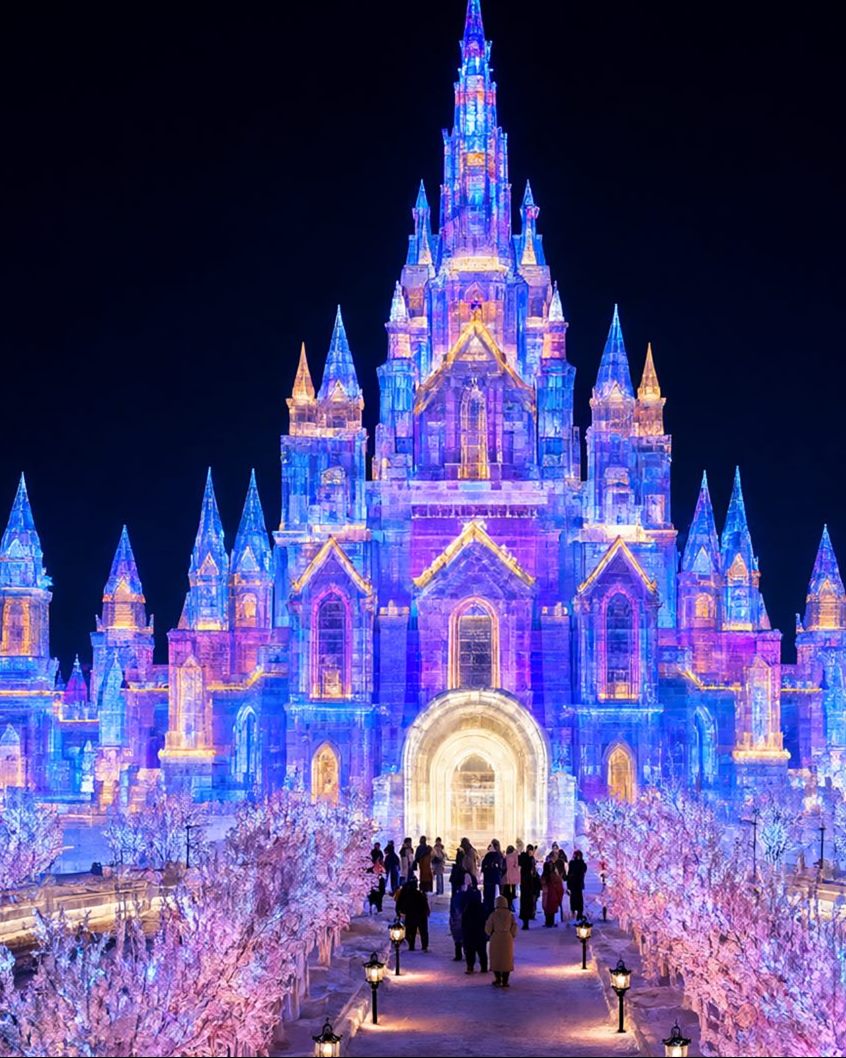
North. Beijing and Xi'an in low winter light: the palace halls nearly empty, the terracotta pits without a crowd, the Wall at Jinshanling with snow in the saddles. Harbin is the exception to all of it — a city organised around −25°C, with the ice festival opening around 5 January and running into late February.
Silk Road west. Dunhuang at −2°C, dry and bright, the Mogao caves open and your group four people rather than forty. Tibet is possible but bureaucratic: permits are tighter in winter, agencies ask for ten days or more, and Lhasa's blue sky is the reward for the paperwork.
South-west. Kunming is 16°C and cheap, Xishuangbanna is 25°C, and the Hani terraces at Yuanyang are flooded and mirror-like from now until March, which is the only window in which they look like that.
Yangtze delta. Shanghai at its least flattering: dark by five, damp, restaurants with the door open and a heater running inside. Suzhou's gardens under a light snow are the compensation, and the canal towns are empty enough to hear a bicycle.
Karst south. Guilin at 12°C with the peaks half-erased by mist, and the Li river low but running. Yangshuo is at its cheapest of the year. Hainan, two hours further south, is 25°C and the only beach worth the flight.
January is the only month when China's most famous rooms are quiet enough to hear the floor. Field desk · the Forbidden City, 8:40am
The ice, and how to survive it
Harbin's festival is three sites: the big illuminated city of ice, a snow sculpture park, and a free stretch on the frozen Songhua. Go on a weekday, arrive at dusk as the lights come on, and keep the phone inside your coat — at −24°C the battery dies after about twenty minutes of photographs. The season usually closes in the last week of February.
A January kit that works
Two layers beat one coat: a thin down jacket for heated shops and trains, a windproof shell over it for the street.
Hand warmers cost ¥2 a pair at any convenience store and decide whether you keep taking photographs or give up.
Boots need a real sole. Harbin's pavements are polished ice for three months, and the hospitals see a lot of wrists in January.
What to book, and when
Harbin is the only thing that needs real planning: accommodation eight to ten weeks ahead for the first half of the month, and check the festival's opening date before booking flights. Everywhere else, a week is plenty. Mogao releases slots about seven days out, the Forbidden City is close to walk-up, and Tibet permits take ten to twenty days through an agency. Train tickets open fifteen days ahead and rarely sell out in January.
What January costs
The cheapest month of the year with one exception. Beijing hotels run ¥300–500, Shanghai ¥380–600, Guilin ¥200–350, Lhasa ¥250–450. Harbin near the ice park is ¥500–900 and climbing; book early or stay one metro stop out and pay half.
Questions travellers ask
- Is January a good time to visit China?
- Yes, if you choose the right China. The north is cold, dry and empty, Yunnan sits at 16°C in the sun, and hotel prices are the lowest of the year. Harbin delivers the ice festival from early January. Avoid the final days of the month if you plan to travel by rail, when the lunar new year rush begins to fill trains.
- How cold is Harbin in January?
- Daytime highs sit near −13°C and nights around −25°C, and wind makes both feel worse. It is manageable with a down coat, thermal base layers, wool socks, gloves and a hat over the ears. Phone batteries fail quickly in the cold, so keep the device inside your jacket between shots and carry a spare.